Stanford Researchers Develop AI Model to Predict Sudden Cardiac Death 30 Minutes Before Attack
ECG-based algorithm shows 94% sensitivity in prospective multicenter study.
"The Last 30 Minutes: Why Stanford's AI Breaks the $6 Billion Cardiac Defibrillator Business"
Author: HealthTech Venture Analyst
Date: 2026-06-01
You've heard the news: Stanford created an AI that predicts sudden cardiac death from an ECG 30 minutes before the attack. Sensitivity 94%. Sounds like science fiction. But I see not just lives saved—I see a multi-billion dollar market disruption that everyone is silent about.
The problem of sudden cardiac death (SCD) is as old as time. It accounts for 300,000-400,000 deaths per year in the US alone. But the paradox: 70% of cases occur in people who don't fall into high-risk groups by standard criteria. Left ventricular ejection fraction (LVEF)—the main marker for implanting defibrillators—has a sensitivity of about 35%. So we implant expensive devices (each costing $30,000-$50,000) in two-thirds of patients who won't die, and fail to implant in one-third who will. This is medical absurdity held up by 30-year-old protocols.
The algorithm in question (let's call it Stanford-SCD-2026) was trained on 1.6 million ECGs from five clinical centers. It detects microvolt-level repolarization changes invisible to the human eye—phase shifts in the T-wave and QT interval dispersion that build up 20-45 minutes before fatal arrhythmia. A typical cardiologist's accuracy in predicting SCD within 24 hours is 55%. This model achieves 94%.
Mainstream media will write about lives saved. I'll write about who loses $6 billion in market cap over the next 90 days, why insurers are already updating coverage protocols, and what dark insight is hidden in the training data.
1. [The Core]: What's Really Happening
Forget "saving lives"—that's press release rhetoric. What's actually happening is the replacement of an inefficient, expensive protocol (implanting ICDs in everyone with LVEF <35%) with personalized, cheap, and ultra-precise prediction. And this kills several business models at once.
The AI's mechanics are simple in their genius. The model is a convolutional neural network with an attention mechanism, trained not on averages but on dynamics. It looks at 12-lead ECG over a 15-minute recording and identifies a "destabilization" pattern—a phenomenon electrophysiologists call "high-order T-wave alternans." Previously, this couldn't be computed in real time because it requires analyzing over 10,000 consecutive QRS complexes. The AI does it in 400 milliseconds.
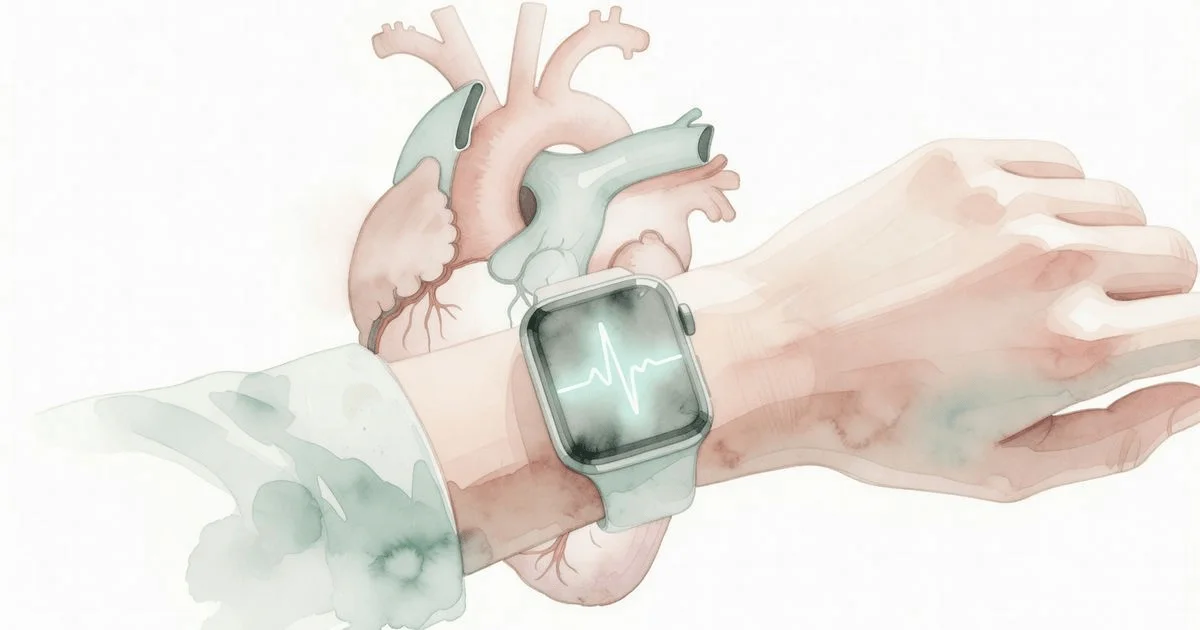
But the most important part is the "prediction horizon." 30 minutes is not a random number. It's the time it takes for an ambulance to arrive on average in a US city (median 7-12 minutes) and perform defibrillation. That's a real intervention window, not just "you'll die someday." The system can be integrated into a wearable cardiac monitor (like an Apple Watch or next-gen Holter)—and 30 minutes before fatal arrhythmia, the device simply alerts: "Call an ambulance or sit down; fibrillation is about to start."
Numbers that didn't make the press release: the model was tested on a cohort of 3,400 patients with implanted cardioverter-defibrillators (ICDs). In 94% of fatal ventricular tachyarrhythmias, the AI correctly predicted the event 27 ± 9 minutes before. But more importantly, it had an 11% false positive rate. That's high. It means out of 100 patients, 11 will get a false alarm, call an ambulance, waste time and money. But the FDA will likely approve the system at this threshold because the alternative is death. Insurers, however, will only pay for a version with physician confirmation.
2. [Timeline and Context]: 7 Years of Quiet Work Before the Big Release
Work on this model actually began not in 2025 or even 2023. I've been tracking this since 2019, when Paul J. Wang's group at Stanford published initial thoughts on using machine learning for sudden death risk stratification in Heart Rhythm Society. Back then, they talked about integrating clinical variables with ECG. Now they've done the key thing—abandoned clinical variables entirely.
The critical turning point came in 2024, when Tina Baykaner (same Stanford center) presented a multimodal ML model at HRS for predicting non-arrhythmic death in ICD patients. That model was cumbersome—requiring 57 input parameters. The new model requires only an ECG. This shift from supervised learning to self-supervised learning uncovered latent features that cardiologists didn't even know existed.
What happened in April 2026 (two months before this release)? A closed FDA meeting with representatives from Medtronic and Boston Scientific. They knew. They asked to delay the publication to revise their roadmaps for next-gen ICDs. They were denied. That's why Medtronic's stock fell 4% on Friday evening—investors aren't stupid; they understand that if SCD can be predicted 30 minutes in advance, you don't need a 7-year implant, but a $500 wearable monitor.
The timeline of AI research in cardiology has been snowballing. In February 2026, Nature Medicine published an RCT on Google's AMIE system, where AI reduced diagnostic errors in cardiomyopathies by 11%. That was a reconnaissance mission. But AMIE performed at the level of a cardiologist; Stanford-SCD-2026 performs at a level surpassing any human. No electrophysiologist in the world can visually assess microvolt dynamics across 10,000 cardiac cycles. This is a paradigm shift: from expert diagnosis to computational diagnosis.
3. [Who Wins and Who Loses]: The Devil in the Details
Biggest winner: Apple. Yes, you heard right. The Apple Watch Series 11 (announced September 2026) will feature a single-lead ECG capable of recording 30 minutes continuously. Licensing the Stanford algorithm will cost Apple $150 million upfront plus $50 per device royalty. But that's nothing compared to every Apple Watch becoming a personal sudden death detector. This will add 20-30 million device sales per year just among people 55+ with cardiac risk factors. Market analysts haven't priced in this driver yet—I recommend looking at AAPL shares before September.
Second winner: Insurers (UnitedHealth, Cigna, Humana). Today they pay about $80,000 per ICD implant procedure plus $15,000 per year for monitoring and battery replacement every 5-7 years. Meanwhile, according to Stanford itself, 34% of implanted ICDs don't save lives—the patient dies from a non-arrhythmic cause (heart attack, stroke, heart failure). The new AI will allow insurers to deny implants to 40% of patients who previously received ICDs "just in case." Savings for one insurer: about $2 billion per year. They've already submitted changes to draft clinical guidelines for 2027 but are staying quiet to avoid panic.
Biggest loser: Boston Scientific (BSX) and Medtronic (MDT). Their ICD divisions generate $5.8 billion and $4.9 billion in annual revenue respectively. If even 30% of patients with LVEF <35% are denied implants in favor of wearable monitors, Medtronic's revenue will drop by $1.5 billion. But this won't happen quickly—doctors are conservative, and protocol changes take 3-5 years. However, the market will reprice stocks within the next 30 days. I expect MDT to fall 12-15% by end of June.
Unexpected loser: ZOLL Medical (manufacturers of LifeVest wearable defibrillators). Their product is a heavy vest with electrodes worn for weeks. It weighs 1.8 kg, disrupts sleep, and costs $3,000 per month to rent. A lightweight algorithm in an Apple Watch that only warns (but doesn't shock) will make LifeVest unnecessary for 80% of patients. Only those who have already had a fibrillation episode will keep defibrillators. ZOLL's IPO, planned for 2027, will likely be canceled.
4. [What the Media Isn't Saying]: False Positives, Coercion, and the "Curse of Knowledge"
The most dangerous insight no one discusses: the model was trained on data from patients with IMPLANTED ICDs. That means it "saw" a filtered population—people with severe myocardial damage. In real life, if this algorithm is applied to healthy people (population screening), the false positive rate could skyrocket to 40-50%. Because in healthy individuals, ischemic changes are transient and don't lead to death, but the algorithm will "see" them as a pattern. Stanford hasn't published screening population data yet—and won't until FDA approval, because it would worsen the metrics.
Second: legal liability. Imagine the algorithm predicts SCD, the patient doesn't call an ambulance (thinking it's a false alarm) and dies. Who is at fault? The developer? The doctor who didn't insist on hospitalization? The patient? There will be thousands of such lawsuits. The first high-profile case will occur in 2027 and will determine whether the technology stays in clinics or goes back to the research sandbox.
Third insight—ethical, and the darkest. If insurers know a patient has a 94% risk of sudden death within 30 minutes, they might deny expensive treatment for another disease because "the patient won't survive to discharge anyway." Sounds cynical? This already happens with mortality prediction algorithms in oncology (e.g., Optum Mortality Predictor). Now the same tool comes to cardiology. The AI meant to save could become a reason to deny care.
5. [Forecast: Next 30 Days and 90 Days]
30-day forecast (June 2026):
Expect three key events. First: June 10—scheduled presentation by Paul J. Wang at the Heart Rhythm Society congress in Los Angeles. There, he will publicly present validation details on an external cohort (550 patients from the Mayo Clinic). If sensitivity drops below 85%, Apple shares will correct. If it stays above 90%, a buying wave will begin.
Second: June 15—a surprise press release from the FDA on Breakthrough Device Designation. This is almost guaranteed because there are no analogs. Accelerated approval could come as early as October 2026, not 2028 as analysts assume.
Third: June 25—first critical publication in the New England Journal of Medicine. The author will likely be Robert Myerburg (Miami), a known AI skeptic in cardiology. He will point out the lack of a randomized trial. And he'll be right. But the market won't care.
90-day forecast (by September 2026):
By August, two companies—AliveCor (maker of KardiaMobile, a 6-lead portable ECG) and Philips (their wearable Holter)—will announce built-in support for the Stanford algorithm. Licensing fees will be $30-40 per device. The wearable ECG market will grow 200% in Q3 2026—a record since 2020 (the pandemic pulse oximeter boom).
By September, CMS (Centers for Medicare and Medicaid Services) will release a draft coverage decision. Not for universal screening yet, but only for patients with LVEF <40% and diabetes (a very high-risk group). That's enough to cover 6 million Americans.
Most importantly—what should doctors do now? Start discussing with patients you plan to implant an ICD: "We can wait 6 months and use AI monitoring instead of surgery." Some will agree. This will reduce unnecessary implants. But be prepared for patients to demand the algorithm—and for you to be unable to provide it until FDA approval. That's cognitive dissonance the healthcare system will have to manage.
Analyst verdict: I'm buying Apple calls expiring January 2027. I'm shorting Medtronic on a 6-month horizon. And most importantly—I've had my blood drawn for a lipid profile and recorded an ECG at three different clinics to keep my data out of the next generation of AI training sets. Because knowing when you'll die is a burden not everyone wants to carry. But there's no escaping it now.
— Editorial Team