Ukraine Sets Record Poultry Export Volume, but Revenue Drops: What It Means for the Global Market
In March, Ukraine exported a four-year high of 43,500 metric tons of poultry—more than at any point since January 2022. Yet, revenue fell by nearly 4%. Why did selling more meat result in less money, and how does this impact your grocery bills? Let’s break it down.
Why the Record Isn’t Exactly Cause for Celebration
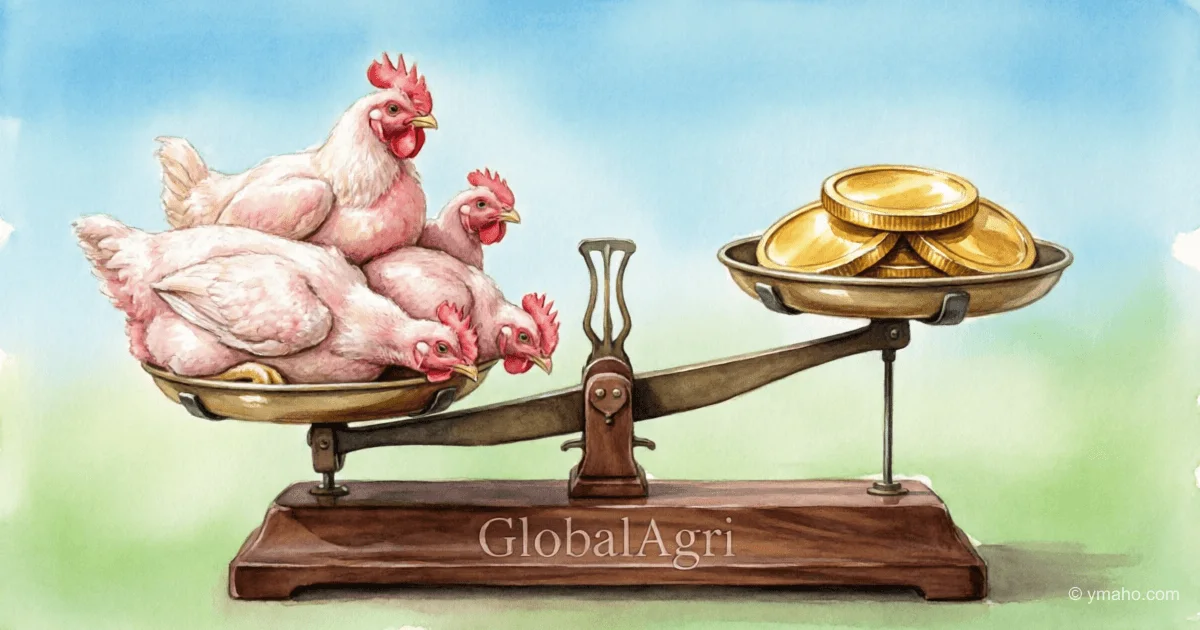
Imagine selling twice as many apples, but at one-third of the price. Your total revenue drops, even though sales volume increases. That’s exactly what happened with Ukrainian poultry. Shipments rose 5.3% in March compared to February, but global prices plummeted to $1.96 per kilogram. As a result, dollar-denominated revenue shrank to $85 million.
It mirrors the fruit market: when harvests are abundant, prices drop, and farmers earn less despite higher sales volumes. For Ukraine, whose economy remains heavily tied to agriculture, these fluctuations send a serious warning. Agricultural exports are currently one of the country’s primary revenue streams amid the ongoing war.
Who’s Buying Ukrainian Poultry?
Top buyers in the first quarter of 2026:
- Netherlands (18.9% of total exports)
- United Kingdom (12.4%)
- Slovakia (10.1%)
- United Arab Emirates (7.9%)
The European Union as a whole accounted for 35.8% of the volume but generated 46.4% of the revenue. Think of it like selling the same product in two different stores: one offers lower prices but moves more units, while the other charges more but sells fewer. For poultry producers, Europe remains the most lucrative market, thanks to higher price points compared to other regions.
New Markets and Old Challenges
Ukraine is actively expanding its export footprint. Recently, Moldova reopened access for a single Ukrainian producer holding EU export approval. Meanwhile, the Sultanate of Oman began importing Ukrainian poultry for the first time. In total, 22 Ukrainian facilities have received authorization to export to the European Union, including 12 poultry-specific plants.
These developments matter beyond Ukraine’s borders. When new countries tap into global supply chains, it inevitably impacts worldwide pricing. For instance, if Oman ramps up purchases of Ukrainian poultry, local farmers in other regions may need to lower their own prices to stay competitive.
Key Takeaways
- Ukrainian poultry has returned to record export volumes, but falling global prices have dragged down revenue.
- Europe remains the most profitable market: lower volume, but higher returns.
- Ukraine is broadening its reach: new markets in Oman and restored access to Moldova.
- Export growth demonstrates that the agricultural sector is adapting to wartime conditions, though it remains vulnerable to global price swings.
What Does This Mean for Everyday Consumers?
If you live in Europe, the UK, or the UAE, you might soon see more Ukrainian poultry on store shelves—and possibly at lower prices. For Ukrainian farmers, strong sales are welcome, but depressed prices are squeezing profit margins. Globally, these figures serve as a reminder that food costs are tied to international supply chains. When one region boosts its exports, it can help make groceries more affordable everywhere.
— Editorial Team









