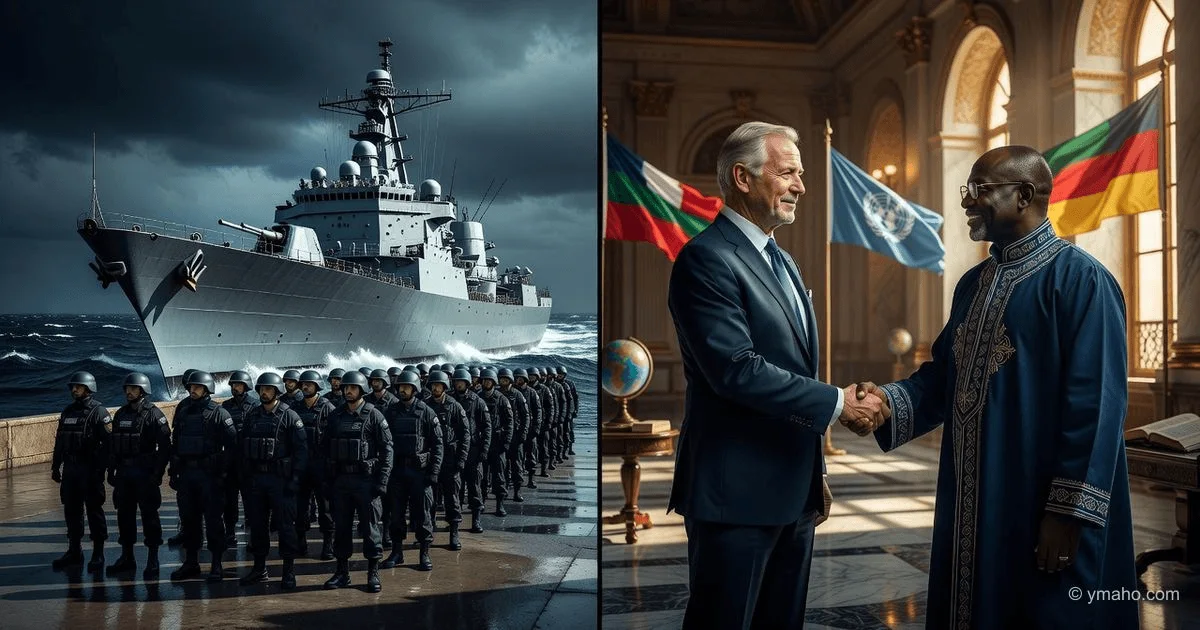
Hard Power vs. Soft Power: Key Differences in Geopolitics
In international relations, power is the currency of influence. The core distinction between coercion and attraction defines how nations pursue their objectives on the global stage. To understand "what is the difference between hard power and soft power," one must look beyond simple definitions to examine their mechanisms, strategic applications, and the evolving dynamics of global competition.
What You'll Learn
You'll gain a clear, data-driven framework to differentiate between hard and soft power, understand their strategic applications, and see how they interact in real-world geopolitics. You'll walk away with the analytical tools to assess why some nations lead through force, others through attraction, and why the most successful powers master both.
At a Glance
| Criteria | Hard Power | Soft Power |
|---|---|---|
| Primary Mechanism | Coercion or inducement (sticks and carrots) | Attraction and persuasion |
| Core Resources | Military force, economic sanctions, energy leverage | Culture, political values, foreign policy |
| Nature of Influence | Command power, tangible | Co-optive power, intangible |
| Object of Influence | Changes behavior through threat or payment | Shapes preferences and identity |
| Effect on Target | "B does what B would otherwise not do" | "B wants what A wants" |
| Visibility | Highly visible and quantifiable (e.g., troop numbers, GDP) | Subtle and diffuse, often unheralded |
| Time Horizon | Quick to deploy, results can be immediate | Requires long-term investment, time to build |
| Cost | Very high (e.g., defense budgets, procurement) | Relatively modest investment for high strategic return |
| Sustainability | Hard to sustain; can generate backlash and resentment | Can create durable goodwill and legitimacy |
| Ideal Context | Deterrence, direct threats, immediate crises | Building coalitions, shaping global norms |
Hard Power Deep Dive: The Currency of Geopolitics
Hard power is the ability of a state to influence others primarily through military force and economic coercion. This is the traditional, realist view of international relations, where an anarchic global system lacks a supreme authority, and order is the result of power competition and war . Former MI6 chief Sir Alex Younger warns that after a post-Cold War "historical aberration," we are returning to a "hard power" centric era where nations must "adapt or die" .
Strengths and Weaknesses
The primary strength of hard power is its directness and speed. It can provide deterrence and compel an adversary to change its behavior . For instance, Germany's hard power—its economic might within the European Union—has been used to coerce smaller EU states into supporting regulations . Similarly, Russia's role as the primary energy supplier to Belarus gives Moscow significant leverage, allowing it to force policy changes .
However, hard power has significant weaknesses. It is enormously expensive; as a point of contrast, the annual budget for the BBC World Service is a fraction of a single defense procurement program . Furthermore, the overt use of force often provokes international backlash and long-term reputational harm. Russia's invasion of Ukraine, while a demonstration of hard power, triggered severe sanctions and diminished its international influence .
Ideal Use Cases
Hard power remains essential in unstable regions and for direct national security threats. Russia’s invasion of Ukraine, Israel’s tensions with Iran and Palestine, and China’s naval expansion in the South China Sea all demonstrate an ongoing reliance on military strength to assert dominance . It is the primary tool for ensuring national survival when diplomacy fails.
Soft Power Deep Dive: The Edge in a Hard Power Era
Soft power, a concept popularized by Joseph Nye, is the ability to get what you want through attraction rather than coercion or payment . It rests on the appeal of a country's culture, political ideals, and policies. In a contemporary world dominated by global connectivity, soft power has become a more relevant means of promoting long-term influence and securing international legitimacy .
Strengths and Weaknesses
Soft power's strength lies in its cost-effectiveness and ability to build enduring relationships. The British Foreign Policy Group argues that in a volatile era, "soft power is the edge," emphasizing that coalitions are built on trust and cultural presence that cannot be procured by government contracts . For example, South Korea has strategically employed K-pop, dramas, and technology to enhance its international stature . The work of agencies like KOICA highlights the power of attraction in achieving diplomatic objectives.
Yet, soft power is not an instrument that can be wielded like a weapon; it is a background condition or a "lubricant" that makes diplomacy easier . Dr. Nicholas Kitchen explains that soft power results from Actor B's willingness to confer approval on Actor A, generated by perceptions of "beauty, brilliance, or benignity" . It is fragile and can be quickly undermined by hypocrisy or actions that contradict a nation's stated values . For instance, while Silicon Valley projects an image of brilliance, issues like homelessness in San Francisco can erode that perception.
Ideal Use Cases
Soft power is most effective for building the coalitions needed to address global challenges. It opens doors for diplomacy, makes economic partnerships more productive, and can turn potential adversaries into allies over time. The United States has historically exerted influence through its universities, tech giants like Google and Apple, and cultural exports, attracting international admiration and partnerships . For a middle power like the UK that relies on alliances, soft power is an essential tool for navigating "choppy international waters" .
Cost & Accessibility
The disparity in investment between hard and soft power is stark.
| Investment Area | Approximate Annual Cost | Strategic Return |
|---|---|---|
| Hard Power (UK Defense) | Substantial portion of GDP | Deterrence, direct security, high cost |
| Soft Power (BBC World Service) | £400m total (£133m direct gov't funding) | Reaches 300m weekly users at approx. 44p per user |
| Soft Power (British Council) | £163m government funding | Generates £1bn for the UK economy |
| Adversaries' Soft Power | Russia & China spend £6-8bn on international state media | Used to disrupt and degrade open information spaces |
This table illustrates the extreme cost-effectiveness of soft power. While hard power is a necessary expenditure for national security, soft power provides a substantial strategic return for a comparatively modest investment, making it a key asset during times of fiscal pressure .
How to Decide: A Strategic Framework
For a nation to craft an effective foreign policy, it must use a "smart power" approach that combines both hard and soft power . The choice is not "either-or" but "how much of which."
A nation should prioritize hard power when:
- Threats are existential and immediate: When direct military aggression or economic warfare is imminent, only hard power can guarantee survival.
- Deterrence is the primary goal: A strong military sends a clear message to potential adversaries.
- Time is of the essence: Soft power takes years to build; hard power can be deployed rapidly to change the calculus of a crisis.
A nation should prioritize soft power when:
- Building long-term alliances: Coalitions are built on relationships and mutual trust, not just shared threats .
- The goal is legitimacy and consensus: Attracting others to your side is more effective for implementing international norms and policies.
- Resources are constrained: Soft power offers a "substantial strategic return for relatively modest investment" .
Verdict: The Interdependent Future of Power
A clear recommendation emerges from the interplay of these dynamics: Hard power is essential, but insufficient. The Prime Minister of the UK is right to describe hard power as "the currency of the age" , but as the British Foreign Policy Group notes, "hard power alone cannot achieve a nation’s goals" . Military capability provides deterrence, but it does not build the coalitions needed to sustain it or grant legitimacy in the eyes of the world . In an era of renewed great power competition, the nations that will succeed are those that understand what is the difference between hard power and soft power and expertly combine the two into a coherent "smart power" strategy. They will invest in their military and economic strength while simultaneously protecting the cultural and institutional sources of their soft power, recognizing that the "velvet glove" of attraction cannot exist without the "iron fist" of credible strength .
Frequently Asked Questions
Is hard power more important than soft power?
Hard power is vital for security and deterrence, but it is insufficient on its own. Soft power is critical for building the alliances and legitimacy needed for long-term influence. The most powerful states use a combination of both, known as "smart power" .
What are the main tools of hard power?
The primary tools of hard power are military force and economic coercion. This includes military interventions, sanctions, trade tariffs, and leveraging energy supplies to exert pressure on other nations .
Can you give a real-world example of soft power?
South Korea's global influence through K-pop, dramas, and technology is a prime example of soft power. By creating attractive cultural exports, South Korea has enhanced its international stature and economic partnerships .
What is "smart power"?
Coined by Joseph Nye, smart power is the strategic combination of hard and soft power. It recognizes that to succeed in international relations, a nation must be able to both coerce when necessary and attract when possible .
Why is soft power difficult for governments to wield?
Unlike a military or economic tool, soft power is not an instrument that can be directly controlled. It is a background condition generated by others' perceptions of a nation's "beauty, brilliance, or benignity." Governments can undermine it through hypocritical actions or policies that contradict their values .
— Editorial Team