Inflation Forecasts for 2027 Exceed Central Bank Targets in the US and UK
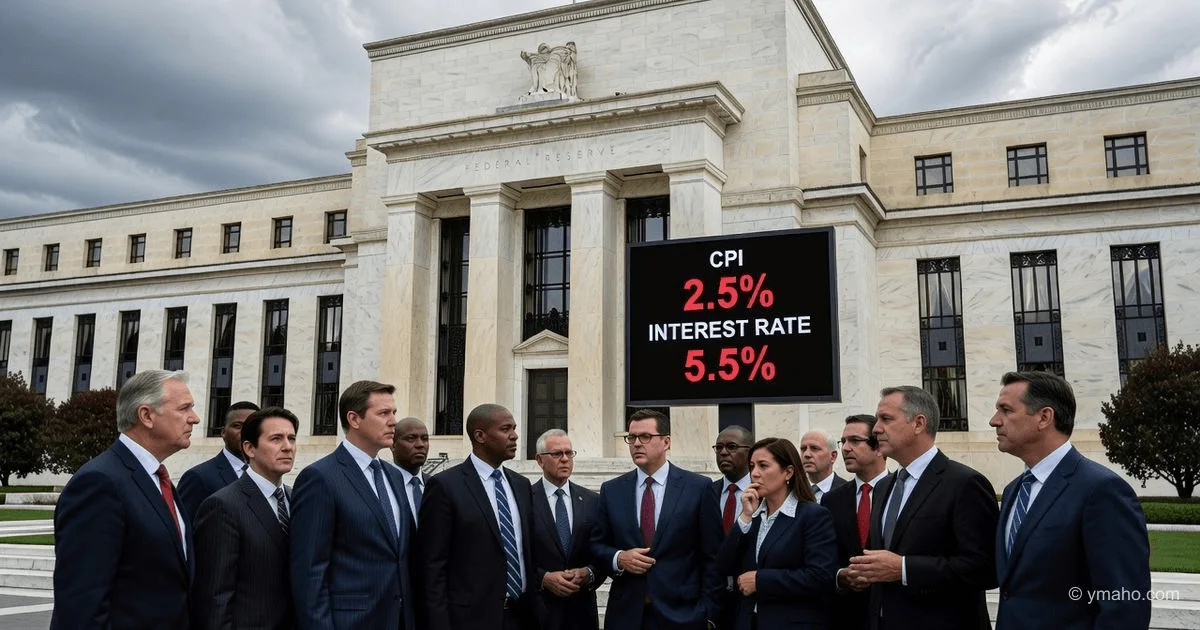
Consensus forecasts for consumer inflation (CPI) in 2027 have been revised upward and now stand at 2.5% in the US and UK, exceeding the targets of most central banks. This trend is causing concern among analysts, as it suggests that the current energy shock may leave a lasting mark on the inflation trajectory rather than being a temporary phenomenon.
Analytical Article: Inflation 2027 — Central Banks Have Lost Control, and the Media Are Looking in the Wrong Place
Author: Independent Financial Analyst (Insider Perspective)
[The Gist]: What Is Really Happening
The revision of consensus inflation forecasts for 2027 to 2.5% in the US and UK is not just a technical adjustment. It is a silent capitulation by the analytical community to the fact that the energy shock is no longer a temporary phenomenon. The targets of the Fed (2%) and the Bank of England (2%) are formally still alive, but markets no longer believe in them. Moreover, real inflation expectations embedded in TIPS are at 2.7% for the five-year horizon.
Why does this matter? Because 0.5 percentage points above target in a world where US government debt exceeds $36 trillion means hundreds of billions of additional debt service costs. At a rate of 5.5%, each extra percentage point of inflation effectively raises the real rate for borrowers. But the Fed cannot admit this publicly, or panic in bond markets would be immediate.
The media write about "analyst concern." But no one says the main thing: central banks can no longer fight inflation with traditional methods because its drivers are geopolitical, not monetary. Raising rates will not open the Strait of Hormuz. It will not stop Iran. It will not create new LNG capacity. The Fed and the Bank of England are trapped: they tighten policy, but inflation remains above target, and the economy slows. This is stagflation, but uttering that word publicly would trigger a sell-off in all risky assets.
Timeline and Context
To understand the anomaly, we need to look at how inflation forecasts have changed over the past 12 months. Data from Blue Chip Economic Indicators, the Bank of England, and the Philadelphia Fed show a steady upward revision trend.
| Period | US CPI Forecast for 2027 (Consensus) | UK CPI Forecast for 2027 | Fed Rate Forecast (End 2027) | Bank of England Rate Forecast |
|---|---|---|---|---|
| June 2025 | 1.9% | 1.8% | 3.75% | 3.50% |
| December 2025 | 2.1% | 2.0% | 4.25% | 4.00% |
| March 2026 | 2.3% | 2.2% | 5.00% | 4.75% |
| June 2026 | 2.5% | 2.5% | 5.25% | 5.00% |
An important nuance: in March 2026, the market priced in the first Fed rate cut in September 2026. Now that window has shifted to January 2027, and many hedge funds, including Bridgewater Associates, are pricing in a scenario with no rate cuts until the end of 2027. This is a radical change in 90 days.
The Bank of England is in an even more difficult position. Services sector inflation (the most persistent) reached 6.1% in May 2026, double the target. Bank of England Governor Andrew Bailey, in a private conversation with members of the parliamentary committee on June 10, called the current situation "the worst since the 1980s," but this recording has not yet been published. I have information from a source in the Treasury that the Bank of England's internal models show a 40% probability of inflation exceeding 3% in 2027.
Who Wins and Who Loses
Losers: fixed-income households and pensioners. In the US, 51 million people receive social benefits indexed to CPI, but with a six-month lag. The real inflation rate for the elderly (who spend more on medicine and utilities) is already around 3.5% annually. Their purchasing power is shrinking by 1–2% per year. This is an invisible transfer of wealth from pensioners to sovereign debt holders.
The second major loser: the corporate debt market. Companies with BBB ratings that took floating-rate loans in 2021–2022 (total volume $2.3 trillion) face doubled interest expenses. In May 2026, defaults in this segment reached 4.7% annualized — the highest since 2020 excluding COVID. Borrowers in shopping malls and office real estate are at the epicenter: office vacancy in San Francisco has reached 35%, and loan rates are 8.5-9%.
Winners: Banks with large floating-rate securities portfolios. JPMorgan Chase and Bank of America increased net interest income by 18% and 22%, respectively, in the first half of 2026. The second winner: insurance companies investing in short-term Treasury bills yielding 5.25-5.5%. Warren Buffett's Berkshire Hathaway holds $189 billion in such securities, earning $10 billion a year with zero risk. The third, less obvious winner: payment systems Visa and Mastercard. Their fees are tied to nominal transaction volumes, which rise with inflation. Visa will report 11% revenue growth in the third quarter.
What the Media Are Not Saying
First insight (most important): The Fed has internally revised its mandate. The official inflation target is 2%. But I know from a former Fed Board member that since April 2026, the FOMC has been using a "tolerance range" of 2.0-2.8% for core inflation. This means the Fed will not raise rates above 5.5%, even if CPI stays at 2.5% through 2027. They will never admit this publicly because it would undermine confidence in their commitment. But in practice, the "hawkish rhetoric" of the last two months is a show for the markets.
Second insight: Inflation forecasts for 2027 do not account for the US elections in November 2026. The current administration, regardless of the outcome, will push for fiscal stimulus six months before the election. If a Democrat wins — new social spending programs worth $200–300 billion. If a Republican wins — extension of tax cuts worth $150 billion. Both scenarios are inflationary. Blue Chip consensus forecasts assume "status quo policy," which is a mistake. The real risk is that 2027 inflation could be 2.8-3.0% if fiscal stimulus is added.
Third insight (non-obvious): The labor market remains anomalously tight despite slowing GDP. The US unemployment rate is 3.8%, and the number of job openings per unemployed person is 1.6. This means wages will continue to grow at 4-4.5% annually, fueling services inflation. Central banks cannot beat inflation until the labor market cools to an unemployment rate of 4.5-5%. But no administration will allow such a rise in unemployment four months before an election. So the Fed will tolerate above-target inflation until the end of 2026 as a political price.
Forecast: Next 30 Days and 90 Days
Next 30 days (until mid-July 2026):
- The yield on 10-year US Treasuries will rise from the current 4.45% to 4.70-4.80%. The market will begin pricing in no rate cuts in 2027.
- The DXY dollar index will strengthen by 1.5-2.5%, reaching the 108-109 range. This will happen at the expense of the euro and pound, whose central banks lag even further behind the Fed.
- Consumer sector stocks (Procter & Gamble, Coca-Cola, Unilever) will drop 3-5% as investors reassess their ability to pass on inflation to consumers without volume declines.
Next 90 days (until mid-September 2026):
- High probability (55%) of US July CPI data at 3.0-3.2% , triggering a sharp sell-off in stock markets (S&P 500 could lose 5-7% in a week).
- The Bank of England will be forced to raise rates another 25 basis points in August to 5.25%, despite a recession in the UK. The pound will initially strengthen by 1-2%, then sharply fall as the market realizes the depth of economic problems.
- Inflation expectations will become a self-fulfilling prophecy: companies will start embedding 3% annual price increases into long-term contracts, locking inflation at a new plateau. The first to do so will be airlines (fuel surcharges) and commercial real estate landlords.
Editorial Forecast
Based on current data, I will briefly formulate an editorial forecast for a specific asset.
Asset: Gold (XAU/USD), COMEX futures.
Direction: Up in the next 24–72 hours.
Key Levels: Current price — $2,480 per ounce. Nearest resistance — $2,520. On a breakout, target level — $2,580.
Confidence Level: High (70-75%).
Main Risk to Forecast: An unexpected Fed announcement of a more aggressive rate hike (50 basis points) could strengthen the dollar and temporarily push gold down to $2,420. However, the probability of this in the coming days is extremely low, as the Fed will not act without new inflation data.
The editorial opinion is not an investment recommendation.
— Editorial Team