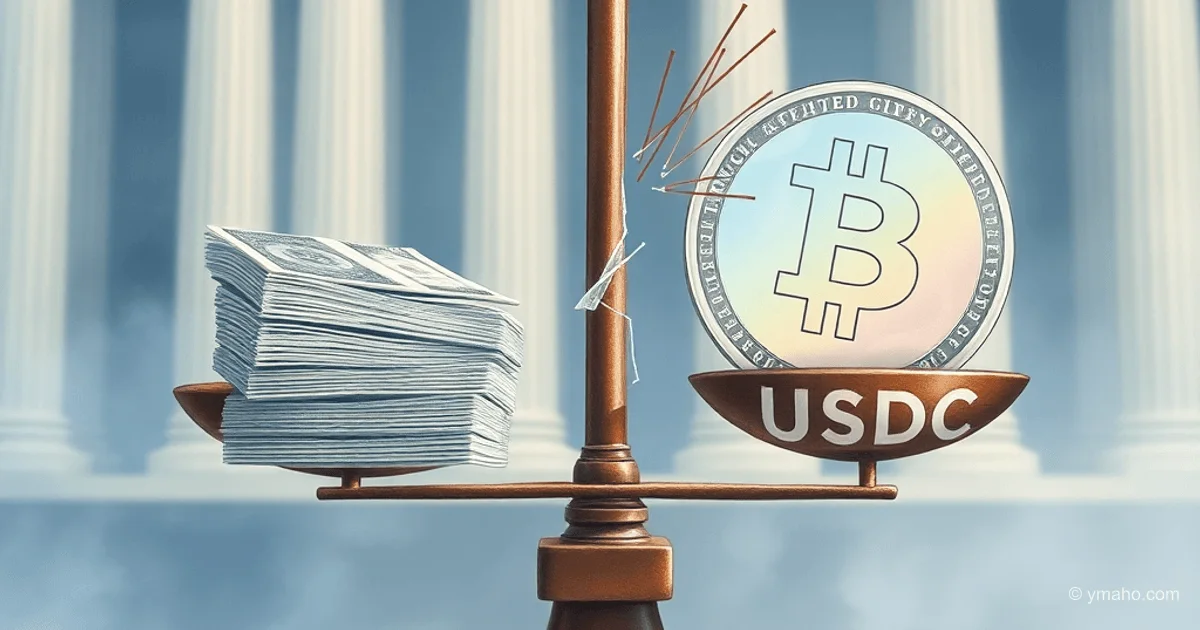
Circle at the Center of a Scandal: Investors Demand Answers Over $230 Million Stolen via USDC
Over one hundred investors have filed a class-action lawsuit against Circle, the company behind the USDC stablecoin. The reason? They believe Circle could have halted the transfer of $230 million stolen during a hack of the Drift protocol on Solana—but failed to do so. For everyday users, this raises an important question: if major crypto companies can freeze funds by court order, why don’t they act when there are clear signs of theft?
What Happened and Why This Is More Than Just ‘Another Hack’
On April 4, 2026, hackers targeted the DeFi protocol Drift, built on the Solana blockchain, and drained over $285 million—more than half of all user funds entrusted to the platform. A portion of these funds was quickly converted into USDC, the stablecoin issued by Circle. From there, the money began moving across different blockchains via bridges, including infrastructure provided by Circle itself.
Investors argue that since Circle technically has the ability to freeze USDC at specific addresses—and has done so before—they should have intervened immediately. Especially considering that just a week earlier, on March 23, the company had already blocked assets at 16 addresses at the request of a court in a separate case. This proves the technology works. Yet in the Drift incident, Circle remained silent.
Who Is Responsible for Digital Money?
The issue runs deeper than it appears. Stablecoins like USDC are often referred to as “digital dollars,” but in reality, they are private products. Circle issues them and can revoke or freeze them based on a court order. It’s akin to your bank blocking your account not because you broke the law, but because someone else used your account to move stolen funds.
ARK Invest expert Lorenzo Valente explains: every freeze is a political decision. If Circle starts blocking addresses without official authorization, it risks being accused of censorship. But if it doesn’t block—as in this case—it faces accusations of negligence. As a result, the stablecoin issuer finds itself at a crossroads between security, the rule of law, and freedom.
Why This Matters to Everyone Using Crypto
USDC is the second most popular stablecoin worldwide after Tether (USDT). Millions of people use it for trading, transfers, and savings. If such assets can suddenly be “switched off,” it fundamentally changes our understanding of decentralization. After all, a single private company effectively controls whether your funds can move or not.
Analysts suggest that North Korean hackers—known for regularly targeting the crypto market—were behind the Drift attack. Some of the stolen funds have already passed through Tornado Cash, a service designed to obscure transaction trails. While this complicates recovery efforts, it doesn’t diminish the central question: could Circle have prevented this in advance?
Here are the key takeaways to remember:
- Circle has the technical capability to freeze USDC—and has previously exercised this power under court orders.
- $230 million of the stolen funds were held in USDC, with part flowing through Circle’s infrastructure.
- The company refuses to act without formal legal requests, citing ethical and legal concerns.
- The ongoing legal proceedings could reshape the rules of the game for all stablecoin issuers.
- This isn’t just a dispute over money—it’s a broader debate about power in the digital economy.
What Does This Mean for Ordinary People?
If you hold USDC or use it for transactions, this story directly impacts you. First, your funds aren’t as “stable” as they seem—they depend on decisions made by a single company. Second, if you accidentally receive stolen funds (for example, through a smart contract or liquidity pools), your wallet could also be frozen. Third, future court rulings may require Circle and other firms to block assets more swiftly—increasing security but reducing privacy.
The bottom line: stablecoins are a convenient tool, but they’re not “digital cash.” Behind them stand real people, corporations, and laws. And when things go wrong, it’s these very forces that determine what happens to your money next.
— Editorial Team









