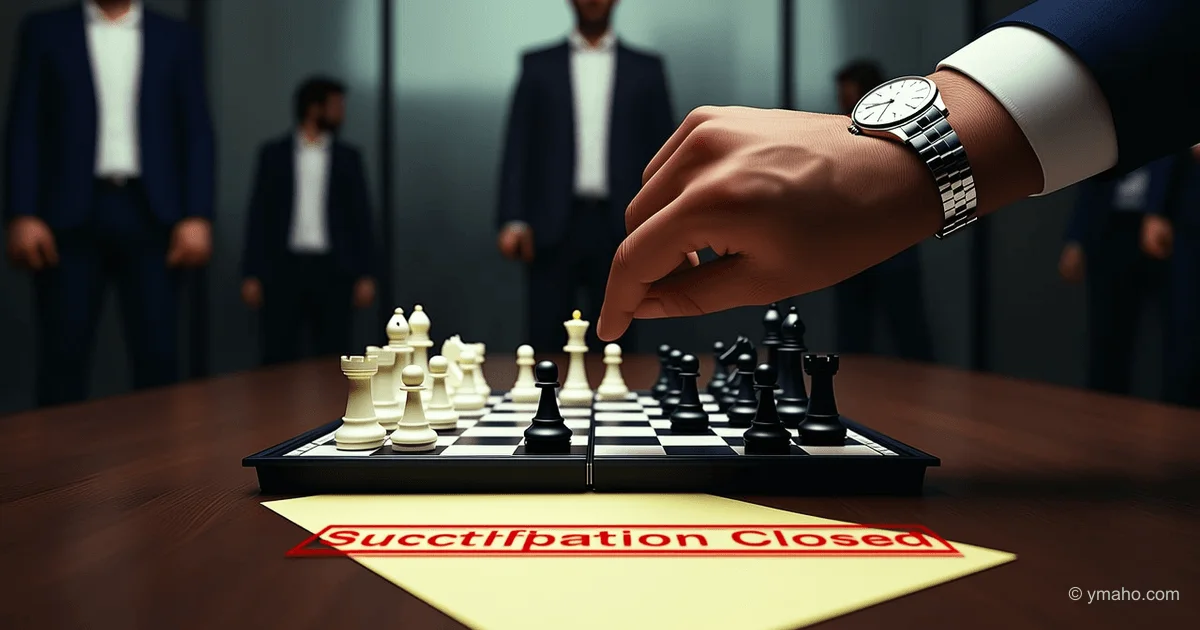
M.Video May Change Additional Issue Format to Private Placement
The Board of Directors of M.Video will consider on May 15 whether to abandon an open subscription share issue in favor of a private placement to a limited circle of investors.
"Closed Club": Why Changing M.Video's Additional Issue Format Is a Death Sentence for Minority Shareholders, Not a Rescue
The Essence: What Is Really Happening
The Board of Directors of M.Video will consider on May 15 yet another change in the format of the additional share issue: from open subscription to a private placement for a limited circle of investors. Most commentators present this as a technical matter or a search for the optimal way to recapitalize. In reality, we are witnessing the final stage of a classic "squeeze-out" scheme for minority shareholders. A private subscription means that only a narrow circle of people will have access to the new shares — most likely, entities affiliated with majority shareholder Bilan Uzhakhov (53.64% of shares). When the Board of Directors asks shareholders to "abandon the open subscription placement," it is effectively asking minority shareholders to voluntarily sign their own dilution sentence. And this is the fourth format change in two years — indicating not flexibility, but frantic flailing in an attempt to plug a debt hole.
Timeline and Context: Two Years of Chaos and 120 Billion Rubles in Debt
The saga of M.Video's additional share issue resembles a bad TV series. In 2024, an open subscription additional issue was planned, then switched to a private format. In 2025, the company again announced an open subscription for September. Now, on May 15, 2026, the Board of Directors is again proposing a private placement.
What lies behind these fluctuations? The answer is debt. The company's net debt is estimated at 120 billion rubles. The net debt/EBITDA ratio is about 3.9x. The company is burning cash on interest payments amid high key interest rates. In 2024, net loss tripled to 20.1 billion rubles, dividends were canceled. In 2025, the home appliance market fell by 12%, and M.Video closed almost 30% of its offline stores.
Initially, 1.5 billion new shares were planned — which would have increased the capital by 9.3 times. Later, the volume was reduced to 180 million, with actual placement expected at 500-750 million. But in any case, minority shareholders not participating in the additional issue lose their stake. With an open subscription, they at least theoretically have a chance to maintain their proportion by exercising preemptive rights. With a private placement, all new shares go to "insiders." That is why SFI, as a large minority shareholder, announced plans to participate in the additional issue — they understand the consequences of refusal.
Who Wins and Who Loses
The winner is majority shareholder Bilan Uzhakhov and affiliated entities. In March-April, Uzhakhov contributed 8.5 billion rubles as part of recapitalization, with a total of 30 billion rubles planned to be raised. The funds were provided as a loan at a rate of 10% of the Central Bank key rate, but not less than 2% per annum. This means the majority shareholder is not just saving the company — he is doing so on favorable terms, essentially lending to M.Video as a creditor. A private placement will allow converting this debt into shares at a price determined by the Board of Directors itself, i.e., at maximum discount. The scheme is simple: lend to the company at interest, then convert the loan into shares at a low price, simultaneously diluting others.
The losers are retail minority shareholders (98.8% of shareholders). Their stake will be reduced many times over. But with a private placement, they lose even the theoretical chance to maintain their proportion. The target share price has already been lowered by Freedom Finance from 105 to 75 rubles, and the rating from "buy" to "hold." Technical analysis indicates support at 62.10 rubles (2026 low), and if broken downward, shares could fall to 55.95 rubles — the 2025 low. This is a level not seen since 2008-2009.
The loser is German Media-Saturn-Holding (15% of shares). Its stake will be diluted, and obtaining government commission approval to participate in the additional issue is problematic. Chinese JD.com, according to RBC, may become an indirect co-owner through the acquisition of Media-Saturn, but this is a lengthy process with an uncertain outcome. In any case, the current 15% will be diluted in favor of the majority shareholder.
What the Media Are Not Saying: Converting Debt into Control
Here is an insight that is not obvious on the surface. The media write about "additional issue" and "raising funds." But in fact, this is not about raising money from the market, but about converting insider debt into shares. The company has already received 30 billion rubles from affiliated parties. Now these funds need to be legalized as capital. A private placement is the ideal tool: shares are issued for a specific recipient, the price is set by the Board of Directors (where Uzhakhov's people sit), and minority shareholders are cut off.
This changes the entire ownership structure. Currently, free float is 24.2%. After the private additional issue, the majority shareholder's stake will increase, and free float will shrink. Low free float means low liquidity, making the shares toxic for institutional investors. We have already seen this in cases of other companies with concentrated ownership — the stock becomes an illiquid toy, its price determined by the will of one person.
The second point is that the debt burden will not disappear. Even after recapitalization, net debt is 120 billion rubles, of which 90 billion must be repaid in 2026. The additional issue does not add money to the company — it merely changes the liability structure, turning debt into equity. This does not reduce debt; it masks it. The company remains with enormous leverage in a declining home appliance market.
The third point is the "personnel issue" on the Board of Directors' agenda. When, in the midst of a debt crisis and chaos over the additional issue format, a personnel issue is raised — that is a signal. A change of CEO or key figures is possible. Felix Lib, the new CEO, presented a three-year strategy focusing on marketplace and fintech. But the first quarter showed marketplace turnover growth of 217% to 7.45 billion rubles — a good signal, but the scale is still incomparable to the 120 billion ruble debt.
Forecast: Next 30 Days and 90 Days
Next 30 days (until mid-June 2026):
The Board of Directors on May 15 will approve the transition to a private subscription and set a date for the shareholder meeting. On the news, a short-term spike in quotes is possible — the market will by inertia perceive "certainty" as positive. But the rise will be speculative and short-lived. Target range: 65-75 rubles per share. Key risk: announcement of the private placement price. If it is significantly below the market price, it will signal that the majority shareholder values the company cheaper than the market.
Next 90 days (until mid-August 2026):
By August, the shareholder meeting should take place and the parameters of the additional issue approved. After the price and volume are announced, a realistic revaluation will begin. I expect shares to test support at 62.10 rubles. If broken downward, the target is 55.95 rubles. Free cash flow will remain negative due to interest payments. The only positive driver is if JD.com officially enters the capital and brings not only money but also access to Chinese electronics supply chains. But that is a 2027 horizon, not the coming months.
Summary: Changing M.Video's additional issue format to a private placement is not a "search for an optimal solution" but the final act of consolidating control in the hands of the majority shareholder at the expense of minority shareholders. The 120 billion ruble debt does not disappear — it is merely shifted from one pocket to another. For a retail investor, holding these shares today means consciously accepting dilution in exchange for a vague hope that a Chinese strategist and marketplace will someday pull the company out of the hole. Until a clear debt reduction strategy and a real operational turnaround emerge, this is a speculative asset with negative expected returns.
— Editorial Team









