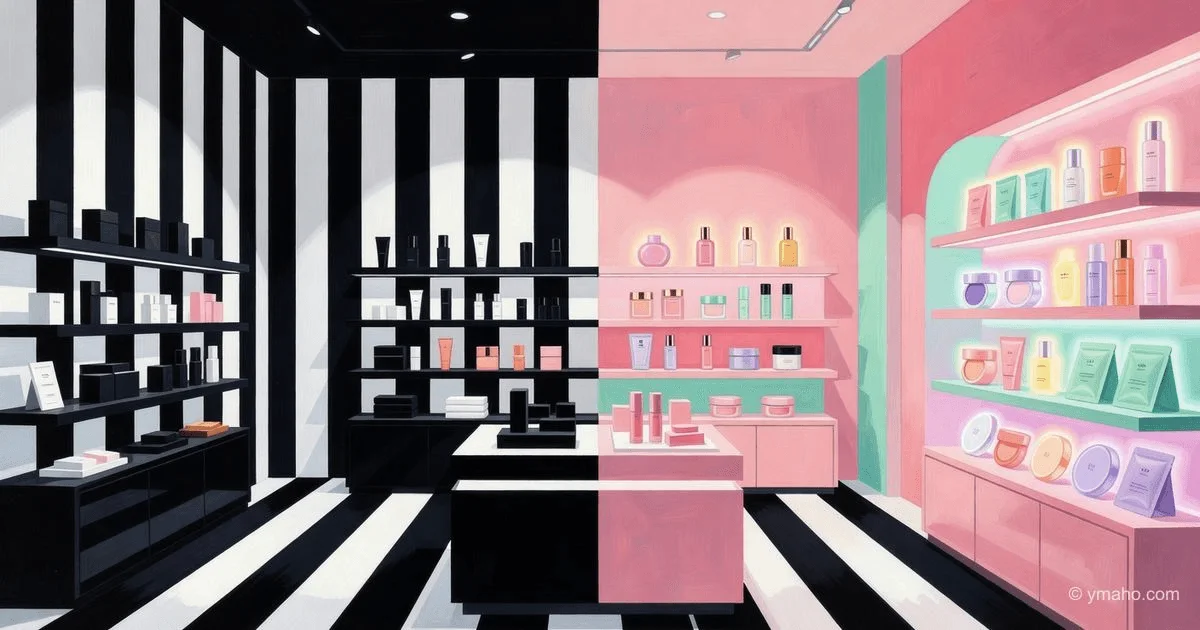
Sephora Debuts Dedicated K-Beauty Zones: 400 Olive Young Products Head to US Shelves
Sephora is teaming up with Olive Young to roll out specialized K-Beauty zones in stores. The rollout begins in Los Angeles in May, then spreads across the US, Canada, and Asia, signaling the global push of Korean cosmetics.
Sephora Waves the White Flag: Why Importing Korean Retail Marks the End of Western Beauty Dominance
You might assume Sephora is simply broadening its lineup—another "Korean shelf," another trend. Just another bid to cash in on the K-Beauty hype. That would be a serious misread.
What actually happened on January 21, 2026, when Sephora and Olive Young formally announced their partnership, is surrender. Surrender of the Western beauty-retail model to its Asian counterpart. Sephora is not merely stocking more Korean brands. It is importing Olive Young’s entire system—the curation process, the rapid assortment turnover, the "trend discovery" philosophy. And it is doing so exactly two years after shamefully exiting Korea, unable to compete with Olive Young on its home turf.
This is not a deal between equals. Sephora is admitting its own model is obsolete for Gen Z and buying a license to sell beauty the Asian way.
[The Reality]: What Is Actually Happening
What is really occurring is a transfer of "taste ownership" in global beauty retail. Sephora used to be the gatekeeper: it decided which brands went global and which trends became mainstream. "Sephora approved" carried more weight than any award. Now Sephora is handing that role to Olive Young.
The numbers tell the story. While Sephora plans to open 200 new stores in 2026, Olive Young just debuted its first US flagship in Pasadena with 5,000 products and has already announced East Coast expansion. The real gap is speed. Olive Young refreshes its assortment every two to three weeks. Sephora manages it once a quarter, if at all. In a world where trends are born and die on TikTok within 72 hours, Sephora simply cannot keep up. It is becoming a museum of beauty rather than its vanguard.
The collaboration launches in fall 2026 in the US, Canada, Hong Kong, and Southeast Asia, followed by the Middle East, UK, and Australia in 2027. Four hundred brands hand-picked by Olive Young will appear on Sephora shelves and online. The key point is not the 400 brands themselves—it is that they have passed the "Korean filter." Sephora is effectively conceding that its own buyers no longer know what will go viral.
The non-obvious insight: Sephora is paying Olive Young not for product, but for the algorithm. Olive Young has sales data from 1,400 Korean stores and consumption patterns from millions of K-Pop idols and their fans. They can predict which ingredient will break out in three months because they see it in their data. Sephora is buying access to that prediction engine. The price is ceding control of its own shelves.
Timeline and Context
Years of developments led to this inevitable moment.
2010: Sephora becomes the first Western retailer to carry K-Beauty brands. At the time it was an exotic niche.
2019: Sephora enters the South Korean market with stores in Seoul. Confidence is sky-high.
2024: Sephora shutters all its Korean stores. A total failure. It could not compete with Olive Young, which by then operated more than 1,300 stores and held total cultural dominance. The exit was humiliating.
2025: Korean cosmetics exports hit a record $11.4 billion, with the US overtaking China as the largest K-Beauty market. Americans spend $2.4 billion annually on Korean cosmetics, up 48% year-over-year.
January 2026: Sephora and Olive Young announce their partnership. Sephora imports its own replacement.
May 2026 (last week): Olive Young opens its first US store in Pasadena, California. CJ Group Chairman Lee Jae-hyun personally oversees the launch, stating: "This is the first step into the world’s largest market and the start of broader global expansion." The store stocks 5,000 items, including Korean pharma-derma brands such as Easydew from Daewoong Pharmaceutical and Centellian24 from Dongkook Pharmaceutical.
Fall 2026 (coming months): The first Olive Young zones appear inside Sephora.
Winners and Losers
Winners:
- Small and mid-sized Korean brands. The Sephora–Olive Young partnership offers them a global launchpad. Previously, landing on Sephora shelves required a US office, distributor contracts, and multimillion-dollar marketing budgets. Olive Young now acts as aggregator, taking on the risk and curation while Sephora supplies the shelf space. The barrier to entry drops sharply.
- Olive Young. It gains access to Sephora’s 3,400 stores in 35 countries. This is exponentially faster than opening its own locations worldwide. Olive Young becomes the global "brain" of beauty retail, leaving Sephora the role of "muscle" (logistics and physical stores).
- The consumer. Shoppers gain access to products previously available only on YesStyle or Olive Young Global with three-week shipping. Now they will be available at the mall around the corner.
Losers:
- Ulta Beauty. Ulta is also expanding K-Beauty through its marketplace program. But it now faces a problem: Sephora has secured exclusive access to Olive Young’s trend-generation engine. Ulta will be left selling what is already popular, while Sephora sells what will become popular next month. That difference is critical.
- Western indie brands. Shelf space at Sephora has always been scarce. Now 400 Korean brands (and counting) will occupy physical space and marketing budgets. Western startups will find it even harder to break through—K-Beauty is pushing them off the main stage.
- Amazon and TikTok Shop (as K-Beauty channels). Previously, if you wanted Anua or Torriden you went to Amazon. Now the premium K-Beauty experience—testers, consultations, atmosphere—will live inside Sephora. Amazon will remain for discounted jars, but the emotion and brand discovery move to the Sephora–Olive Young offline partnership.
What the Media Is Not Saying
Media coverage talks about "cultural convergence" and "the victory of Korean cosmetics." It glosses over three sharp edges.
First, conflict of interest and cannibalization. Olive Young just opened its own store in Pasadena. It will sell the exact same brands a 15-minute drive from Sephora in Los Angeles. Olive Young is simultaneously a "content supplier" to Sephora and its direct competitor in the US. The partnership is a powder keg. Sooner or later the two will compete for prime mall locations and exclusive launches. Sephora has essentially raised a rival that will now steal its traffic.
Second, US regulatory standards. Press releases omit that many Korean products do not meet American requirements. This is especially true for sunscreens. Korea uses the latest UV filters that the FDA has still not approved. To reach Sephora shelves, many Korean brands must reformulate to weaker US versions. Will Olive Young offer Sephora "watered-down" versions of its hits? Or will it teach Americans to order the originals online (where Olive Young has already launched a US site)? This creates a complicated sales funnel that customers will not understand.
Third, speed versus scale. Olive Young refreshes its assortment every two to three weeks. Sephora is a global corporation owned by LVMH. Its supply chains, distributor contracts, and visual merchandising standards are not built for bi-weekly updates. Either Sephora overhauls its entire operating model (hundreds of millions of dollars and years of work) or the K-zones will look stale and dull compared with real Olive Young stores in Korea and even Pasadena. "Trend velocity" is what destroys large corporations.
Outlook: Next 30 Days and 90 Days
Next 30 days (July 2026):
Sephora will begin pilot testing in its top 20 Los Angeles and New York stores. It will not wait for the official fall launch—it must respond quickly to Olive Young’s Pasadena opening. These pilot zones will feature only the 50–100 loudest Korean brands (Anua, Round Lab, Torriden, Mediheal). July’s goal is not sales but data collection: how American shoppers interact with the Korean format (testers, consultations).
Expect Ulta Beauty to announce an "accelerated" K-Beauty push in response. It will likely offer exclusive contracts to brands still outside the Olive Young pool. A battle for Korean brands between the two retail giants is about to begin.
Next 90 days (Fall 2026):
Official partnership launch. Sephora will open "Olive Young Zones" in roughly 700 stores worldwide. LVMH will pour serious marketing dollars into the collaboration—expect campaigns featuring Korean influencers and Western celebrities. This will be the largest K-Beauty launch in history.
But friction will start within 90 days. Sephora management will realize that standard six-month brand contracts are incompatible with Olive Young’s two-week refresh cycle. An internal crisis will erupt: the buying team (used to stability) versus the marketing team (demanding speed). By the end of 2026 it will be clear that Sephora’s "Korean dream" is colliding with corporate bureaucracy.
Final forecast: Sephora paid for access to the machine but does not know how to drive it. Olive Young, meanwhile, is using the partnership as a marketing campaign for its own US stores. "You can try these 400 brands at Sephora, but the full 5,000-item assortment is only at our Pasadena location and on our site." By 2027 Olive Young will open 10–15 stores on the West Coast and no longer need Sephora. Sephora will be left dependent on a crutch that has learned to walk on its own.
— Editorial Team