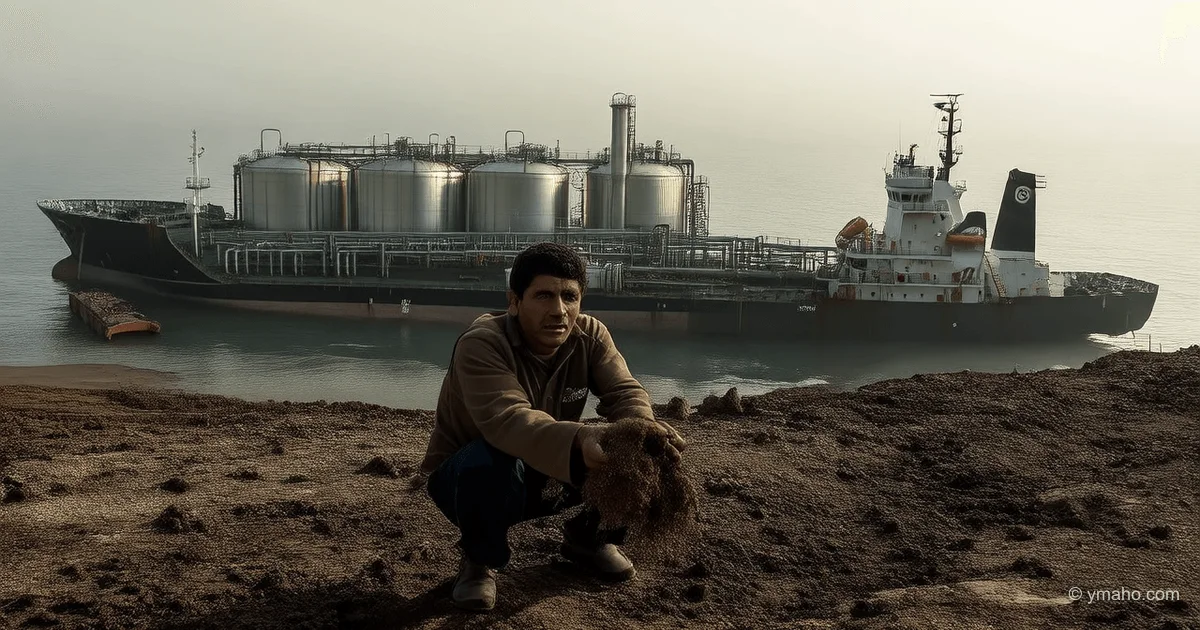
Analysts Warn: Global Sulfuric Acid Shortage Worsens Due to Strait of Hormuz Blockade
Global supplies of sulfuric acid, essential for fertilizer production and metallurgy, are under threat due to the conflict in the Middle East. A significant portion of sulfur comes from Persian Gulf refineries, whose routes are blocked. The situation is exacerbated by China's decision to limit exports.
Sulfuric acid is perhaps the most underestimated strategic commodity in the world. While everyone watches the Brent barrel and the ounce of gold, it is the collapse of the H₂SO₄ market that triggers a chain reaction that will hit the global economy harder than the Hormuz blockade itself. What began as a logistical glitch has escalated into a full-scale cross-industry crisis, and, as often happens, the devil is not in the headlines but in the treacherous details of physical chemistry.
The Essence: What's Really Happening
Formally, we have a collapse in sulfur supplies from the Persian Gulf. The Gulf, a giant petrochemical cluster, pumped sulfur onto the world market as a byproduct of crude oil and gas refining. Sulfur was essentially waste that oil companies were happy to get rid of, and global producers paid pennies for it. The volume of seaborne sulfur shipments from the Gulf in the first quarter plummeted by 36%, and specifically in March, exports fell by 66% compared to February.
But the real essence of the crisis runs deeper: the market is facing a perfect storm of three devastating waves. First, the physical blockade of sulfur tankers due to the war. Insurance premiums have soared to 10% of the vessel's value, making the voyage suicidal. Second, and this is my key insight: China, the world's largest producer of sulfuric acid, completely halted its exports in May. Beijing fears not so much the attack as a domestic fertilizer shortage before the planting season. Third, Turkey imposed a ban on sulfur exports back in April, and Russia extended its embargo until the end of June. This domino effect means that a shortage is forming at every stage—raw material, intermediate, and final product.
Timeline and Context
- February 28: Strikes on Iran begin. Traffic in the Strait of Hormuz is paralyzed. Seaborne sulfur shipments stop instantly.
- March: Sulfur exports from the Gulf fall by 66%. The market survives on warehouse stocks.
- Early April: FAO sounds the alarm: the phosphate fertilizer market is at risk, as the Gulf provided half of the world's sulfur exports.
- April 7: Turkey becomes the first to impose a ban on sulfur exports.
- Late April: China introduces strict quotas; from May, acid exports drop to zero.
- May 9-11: Panic in the metals market. According to my data from industry terminals, prices for sulfuric acid delivered to Chile have surged from pre-war $130 to $380 per ton, and on the spot market they have already exceeded $480.
Who Wins and Who Loses
Losers:
- Global Farmers. FAO states outright: if the blockade lasts more than 3 months, global planting decisions for 2026 will be disrupted. Prices for urea and phosphates have already jumped by 20-28%, and reduced fertilizer application will lead to a disproportionately large drop in yields in Asia and Africa.
- Chilean Copper. This is my favorite case. Chile imports about 150,000 tons of acid from China annually (37% of its imports), and this flow has stopped. Since ore in Chile is old and low-grade, producing a ton of copper requires nearly 6 tons of acid. The acid shortage creates a monthly gap of 12,500 tons, and if China's ban lasts 6 months, the world will lose up to 70,000 tons of copper.
- Indonesian Nickel. Rising sulfur prices have already added about $4,000 to the cost of each ton of nickel, making some projects in Sulawesi unprofitable.
Winners:
- Physical Sulfur Traders. Those with stocks in Rotterdam or Abidjan ports are now selling with a margin of 300% or more.
- American Fertilizer Producers. With access to cheap gas and their own sulfur sources, they are capturing markets previously served by the Middle East.
- African Pyrite Roasting Projects. In the short term, replacing Gulf sulfur is impossible, but in the long run, projects to produce acid from pyrite will get a chance for investment.
What the Media Isn't Saying
Mainstream media scream about chip shortages but remain silent about uranium shortages. And this is the most dangerous aspect of the crisis. Extracting uranium via in-situ leaching (which accounts for almost all Kazakh and part of African uranium) requires huge amounts of sulfuric acid. Rosatom is already recording a growing shortage of the reagent. The shutdown of uranium mines due to acid shortages won't hit the economy tomorrow, but it will plant a time bomb under global nuclear energy for 2027-2028, when current fuel contracts cannot be fulfilled. This is the "silent bomb" that the market is ignoring amid the oil panic.
Forecast: The Next 30 Days and 90 Days
Next 30 Days (until June 11, 2026):
We will see a cascade of shutdowns at African copper smelters in Congo and Zambia, which depended on Middle Eastern sulfur for 48% of their supply. The price of acid at Chilean ports will break the $500 per ton mark. Chinese traders will start illegally exporting acid disguised as other chemicals, but this will cover no more than 5-7% of the deficit. The copper market on the LME will begin to rise toward $14,000 per ton once exchange stocks fall below the critical level of 3 days of consumption.
Next 90 Days (until mid-August 2026):
The "moment of truth" for food will arrive. If navigation in the Strait of Hormuz cannot be resumed by August, the autumn harvest in South Asia and the rice season in Bangladesh will be at risk of failure due to a total lack of fertilizers. We will face food inflation that will even surpass energy inflation. In the metals market, a split will occur: major players that have stockpiled acid (like Codelco) will survive, while small projects with high acid consumption in Chile and Congo will shut down completely, physically creating a copper concentrate deficit of 5-7% of global supply. In this scenario, the price of gold will settle above $5,000 per ounce, as central banks begin shifting from the dollar to real assets amid the collapse of commodity chains.
— Editorial Team









