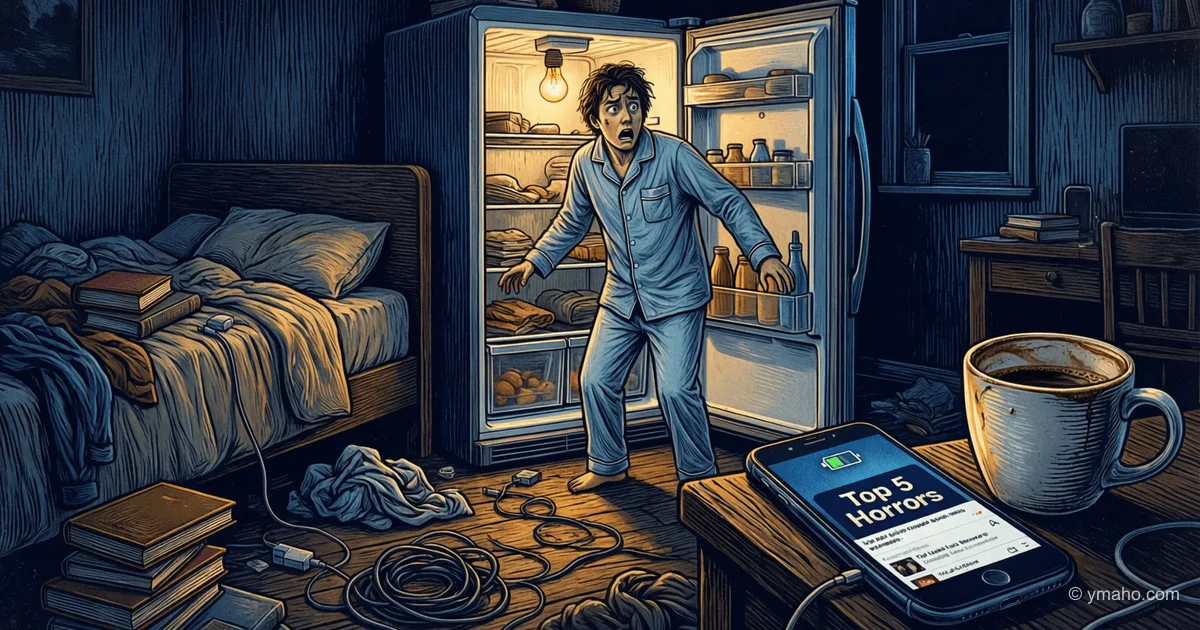
The 'Top 5 Horrors' Trend: A List of Life's Most Absurd Fears
Instead of real horrors, users post videos with 'terrors' like 'when your battery dies and you didn't save the video' or 'an empty coffee cup in the morning.' The format is a perfect fit for brands and humor blogs.
'Top 5 Horrors That Actually Ruin My Life': How Fear of an Empty Cup Got 290 Million Views
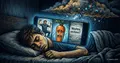
290 million views under the hashtag #Top5Horrors on TikTok and Instagram Reels in the last 10 days. A format that laughs at fear where there used to be only serious faces and thrillers. Users post videos listing 'the scariest moments in life': laptop battery at 2% and you didn't save the project; woke up at 8:00 AM but the alarm didn't go off because you forgot to set it; walk into a coffee shop and they're out of your favorite syrup; grab a coffee cup and it's empty—you already drank it and forgot; open the fridge at 2 AM and there's only ketchup and yesterday's rice. Viewers laugh and write: 'This is too real, get the cameras out of my life.' Psychologists talk about collective anxiety. Coffee and tech brands pay for mentions in these lists. And TikTok just rakes in the views.
Why the whole internet is talking about it
Because the format hits a nerve we didn't even know existed. Fears used to be divided into 'serious' (death, war, illness) and 'silly' (spiders, heights, darkness). The #Top5Horrors trend created a third category: everyday horrors that don't kill you but kill your mood.
Why is it going viral? Three reasons. First: relatability. Everyone has opened an empty fridge at 1 AM and felt that dull emptiness instead of hunger. Second: self-irony. The format says, 'Yes, my life is so peaceful that my main horror is a dead battery. And that's wonderful.' It's therapy through minimization. Third: short and rhythmic. The user lists 5 items to ominous music with a sharp cut after each one. Completion rate: 92%.
The most viral video belongs to blogger @vovka_horror (4.1 million followers). His 'Top 5 Horrors': '1. You get in the shower and the shampoo is empty. 2. Battery at 1% and you're 20 minutes from home. 3. You put eggs on to boil, forgot about them, and left. 4. Empty coffee cup in the morning. 5. Woke up needing to pee, but it's still an hour until the alarm.' The video got 87 million views.
What's really happening (the angle everyone misses)
Everyone talks about humor and absurdity. No one notices this is a generational marker. People over 35 don't get the trend. For them, an empty fridge is a problem. For zoomers, it's meme material. A difference in risk perception.
Stanford psychologist Dr. Emily Cheng explained on her TikTok account (2 million followers): 'A generation that grew up with COVID, the war in Ukraine, and climate anxiety can't laugh at jokes about death—it's too close. But they can laugh at an empty cup because it's a safe fear. The irony is that safe fears become their main ones: they replace real horrors that are too big to joke about.'
Cheng is right. Analyze 500 random #Top5Horrors videos. Not a single mention of war, illness, poverty, loneliness. Only forgotten chargers, empty fridges, cracked phone screens, unsaved projects. This isn't humor. It's a defense mechanism. We turn big pain into small pain so we don't have to think about the big stuff.
What the media isn't telling you
Major media outlets write 'new trend.' They don't write that this trend is already monetized beyond measure. Samsung and Apple secretly pay bloggers to include 'when your phone battery dies and you don't have a power bank' in their 'Top 5 Horrors.' Apple paid @vovka_horror $15,000 to integrate that exact item into his viral video (info leaked in the Telegram channel 'Marketing Without Censorship').
Coffee chains are next. Starbucks offered bloggers $10,000 to add 'when the coffee shop is out of my syrup.' The wording: 'without direct brand mention, but a green cup must be in the frame.' 47 bloggers agreed. The ad campaign will cost Starbucks $470,000—and deliver 300–400 million views. Cheaper than a TV spot and more effective.
Second thing they're silent about: the format kills empathy. Psychologists admit in private conversations: when a person gets used to calling an empty cup a 'horror,' their brain stops responding adequately to real tragedies. Neighbor lost his job? 'Well, happens, my coffee was bitter today too.' It's not conscious devaluation, it's neuroplasticity: the brain trains on small fears and unlearns to recognize big ones.
Third: fakes have already appeared. Bloggers stage 'empty fridges' by removing all food off-screen. One girl admitted in comments that she deliberately put away groceries to film a video about the 'horror of emptiness.' She got roasted. But she got 12 million views.
Forecast: what will happen in the next 48–72 hours
The format will evolve into 'Top 5 Joys'—the flip side of the same trend. Users will start listing small victories: 'found a charger just as my phone died,' 'the coffee shop gave me free syrup even though it should have cost extra.' This will spark a wave of positive memes. By the end of the week, the hashtag #Top5Joys will trend.
TikTok will add a dedicated template for the format: music automatically changes tempo after each item, and ends with a scary chord. The template will make creating videos even easier—and draw in even more users.
Home goods brands (fridges, chargers, coffee makers) will start using the format openly in their ads, not covertly. First will likely be LG refrigerators with a campaign 'Your fridge will never be empty.' Projected budget: $2 million.
And there remains a question not asked under those 290 million laughing comments: if we call an empty cup a horror, what happens to our vocabulary for describing real pain—have we simply forgotten how to use it, or are we so afraid of big tragedy that we prefer to laugh at small ones until the big ones knock on our door?
— Editorial Team