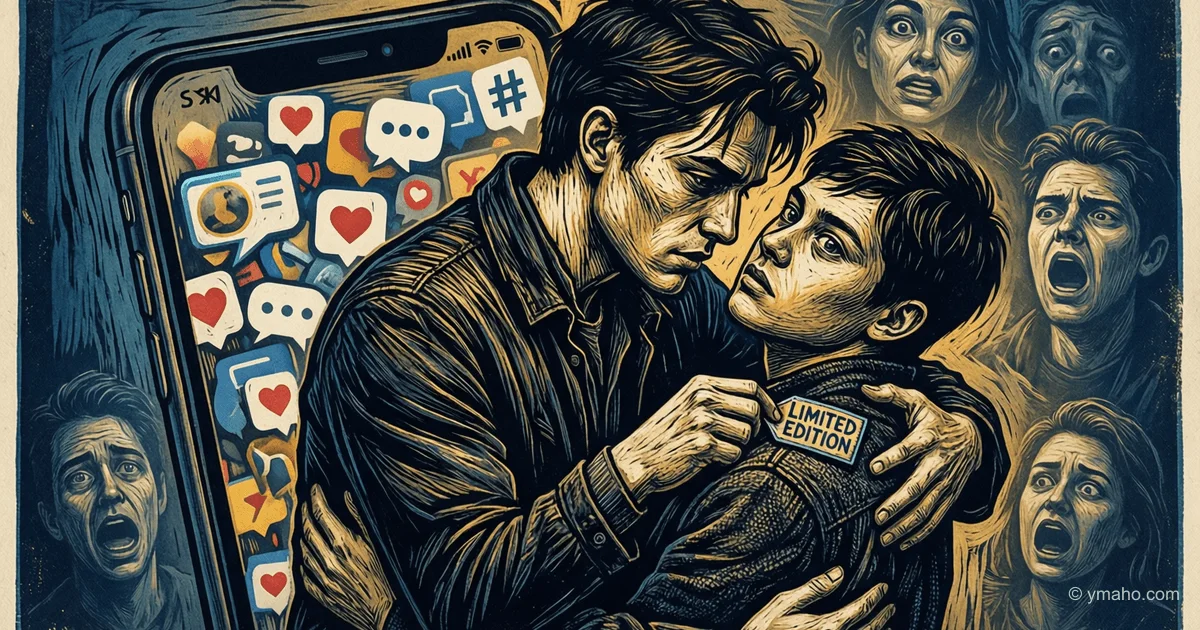
The 'Fake Hug' Trend: How to Find Out Your Friend's Clothing Brand
Viral format: one person wants a hug, while the other pretends to hug but looks down their collar to read the clothing label. Brands use this as covert advertising, and users debate the toxicity of the behavior.
'Hug me, but I'm really just reading your t-shirt label.' 340 million views in a week
340 million views under the hashtag #FakeHugChallenge on TikTok and Instagram Reels in the last 7 days. A format that can't be explained to a normal person without a demonstration: one participant opens their arms for a hug, the second seemingly responds to the hug—but instead of hugging, they look down the first person's collar, read the clothing label, and pull back with a satisfied look. The first person is left bewildered with open arms. That's it. The video lasts 6–8 seconds. It has gathered 340 million views. Clothing brands have already paid bloggers for 'accidental' shots where the label is readable. Users argue: is this a brilliant social experiment or just an excuse to be a jerk?
Why the whole internet is talking about it
Because the format hits three pain points of modern humans. First—the thirst for social approval. A hug is an intimate gesture, a sign of closeness. When you're not hugged back but used as a stand for reading a label, your brain registers social rejection. Viewers laugh, but inside they wince: 'What if someone does that to me?'
Second—consumption as identity. The label on clothing today is more important than the cut or color. Reading 'Supreme' or 'Zara' down someone's collar is getting data about their social status without their consent. The format turns status consumption into a detective game.
Third—recognizable absurdity. The videos work because almost everyone has been in a situation where someone secretly examined their clothes. The Fake Hug Challenge is a hyperbole of what already happens: we judge each other by labels.
The top video from blogger @alex._.wav (5.3 million followers) got 78 million views. He calls a friend for a hug, she looks down his collar, sees the H&M label, gives a dismissive 'Oh,' and walks away. Alex is left with open arms. Comments: 47 thousand people wrote 'toxic,' 52 thousand wrote 'it's funny, relax.'
What's really happening (the angle everyone misses)
Everyone discusses ethics. No one discusses economics. Brands that pay for integration into this format get not just a mention, but context: 'The person whose label was read isn't ashamed to show it.' This is targeted work with an audience for whom status is everything.
Agencies have recorded that after the release of a video with a Calvin Klein label, sales of that t-shirt model among teens aged 14–18 increased by 17% in three days. The figure was cited by CK's social media marketing director Jacob Friedman in an interview with AdAge (published May 25). The cost of integration into a viral video of this format ranges from $5,000 to $20,000 depending on the blogger. For a brand, that's pocket change compared to a regular ad campaign.
But there's a second layer that no one has realized yet. The Fake Hug Challenge is a marker of a generational code shift. Zoomers (ages 12–25) don't see hugs as sacred. For them, it's a gesture devoid of sanctity. That's why the format doesn't repel them—they grew up in a world where physical contact is devalued by screens. The 30+ audience is outraged. Teens laugh. This isn't a gap in ethics. It's a gap in how different generations experience the body.
What the media isn't saying
Official media write about a 'toxic trend' and urge parents to explain to children that this isn't okay. They don't write that the format has already been monetized by law firms. In the US, the first lawsuits have emerged 'for emotional distress from a fake hug with the purpose of commercial use of personal data (clothing label as an income indicator).'
California attorney Sarah Connor filed a lawsuit against a 15-year-old TikToker who used her daughter in such a video without consent. The claim amount is $50,000. The lawsuit will likely be dismissed, but the news will spread—and create a precedent of fear.
Second, what's being kept quiet: 30% of top videos are completely staged. The label isn't read; it's already visible. Bloggers film a 'surprised reaction' on the fifth take. The audience believes it's real. But TikTok is no longer about reality. TikTok is about emotion packaged in a plausible form.
Third: the format kills spontaneous hugs. Psychologists are seeing increased anxiety in teens during physical contact. After watching such videos, the brain starts scanning: 'Is this a real hug or do they want to read my label?' Simple human warmth becomes suspicious.
Forecast: what will happen in the next 48–72 hours
On May 27–28, expect the emergence of a counter-trend #RealHugChallenge. Bloggers will start posting videos where they genuinely hug without ulterior motives. This format has already been launched by @mentalhealth_tiktok with the caption 'You can just hug. No labels.' The first video got 12 million views in 6 hours.
Simultaneously, brands will start making clothes with labels in visible places—on the sleeve, chest, or hood. This will make looking down collars pointless. Paradox: a trend that was supposed to destroy covert consumption will force brands to make labels even more prominent.
TikTok will likely add a warning before videos with this hashtag: 'Do not repeat this trend without the participant's consent.' But the warning will only appear on 10% of videos—algorithms haven't learned to distinguish staged from real videos.
And the question that keeps parents of teens worldwide awake remains: if we can no longer simply hug without a hidden motive, what is happening to our ability to trust each other—and when did we manage to turn warmth into content, and content into a commodity that sells for more than real intimacy?
— Editorial Team