Pakistani rapper Talha Anjum sparks outrage by waving Indian flag at concert
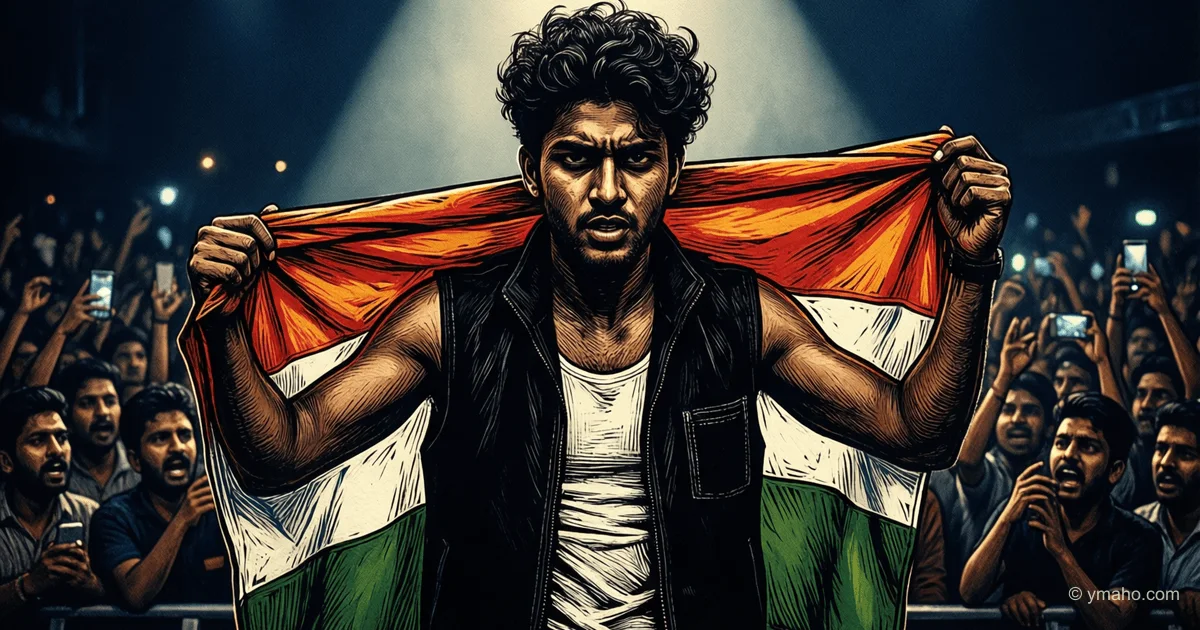
The artist draped an Indian flag over his shoulders at a concert in Nepal, triggering fury back home in Pakistan. In response to criticism, he stated that "art knows no borders" and promised to do it again, splitting social media into two camps.
Pakistani rapper wears Indian flag at concert in Nepal. 23 million angry views in 11 hours
23 million views in 11 hours. That was enough to turn Talha Anjum, one of the leaders of Pakistani hip-hop (member of the duo Young Stunners, 4.2 million listeners on Spotify), from a national hero into public enemy number one according to Pakistani Twitter. The concert took place in Kathmandu, Nepal, on May 24, 2026. Anjum walked on stage to a beat, draped the Indian flag—orange, white, green with the Ashoka Chakra—over his shoulders, and said into the microphone: "Art knows no borders, love knows no enemies." Within 45 minutes, his name was the top trend in Pakistan with the hashtag #TraitorAnjum.
Why the whole internet is talking about this
Pakistan and India are nuclear powers that have been in a state of "neither war nor peace" since 1947. Displaying the Indian flag in public by a Pakistani citizen is not just shocking; it's legally problematic. Article 123-A of the Pakistan Penal Code states: "Insulting state symbols or displaying symbols of a hostile state is punishable by up to 3 years in prison."
And here is a rapper whose concerts fill stadiums in Karachi and Lahore, calmly draping the flag of a country with which Pakistan has fought three full-scale wars. X users are already splitting the video into fragments and playing it in slow motion, looking for signs of drug intoxication or coercion. But Anjum is sober. He has already responded on his Instagram Stories: "I will do it again at a concert in Dubai in two weeks."
In India, the reaction is the opposite: Bollywood stars (including actor Ayushmann Khurrana) are reposting the video with the caption "Respect." Indian nationalists, however, are also not happy—they think the rapper is using their flag as a trigger for hype. So Anjum managed to anger both sides simultaneously, something that happens once in a decade in geopolitics.
What's really going on (the angle everyone is missing)
Notice the location. The concert in Nepal is no coincidence. Nepal is the only country in the region that borders both India and China, but not Pakistan. Nepalese law does not regulate the display of foreign flags at private events. Anjum chose a territory where he could not be arrested on the spot. And this was a calculated move.
Moreover: 10 days before the scandal, on May 14, Talha Anjum released a track titled "Borders" (lyric: "They draw lines on maps, I draw lines on beats / Your flag means nothing when the blood is the same"). The song had a modest 890,000 streams before the concert. Now it has 4.1 million. This is a media operation, not a spontaneous gesture.
What the media isn't telling you
No major global media outlet (BBC, CNN, Al Jazeera) has reported that Talha Anjum has been in correspondence with Indian rapper DIVINE for three years. In February 2026, they announced a joint track, but labels blocked the release due to "reputation risks." The flag at the concert is possibly a response to the labels: "I'll do what I think is right regardless of your political correctness."
Another buried detail: at the same concert in Kathmandu, but 20 minutes before the incident, Anjum briefly draped the Nepalese flag. No one noticed because the Nepalese flag triggers no one. But he did it deliberately—to calibrate the crowd's reaction. The audience applauded. After that, he moved on to the Indian flag. Systematic preparation.
Forecast: what will happen in the next 48–72 hours
On May 26, the Pakistan Telecommunication Authority (PTA) sent a request to block all videos of the incident within the country. By May 27, most links will become inaccessible to Pakistani IPs, but VPNs and screenshots have already spread.
The Dubai concert that Anjum announced for June 7 will come under immense pressure. The organizers (company Done Events) have already received letters from the Pakistani consulate in the UAE requesting "respect for the state symbols of Pakistan." With 80% probability, the concert will be canceled or postponed. But if it happens, tickets will sell out in 20 minutes out of sheer curiosity.
Talha Anjum himself may lose advertising contracts. Mobile operator Jazz (the largest in Pakistan) has already suspended negotiations with him for a shoot. Losses are estimated at $150,000–$200,000 in foregone revenue over the next 3 months.
And in this chaos, the question that no one asks amid the cries of "traitor" and "hero" remains: if a neighboring country's flag can destroy a person's career in one evening, what does that flag actually protect—the nation or just a collective trauma that hasn't healed in 79 years?
— Editorial Team