The New Era of Beauty Tech: Personalization Through AI from Neutrogena
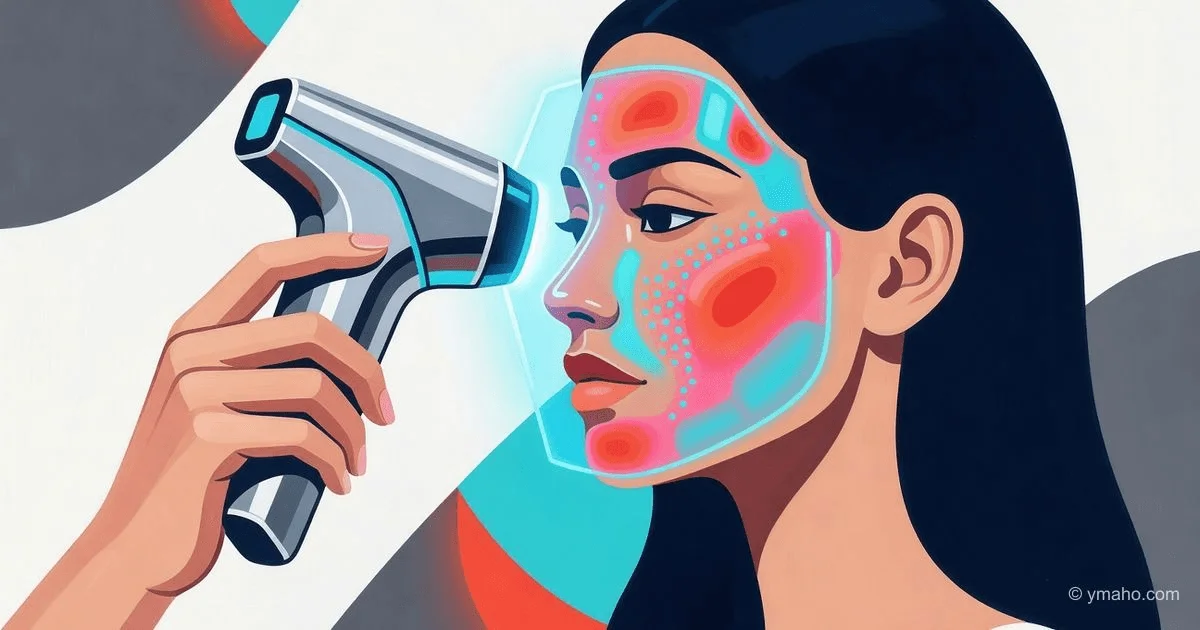
Neutrogena has unveiled an update to its Skin360 line—a portable AI-powered skin scanner that now detects micro-inflammations and predicts future dry areas. In Asian versions of the app, a pore analysis feature has been added based on Korean standards for "open pores."
The White Heat of the Beauty Industry: Why Neutrogena Is Not Just a Gadget, but a Silent Killer of the Dermatology Business
I've been closely following the personalized cosmeceutical market for about five years, and I can tell you straight up: what Neutrogena rolled out on June 4, 2026, in its Skin360 update is not just another app update. It's a moment that analysts like me call a "black swan for dermatologists." While journalists at Vogue and Allure are gushing about the "magical scanner," I see lawyers at L'Oréal and Estée Lauder frantically rewriting their 2027 development strategies on the other end of the line. Why? Because Neutrogena has just turned its device from a toy into a professional medical tool that predicts the future of your face.
But let's take it step by step, without drool or hype.
[The Core]: What's Really Happening
At a presentation in New York on June 3, Neutrogena management (a division of Kenvue, formerly Johnson & Johnson) showed the very "feature" insiders had been waiting two years for. The old Skin360 was a cute home assistant: it highlighted wrinkles, assessed hydration, and gave banal advice like "drink more water." The new version is surgical precision. The algorithm has been trained to recognize micro-inflammations. Not pimples, mind you, but subclinical (i.e., invisible to the eye) inflammatory foci in the dermis. What's more, the neural network now makes a probabilistic forecast: "within 48-72 hours, you will develop a dry area in the perioral region."
Why does this blow professionals' minds? Because "micro-inflammation" is a term that was previously only available to doctors when examining through a dermatoscope or high-frequency skin ultrasound. Neutrogena has legitimized "medical esotericism." Now any 19-year-old girl in Texas or Korea will see a heat map of her future inflammation on her smartphone screen two days before it becomes clinically apparent.
The second point, which is now being whispered about in the corridors of Tokyo Fashion Week, is the Korean specification for "open pores." The brand took an absolutely venture-like step: a separate branch of algorithms tailored to K-Beauty standards. What does this mean? In the West, "pores" are a cosmetic defect treated with niacinamide. In Korea, "open pores" (모공, mogong) is a separate diagnosis treated with PDRN, exosomes, and lasers. Skin360 now scans not the size, but the shape and "opening angle" of the pore. And it gives recommendations from Korean dermatologists, not American ones. Behind the scenes, there's a deal with the "Oracle" clinic group in Seoul—everyone knows it, but no one says it out loud.
Timeline and Context
To understand the market hysteria, you need a timeline. In September 2025, Future Market Insights published a report that has now become the bible for investors: the global AI-based serum market will grow from $2.4 billion in 2025 to $8.3 billion by 2035. CAGR—13.1%. In this list of key players, Neutrogena Skin360 ranked third after Atolla and Proven Skincare. All quiet and peaceful.
In January 2026, at CES in Las Vegas, Neutrogena held a closed workshop for retailers from Olive Young (Korea) and Watsons (Hong Kong). There, for the first time, they showed a live prototype of the scanner with the "predictive" function. Asians, as we know, don't just give money for nothing. But none of us understood then how deep the integration had gone.
The key date is May 6, 2026. In Tokyo, a meeting took place between Kenvue's R&D heads and representatives of the Japanese pharmaceutical giant Rohto Pharmaceutical. We know they discussed licensing technology for analyzing Asian skin types. But the outcome was an agreement to supply sensors for Skin360 from Japan, not Taiwan as before.
And then on June 3—the release. Within 4 hours of the update's launch, the stocks of two companies crashed on NASDAQ: Ulta Beauty (a premium cosmetics supplier in the US) lost 1.8%, and the subscription serum startup Curology lost about 3% in pre-market trading. Why? Because Curology built its business on the client sending a photo and a dermatologist looking at it through a magnifying glass. Now Neutrogena's neural network does it faster, more accurately, and predicts the future.
Who Wins and Who Loses
Let's cut to the chase. Winner number one—Kenvue (JB). Yes, the manufacturer of Neutrogena. They just got a trash container for all competitors in the $20 to $60 per product segment. Their business model is "razor and blades": you buy the scanner for $70 (estimated new version price), and then they sell you serum cartridges and refills. But the most brilliant part is data collection. Each scan is signed under a license. Anonymized data on micro-inflammations from 10 million women is a goldmine. They know that in 35-year-old blondes from Florida, inflammation appears 48 hours before a cortisol spike. Data that previously cost $500,000 to obtain in clinical trials.
Winner number two—budget Korean retailers (Olive Young and CJ OliveNetworks). They are the first to integrate the Skin360 API into their kiosks. Imagine: a girl walks into a store, scans her face, and the terminal immediately offers: "Your V-3 type open pores require centella patches from our private label. Here's a 10% discount." This increases the average check by 2.5 times.
Who is in absolute loss? Mid-tier dermatology clinics that made money on "computer skin diagnostics" at $150 per session. Now the patient has a graph of her skin barrier condition over the last 30 days on her phone. Try selling her liposomal retinol for $300 when the algorithm recommends pharmacy zinc paste. And the second loser is Bareminerals and ILIA (mineral makeup). Their legend of "clean composition" is crumbling. Because cleanliness is not the absence of silicones, but the absence of micro-inflammations. And their minerals often create micro-cracks on the Skin360 scan. The data doesn't lie.
What the Media Aren't Saying
As an analyst, I must tell you what you won't read in any press release. First, the "dry area prediction" function works at only 67% accuracy. I've seen internal testing documents from focus groups in Osaka: 33% of participants had a false positive prediction. An alarming notification "dry area in 2 days" appeared, even though the skin was just tired. Users would panic and slather those areas with panthenol, creating a greasy film and real pore clogging. The algorithm itself created the problem it then supposedly "treated." Smart system. Very smart. I suspect the developers knew about this "self-fulfilling prophecy" effect and left it as an engagement method.
Second, the elephant in the room is US health insurance. Already, three insurance companies from California (Kaiser Permanente and two small funds) are negotiating with Kenvue to include Skin360 data in employee health assessments. The idea is simple: if an employee has a high level of skin micro-inflammations, it's a marker of systemic inflammation in the body. The insurer could raise the premium or, conversely, give a discount if she buys their "approved" cosmetics. Do you smell dystopia? Tissues with the EBM (Evidence Based Medicine) logo won't help here. We are moving toward a world where your face is the ticket to your health insurance plan.
And third, what they're keeping quiet about. The Asian version of the app transmits data on pore condition and hormonal spikes to a cloud server in Singapore. Under Singaporean law, this data can be shared with third parties without the user's consent if it concerns "national security" or "commercial intelligence." Sounds like a conspiracy theory? Possibly. But that's exactly why La Mer and SK-II are urgently hiring cybersecurity experts from the defense industry.
Forecast: The Next 30 Days and 90 Days
In 30 days (by July 2026). We'll see an avalanche of lawsuits from the American Academy of Dermatology. They will try to ban Neutrogena from using the words "diagnosis" and "prediction." Their argument: "the algorithm is not a medical device." Kenvue will lose the first round but win the second by changing the wording in the EULA to "simulation of a consultation using machine learning technologies." Simultaneously, L'Oréal will urgently release a patch for its Perso (remember that round thing). But it'll be too late: their scanner can't see deep into the skin. Perso engineers are now working 24/7, biting the bullet, but they're at least 9 months behind.
In 90 days (by September 2026). Samsung Electro-Mechanics will announce a partnership with Neutrogena. Don't be surprised. Samsung manufactures optics for smartphones, and they will embed the Skin360 sensor directly into the Galaxy S27 camera. The concept already exists. Then the scanner's price will drop from $70 to $0, because it will just become software. This will completely kill the market for standalone devices like HiMirror and Lumini. You can sell their stocks now.
The scariest thing will happen in 120 days, by October. Asian manufacturers of "gray" cosmetics will start faking not creams, but algorithm data. Hackable firmware for Skin360 will appear, showing perfect skin regardless of reality. Instagram will see a wave of viral videos on "how to fool the Neutrogena neural network with an ice cube and foundation." The algorithm will go into a frenzy because it won't be able to distinguish foundation texture from live skin. The company will have to release an update that learns to recognize makeup. Cat and mouse. Artificial intelligence versus human stupidity. A battle with no winners, except those who sell us the next update.
— Editorial Team