Apple and Intel Strike Deal to Develop and Manufacture Chips in the US
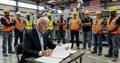
President Trump announced a deal between Apple and Intel under which chips will be designed and manufactured on US soil. Intel shares surged, while Apple saw a modest gain amid plans to raise prices to offset memory and chip costs.
Apple-Intel Deal: Analyzing a Geopolitical Shift in the Semiconductor Industry
The semiconductor market is experiencing one of the most significant tectonic shifts in the last decade. President Trump's announcement of an Apple-Intel partnership for chip design and manufacturing in the US is not just another news item that sent stocks up 10-12%. It is an event that rewrites the rules of the global electronics supply chain and marks the end of an era of unchallenged Taiwanese dominance in producing the most advanced chips.
[The Gist]: What's Really Happening
At its core, we are witnessing the realization of a long-overdue strategic pivot. Apple, which for decades relied on TSMC as the sole manufacturer of its flagship processors, is beginning to diversify its production risks. The deal with Intel is an acknowledgment that the political and economic concentration of manufacturing in one region (Taiwan) has become too risky for the world's largest company by market capitalization.
The deal involves shifting production of some chips to Intel's US factories, a direct consequence of US government policy to bring semiconductor manufacturing back home. Importantly, Trump didn't just announce the deal—he emphasized that the administration supported Intel in exchange for a 10% stake in the company. With Intel's market cap over $600 billion, that stake is valued at more than $60 billion. This turns the US government from a regulator into a direct beneficiary of the company's success.
However, this news should not be seen as an immediate replacement of TSMC by Intel. Analysts at Wedbush and Bernstein agree that in the initial phase, Intel will likely produce either chips for older models or less critical components for Apple. Flagship processors for iPhone and Mac will probably remain with TSMC, as Intel's 18A process, while having entered initial production, still needs to prove its competitiveness in mass-producing the most complex products.
Timeline and Context
To grasp the scale of what's happening, we need to look at the timeline. Rumors of Apple-Intel talks had been circulating for over a year, and as early as May 2026, information about a preliminary agreement emerged. But it was on June 18, 2026, that Trump officially confirmed the deal, bundling it in his post with other initiatives to bring manufacturing back to the US.
| Period | Event | Market Reaction |
|---|---|---|
| August 2025 | US government invests $8.9 billion in Intel in exchange for a 9.9% stake | Foundation laid for government partnership |
| September 2025 | Intel announces partnership with Nvidia on AI infrastructure | Increased confidence in contract manufacturing strategy |
| May 2026 | Apple-Intel negotiations enter final stage | Increased market speculation |
| June 17, 2026 | Intel announces start of production using 18A process | Technical foundation for the deal |
| June 18, 2026 | Trump officially announces Apple-Intel deal | Intel shares surge 12% to an all-time high of $135.48 |
What's surprising here is not the deal itself, but its perfect synchronization with other factors. Just one day prior, Intel announced the start of production using the 18A process, a critical condition for attracting major customers like Apple. This suggests that negotiations were driven by a strict logic of technological readiness, not just political ambitions.
Simultaneously, Apple CEO Tim Cook acknowledged in an interview with the Wall Street Journal that price increases on Apple products had become "inevitable" due to a sharp rise in memory and chip prices. This statement creates an ideal backdrop for explaining the deal: Apple needs to diversify suppliers not only for political but also for economic reasons.
Who Wins and Who Loses
Intel — the obvious winner. The company's shares, which had already risen 464% over the past year, received a new boost. Acquiring Apple as a client is not just a contract; it's a "seal of approval" for Intel's entire contract manufacturing business. It signals to the market that Intel's process technology is mature enough to serve the world's most demanding customer.
Apple — also a winner, but with nuances. The company gains leverage over TSMC in price negotiations and hedges against geopolitical risks. However, it also takes on commitments to the US administration and must accept that some of its products may become more expensive. It's no coincidence that immediately after the deal announcement, Tim Cook spoke about the inevitability of price increases.
US Government — achieves its strategy and sees the value of its Intel stake grow, which has already yielded a $50 billion profit since the investment. TSMC — relatively worse off. Although in the short term it will retain its status as Apple's primary manufacturer of flagship chips, its monopoly has been cracked. In the long term, this could limit its bargaining power.
Consumers — the biggest losers. The price increases on iPhones and Macs that Cook warned about have become a reality. The average smartphone price will rise 20% in 2026, and the next-generation iPhone could cost $150 more. The reason is not just the Intel deal, but a global rise in component prices driven by the reallocation of capacity to AI chips.
What the Media Isn't Saying
The key insight being overlooked is that the Intel deal is a forced move for Apple, not an act of strategic choice. Tim Cook made it clear that the memory price situation had become "unsustainable." DRAM prices rose 58-63%, and NAND prices rose 70-75% in the last quarter because manufacturers shifted to producing chips for AI servers. Apple can no longer "absorb" these costs as it did before.
And here's the most interesting part: the Intel deal is less about manufacturing advanced processors and more about gaining access to alternative memory sources and supply stability. Even if Intel produces chips for older models, that frees up TSMC capacity for more expensive and complex chips for new devices. This allows Apple to maneuver in a tight supply environment.
Moreover, the media overlooks that Intel has been actively working to reduce manufacturing costs in the US. The partnership with Apple gives Intel economies of scale, which are critical for competing with TSMC. Experience shows that having an anchor customer like Apple allows a manufacturer to recoup investments in new processes faster and improve quality.
Forecast: Next 30 Days and 90 Days
Next 30 days. Intel shares will continue to trade with elevated volatility as investors await official comments from the companies and deal details. If rumors that the deal only covers older chips are confirmed, a short-term correction is possible. However, the trend remains bullish: talks of expanding cooperation will sustain interest in the stock. For Apple, the main driver will not be this news but consumer demand dynamics in light of announced price increases.
90 days. By then, the market will see the first practical results of the collaboration. If Intel successfully launches chip production for Apple and confirms its ability to meet quality standards, it will be a powerful signal to other manufacturers, including Nvidia and AMD, which are also seeking alternatives to TSMC. For Apple, the main risk is a decline in margins: if US manufacturing costs turn out to be significantly higher than Taiwan's, the company will have to either raise prices further or accept lower profits.
Editorial Forecast
In light of the deal news and inevitable price increases on Apple products, we expect short-term pressure on Apple shares (AAPL) over the next 48-72 hours. With the current price around $299 and an average analyst target of $400, investors will begin pricing in the risk of lower consumer demand due to higher product prices. The key support level is $290; a break below could trigger a deeper correction. Confidence level is moderate, as Apple's strong brand may offset this negative. The main risk is if the company clarifies that price increases will only affect secondary products, which could trigger a rebound.
— Editorial Team