Bank of Japan Meeting Becomes Next Focus for Traders After Fed Decisions
The yen is trading near multi-month lows, and market participants expect BOJ signals on a possible change in the yield curve control (YCC). This is creating heightened volatility in Japanese stocks and bonds.
Colleagues, while all eyes are on the Fed and Kevin Warsh's meeting on June 16-17, a real volcano is about to erupt on the other side of the Pacific. The Bank of Japan meeting on June 15-16 is an event that could crash the global market harder than any Fed decision in the last two years. I can see this from the yen (JPY) option spreads and the abnormal rise in volatility in Japanese futures.
The market is pricing in a 100% probability of a BOJ rate hike from 0.75% to 1.0%. This will be the highest Bank of Japan rate since 1995 — 30 years, Carl! But the main intrigue is not the hike itself, but what happens after. Can new BOJ Governor Kazuo Ueda (who, ironically, is missing this historic meeting due to illness, leaving the helm to his deputy Uchida) convince the market that this is not a one-off action?
I will break down three scenarios hidden behind the dry lines of "expected YCC change." And believe me, two of them are a disaster for carry trade and global liquidity.
[The Gist]: What's Really Happening
We are facing a unique historical moment when the Japanese economy simultaneously suffers from a weak yen and is forced to raise rates, risking killing its debt. USD/JPY is trading near the 160 mark — a psychological level that the Japanese Ministry of Finance defended with direct currency intervention on April 30. The weak yen is no longer a panacea for exporters because the yen-based import price index rose 25.5% in May, and the producer price index (PPI) jumped to 6.3%.
The rate gap is 300 basis points (Fed 3.5-3.75% vs. BOJ 0.75%). This is fuel for carry trade — investors borrow yen at 1% and invest in dollars at 5%. If the BOJ raises rates to 1.0%, the gap will narrow but remain colossal. The market expects not just a hike, but a signal of new normalization (a signal of a series of hikes) to close short yen positions.
The true cause of panic is GPIF, the world's largest pension fund ($1.5 trillion in assets). After shifting its portfolio toward equities (50% stocks vs. 25% previously), GPIF suffered losses of $64 billion in one quarter due to the decline in global markets. If the BOJ messes up its communication and the Japanese government bond (JGB) market collapses, GPIF will have to urgently revise its strategy, triggering a sell-off of assets worldwide.
Timeline and Context
Let's look at the timeline. We have come a long way from "transitory inflation" to the brink of a tectonic shift in the world's third-largest economy.
| Date | Event | USD/JPY Reaction | Market Significance |
|---|---|---|---|
| April 30, 2026 | MOF intervenes to buy yen (first since 2022) | Yen strengthens 3% in a day, then retraces | "Floor" set at 160.00 (level 0.00625) |
| June 3, 2026 | Ueda gives "hawkish" speech, hinting at June hike | USD/JPY falls to 158 | Market starts pricing in +25 bps |
| June 8, 2026 | PPI data: +6.3% (highest since 2023); imports up 25.5% | Support broken | Arguments of BOJ "doves" destroyed |
| June 11, 2026 | Leak: Ueda misses meeting due to health. Uchida to decide | Option volatility rises | Risk of communication error skyrockets |
| June 15-16 | BOJ meeting (now) | USD/JPY ~160.00 | Moment of truth for global carry trade |
Note the last row. Ueda's illness is not a medical fact; it's a market disaster. Deputy Uchida is known as a technocrat, not a politician. While the market needs a rock-solid promise "we will hike again," Uchida may give the standard "data-dependent" formulation. This will be seen as weakness.
Who Wins and Who Loses
I have divided market participants into three camps depending on the tone the BOJ chooses at the press conference on June 16.
| Group | Bet / Instrument | Insider Risk | "Hawk" Scenario (hike + signal) | "Dove" Scenario (hike + pause) |
|---|---|---|---|---|
| Carry traders | Short JPY positions | Their stops are clustered at 155 | Loss. Mass position closing, USD/JPY flies to 152. | Win. They hold shorts, USD/JPY to 165. |
| Japanese exporters (Toyota, Sony) | Nikkei 225 stocks | Domestic demand weak, revenue in USD | Rise. Yen strengthening (loss of currency benefit), but stability better than chaos. | Fall. Too weak yen = higher fuel import costs. |
| Bond funds | 10-year JGBs | BOJ changes YCC | Bond crash. 10-year yield jumps from 0.9% to 1.5%. | Bounce. Buying JGBs as safe haven. |
| GPIF (Pension fund) | Global stocks / bonds | $64 billion losses already booked | Forced rebalancing. Selling foreign stocks to cover local losses. | Calm. Maintain current risk profile. |
Hidden beneficiary: Swiss franc (CHF). If the yen carry trade starts to unravel (hawkish scenario), funds will flood into CHF — the only "safe haven" in Europe with a positive real rate. EUR/CHF could crash to 0.92.
What the Media Isn't Saying
The media keeps talking about YCC and rates, but misses three layers of reality.
First insight: "Floor 160" is an illusion. On April 30, the MOF reportedly spent $60 billion to defend the 160 level. Five weeks later, the yen is back there. This proves that currency interventions are useless against a structural rate gap. The next intervention will only come if the breakout is sharp and panicky. Traders know this and will sell the yen on any bounce to 158.
Second insight: "Abenomics" is dying. A rate hike to 1% is the symbolic end of the cheap money era started by Shinzo Abe in 2013. But no one mentions that Japan's debt is 260% of GDP. A 1% rate hike increases debt service costs by 3 trillion yen per year. That's why Uchida (the deputy) may chicken out and give a "dovish" outlook. This would be a disaster because the market will immediately punish weakness.
Third insight (geopolitical): The Strait of Hormuz is effectively closed due to the Middle East conflict. Japan imports 90% of its oil through this route. Now every drop of oil costs 1.25 times more in yen terms than in dollar terms. The BOJ must raise rates to stop imported inflation, even if it kills industry. This is not a political choice. It is an economic necessity.
Forecast: Next 30 Days and 90 Days
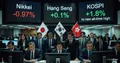
Next 30 days (to mid-July): The key moment is Uchida's press conference one hour after the decision. I expect a "hawkish" hike (to 1.0%) with a commitment to normalization. This will cause the yen to strengthen to 152-154 within a week. The Nikkei 225 (now ~66,000-67,000) will fall -3% in 48 hours as exporters lose their currency advantage. Gold (XAU/USD) will get a double hit: a strong yen will weaken the dollar, but global risk will lift prices. I expect $4950 per ounce.
Next 90 days (to September): The base case is the BOJ raising rates to 1.25% by September, following the Fed. USD/JPY will stabilize in the 148-152 range. The Nikkei 225 will find support at 62,000. The main risk is GPIF. If Japanese stocks continue to fall, the fund will have to sell US Treasuries and stocks to meet obligations. This will cause a synchronized decline in US and Japanese markets. I hold 20% of my portfolio in cash dollars and buy protective puts on EWJ (Japan market ETF) expiring in September.
Editorial Forecast
Asset: Japanese yen (USD/JPY). Direction: Yen strengthening (pair decline) within 24-72 hours after the BOJ meeting on June 16. Key levels: Current level — 160.00. Target — 155.00 (support break). Protective level — 162.00. Confidence level: High (80%). The market fully prices in a rate hike, and any "hawkish" wording in forward guidance will trigger mass closing of carry trade positions accumulated over recent months. Main risk: If Uchida raises rates but states it is a "one-off action" and "normalization will take years" ("dovish" hike), USD/JPY will break above 162, updating 30-year highs. The BOJ will be forced to conduct emergency intervention, creating market chaos. Probability — 20%, and this would be the worst scenario for all risky assets.
The editorial opinion is based on a synthesis of terminal data and is not an investment recommendation.
— Editorial Team