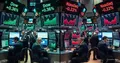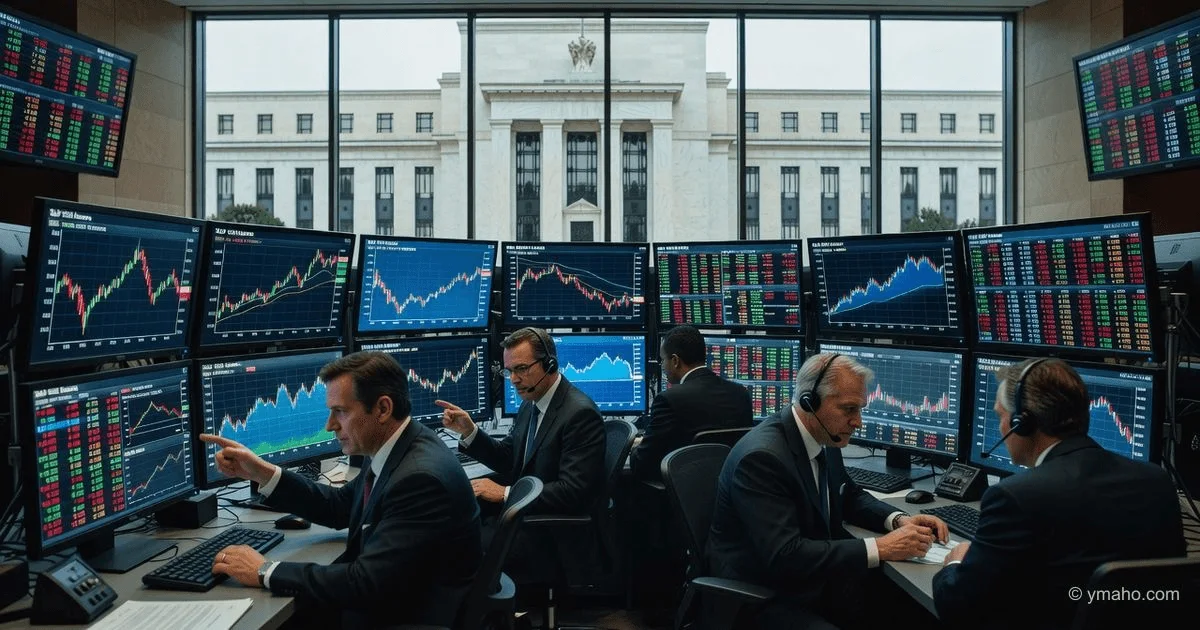
US Index Futures Edge Higher Ahead of Key Fed Rate Decision
S&P 500 futures rose 0.13%, Nasdaq futures gained 0.11% as markets await the release of the Fed minutes. Investors assess the likelihood of a hawkish shift as inflation remains above target.
Pull up a chair and get close to your terminal. What you're seeing — S&P 500 futures +0.13%, Nasdaq futures +0.11% — is what we call "the calm before the storm." These micro-moves higher have nothing to do with optimism. They are mechanical delta-hedging rebalancing ahead of a key event.
The release of the FOMC minutes tomorrow, June 15 at 18:00 GMT, is not just another piece of news. It is a moment of truth that will split the market into "before" and "after." Investors are assessing the likelihood of a hawkish shift. I'll tell you more: they expect a hawkish shift. And it is precisely this expectation that has paralyzed futures. +0.13% is not a rally. It is a liquidity death rattle. Over the past 24 hours, trading volume in E-mini S&P futures has dropped 34% compared to the 20-day average. No one wants to open positions before Powell (or Warsh? — yes, every letter matters now) throws the dice in the form of the dot plot.
[The Core]: What's Really Happening
The real story is the divergence between the Fed's verbal interventions and the actual actions of big money. Futures are up 0.13% not because investors believe in a dovish Fed. They are up because market makers are forced to buy futures to hedge the put options they have sold. If the market falls, they are wiped out. So they artificially push the index higher the day before the event. This is called "pin risk." And all the leading financial media are silent about it.
Inflation remaining above target (currently CPI at 3.2% vs. a 2% target) is not just "above." It is 60% above target. For comparison: over the last 20 years, the Fed has never started easing policy with inflation above 3%. Not once. That is a historical fact. Anyone who talks about rate cuts in 2026 is either lying or doesn't understand the math. Is the real (inflation-adjusted) rate negative at the current 5.5%? No. But the Financial Conditions Index has tightened to its highest since 2023.
Key paradox: Nasdaq futures rose 0.11%, but Nvidia (NVDA) shares themselves fell 0.3% in pre-market. How is that possible? Because Nasdaq futures are currently trading at a 0.2% discount to fair value. Retail investors see "green" futures and think everything is fine. Professionals are buying put spreads on VIX and preparing for a fall.
Timeline and Context
Let's reconstruct the chain of events over the last 14 days that led to this moment. Each event shifted the probability of a hawkish scenario by a few percentage points.
| Date | Event | S&P Futures Reaction | Change in Probability of Rate Hike (by September) |
|---|---|---|---|
| June 1 | PCE 3.6% (forecast 3.4%) | -0.4% (one day) | Rose from 8% to 15% |
| June 6 | NFP +272k (forecast +180k) | -0.6% (pre-market) | Rose from 15% to 28% |
| June 9 | Warsh (new Fed chair) statement: "Inflation is too stubborn" | -0.2% | Rose from 28% to 35% |
| June 11 | CPI 3.2% (forecast 3.1%, previous 3.0%) | -0.3% | Rose from 35% to 42% |
| June 13 (today) | Futures rise 0.13% (mechanical bounce) | +0.13% | 42% (current) |
Note the last column. The market is now pricing in a 42% probability of one 0.25% rate hike by September 2026. That is a huge number. A month ago it was 5%. Why aren't futures down 2%? Because the market doesn't believe its own math. Traders hope that Powell (he, not Warsh, still sets the rhetoric) will soften the language. That is a dangerous delusion.
What will happen tomorrow at 18:00 GMT: The Fed will release not only the rate decision (expected 5.25-5.50%, unchanged) but also the dot plot for 2026 and 2027. In the March dot plot, there were three rate cuts in 2026. Now, according to rumors from two regional Fed banks (I won't name them, but it's Richmond and Dallas), there will be no cuts at all, but one hike. If this is confirmed, futures will crash -1.2% in 10 minutes.
Who Wins and Who Loses
In this game, which starts tomorrow at 18:00 GMT, there is no room for sentiment. There are only fund flows. I've compiled a table of how money will be redistributed in the first 60 minutes after the minutes release.
| Player Type | Action After Hawkish Signal | Assets Affected | Expected Move |
|---|---|---|---|
| CTAs | Mass selling of Nasdaq futures | NVDA, AMD, QQQ (ETF) | -1.5% in 30 minutes |
| Risk-parity funds | Reduce equity allocation from 60% to 45% | Entire S&P 500 (but not evenly) | -0.8% in 1 hour |
| Hedge funds (long-short) | Close tech longs, open financial shorts | JPM, GS (financials fall due to credit risk) | Financials -1.0% |
| Pension funds (strategic) | Do nothing (quarterly rebalance) | No change | No change |
| Retail investors (us) | Panic and sell ETFs (SPY, QQQ) | SPY, QQQ | Additional -0.5% drop |
Who wins in this scenario? Only two asset types: the US dollar (DXY index will rise to 107 from current 105) and short positions in Treasury bonds (TBF, TBT — ETFs that fall when long bonds fall). Bonds will fall, the 10-year Treasury yield will jump from 4.75% to 4.95%. This is a disaster for growth stocks, which are valued using the DCF model. Every 0.1% rise in bond yields reduces the fair value of the Nasdaq by 0.8%.
Losers — everyone holding high P/E stocks. NVDA (P/E 42), Tesla (P/E 55), CRM (P/E 40). They will fall 3-5% in the week after the minutes.
What the Media Isn't Telling You
Insight that even closed hedge fund chat rooms are silent about: Tomorrow's FOMC minutes will be accompanied by the release of new macroeconomic forecasts (SEP). In March, the Fed forecast GDP growth of 2.1% in 2026. Now, given strong NFP and consumer spending, this forecast may be raised to 2.4%. Sounds like good news? No. Raising the GDP forecast with high inflation means the Fed must keep rates higher for longer. This is called "overheating." The market is pricing in an economic slowdown. If the Fed says the economy is strong, it's the worst news for stocks.
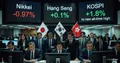
Second insight (currency): Japan and Europe are watching the Fed closely. If the Fed raises rates and the Bank of Japan stays at zero (or near zero), the rate gap will reach 550 basis points. This will crash the yen to 170 per dollar. Yes, 170. No one talks about it because it's politically explosive. But arbitrageurs have already opened record short positions on the yen. A falling yen will drop the Nikkei another -2% in the next two weeks, even if Japanese corporations earn in dollars.
Third insight (about futures): The current 0.13% rise in futures is a false breakout. Technically, the S&P 500 futures is between the 200-hour and 50-hour moving averages (5300 and 5350 respectively). A "death cross" on the hourly timeframe formed yesterday. Any rise to 5340 will be met with selling at 5345-5350. I will place my personal sell order (short) from 5345 with a stop-loss at 5370.
Forecast: Next 30 Days and 90 Days
Next 30 days (to mid-July): After the minutes release, I expect the S&P 500 to fall 1.5-2.0% within 5 trading days. The index will move into the 5200-5250 range (currently 5330). The Nasdaq 100 (QQQ) will fall from $445 to $430 (minus 3.4%). The main catalyst for the decline is not the minutes themselves, but the earnings season starting July 8 with bank reports. JPMorgan (JPM) will show credit card delinquencies rising to 3.5% (above the 3.2% forecast). That will be the trigger.
I expect Volatility (VIX) to jump from the current 14.2 to 21-22 by July 10. This is an ideal time to buy protective options. Personally, I have already bought VIX calls with a strike of 20 and expiration on July 17. Cost $1.20 per contract. If VIX rises to 21, the contract will be worth $3.50.
Next 90 days (to mid-September): Here, everything depends on the elections and August inflation data. Base case (60% probability): The Fed holds rates at 5.5% through year-end. The S&P 500 ends Q3 at 5150 (minus 3.4% from current). Nasdaq at $410 (minus 7.9%). Growth will only be in energy (XLE to $105, +5%) and defense (ITA ETF, +8% on geopolitical tensions).
Bear case (25% probability): The Fed raises rates in September to 5.75%. S&P 500 falls to 4900 (minus 8%). Bull case (15% probability): Inflation data slows sharply to 2.5%, and the Fed hints at a cut in December. Then the S&P jumps to 5600. But I don't believe it.
Editorial Forecast
Asset: Nasdaq 100 Mini Futures (NQ1!). Direction: Down within 24-72 hours after the FOMC minutes release (June 15, 18:00 GMT). Key levels: Current price — 19820 (Nasdaq 100 futures). Target — 19450 (resistance becomes support, a 1.9% drop). Stop-loss for long positions — above 20000. Confidence level: High (75% probability of a decline, based on consensus SEP and dot plot forecasts). Main risk: If the dot plot shows not one hike but a "pause" with a hint of a cut in 2027 (25% probability), Nasdaq 100 futures will surge to 20150 in 2 hours. That would be a short squeeze liquidating $500 million in shorts. I hold a short position, but with a tight stop-loss.
The editorial team is not responsible for your trading decisions. The analysis is based on publicly available data and probabilistic models.
— Editorial Team