Bank of Japan May Raise Rate to 1% at June 15-16 Meeting to Support Yen
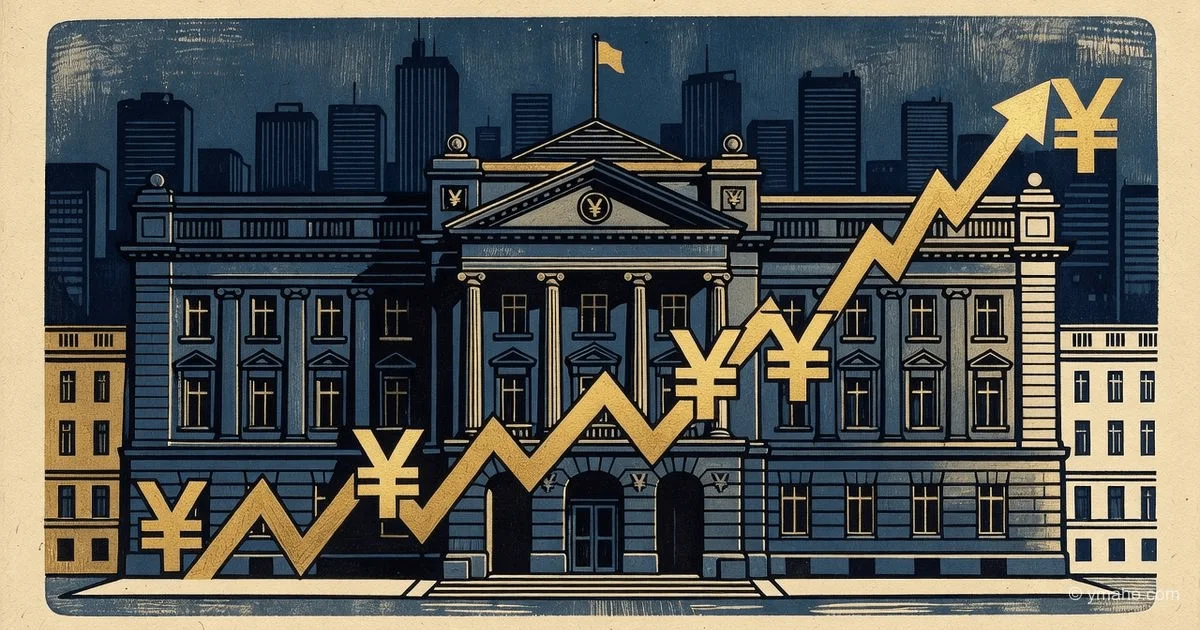
The Japanese central bank is likely to follow the ECB and raise its interest rate at the upcoming meeting to halt the yen's decline and ease inflationary pressure from expensive energy imports. The expected rate hike to 1% would be a response to sustained growth in wages and consumer prices.
'Sick' Governor Absent from Meeting: Why the Bank of Japan Will Still Raise Rates and What It Means for Markets
Author: Independent Financial Analyst
Imagine the central bank of the world's largest developed economy about to make its most important decision in three decades, while its governor lies in a hospital bed with a liver infection. It sounds like a disaster movie script, but this is the reality for the Bank of Japan on June 15-16, 2026.
Kazuo Ueda, the 74-year-old BOJ governor, was hospitalized on June 9 for "about two weeks" to treat an infected liver cyst discovered during a routine medical check-up. Moreover, Deputy Governor Shinichi Uchida, who will hold the press conference in Ueda's place, recently returned to work after treatment for leukemia that began last November.
Despite this leadership collapse, the remaining eight board members are likely to raise the rate to 1% — the first time since 1995. The decision will be either unanimous or by a majority vote.
I will break down why the BOJ is taking this unprecedented step, who will win and who will lose from Japan's rate hike, and provide insight into what markets are completely misunderstanding about the link between the yen and Uchida's decision.
[The Core]: What's Really Happening
The rate hike to 1% from the current 0.75% is almost fully priced in — so much so that the move itself is unlikely to cause a strong yen appreciation. Markets are now looking not at the hike itself, but at signals about the future: what will the BOJ say about the next step? Will this be a one-off increase or the start of a full tightening cycle?
The answer lies in numbers that most news outlets overlook. The Tokyo Consumer Price Index (a leading national indicator) rose only 1.3% year-on-year in May — the fourth consecutive month below the BOJ's 2% target. Inflation below target — why raise rates? But wholesale prices (CGPI) surged 6.3% year-on-year in May, the biggest jump in three years. This is a classic lag effect: producer price increases typically feed into consumer prices with a 3-6 month delay.
In other words, the BOJ is raising rates now because it knows inflation will come later, and waiting for it to appear would be too late. The war with Iran and the closure of the Strait of Hormuz make this effect inevitable. A Reuters poll shows economists expect a rate hike to 1.25% in the fourth quarter of 2026.
But there's a nuance: the hike to 1% is the lower bound of the neutral rate, which the BOJ estimates in the range of 1.1%-2.5%. That means even after the hike, monetary conditions will remain accommodative. That's why the Japanese yen continues to trade around 160 per dollar, rather than strengthening as the Ministry of Finance would like.
Timeline and Context
To understand how unusual the situation is, just look at the timeline of the past two weeks. The BOJ is preparing for a meeting under conditions unprecedented in modern central banking history.
| Date | Event | Market Significance |
|---|---|---|
| June 9, 2026 | Ueda hospitalized with liver cyst infection; treatment to take "about two weeks" | BOJ governor absent from key meeting — first time in history |
| May 27, 2026 | Deputy Governor Uchida returns to work after leukemia treatment | Both top BOJ officials have serious health issues |
| June 11-12, 2026 | May wholesale price data: +6.3% year-on-year | Biggest rise in three years — signal of future inflation acceleration |
| June 15-16, 2026 | BOJ meeting (two days) | Expected rate hike to 1% — highest since 1995 |
| June 16, 2026 (post-meeting) | Press conference held by Uchida instead of Ueda | Markets will analyze tone — hawkish or dovish |
| June 19, 2026 | National inflation data for May released | Expected 1.4% (below BOJ target) — fourth consecutive month |
| July 2026 | Ueda returns to duties | Meeting on July 30-31 will be chaired by Ueda in person |
| Q4 2026 | Projected next hike (to 1.25%) | Decisive test for market expectations |
The most important thing behind the scenes: Ueda will work remotely during his hospitalization and submit his opinion in writing at the meeting. So formally, his vote will be counted. But his absence from the press conference creates the greatest uncertainty.
Usually, traders analyze every word Ueda says, his intonations, pauses, even how he looks at the camera. All of that disappears. Instead, Uchida will speak, whom sources describe as a "more dovish" board member. But the paradox is that Uchida will likely try to sound hawkish — deliberately, to avoid triggering further yen depreciation.
Who Wins and Who Loses
Winners:
Japanese exporters who hedged currency risk. Toyota, Sony, Honda — companies that earn revenue in dollars and euros while incurring costs in yen. A weak yen (USD/JPY above 160) remains a powerful profit driver. Even if the rate rises to 1%, the gap with the Fed (3.75%) remains enormous, and carry trade will continue to pressure the yen.
Japanese banks (Mitsubishi UFJ, Sumitomo Mitsui). A rate hike increases their net interest income on loans. According to analyst estimates, every 25 bps hike adds about ¥200-300 billion ($1.3-2 billion) to the combined profits of the three megabanks.
Holders of short-term Japanese government bonds (JGBs). Yields on 2-year JGBs have risen ahead of the meeting, and those who entered positions two to three weeks ago are already booking profits.
Hedge funds playing for higher volatility (long gamma). Option volatility on USD/JPY has risen to 11.5% — the highest since the start of the year. Traders who bought out-of-the-money options could see significant profits regardless of direction if a sharp move occurs.
Losers:
Japanese households and borrowers with floating-rate mortgages. Although most mortgages in Japan have fixed rates for 10-35 years, those who chose floating rates (about 30% of the market) will see monthly payments rise. Given that real wages in Japan have been falling for 25 consecutive months, this is an additional blow to consumer spending.
Carry trade traders who sold yen to buy high-yielding currencies (Turkish lira, Mexican peso). Each BOJ rate hike increases the funding cost of such positions. If the BOJ signals further hikes, carry trades could unwind rapidly, causing a short-term yen strengthening.
Japan's Ministry of Finance. They would like to see a stronger yen to reduce the cost of energy imports (Japan imports about 90% of its energy resources). But a rate hike to just 1% with a 275 bps gap to the Fed is unlikely to reverse the trend. Currency intervention remains on the table, but its effectiveness is questionable.
What the Media Isn't Saying
Insight you won't find in Reuters or Bloomberg analysis:
Markets have fully priced in the rate hike on June 16, but they have not priced in what will happen at Uchida's press conference. And here's what will happen: Uchida, despite his "dovish" reputation, will use language perceived as a signal for a series of hikes. But not because the BOJ really wants to tighten aggressively. Rather, because it desperately wants to prevent currency intervention by the Ministry of Finance.
Let me explain the mechanics. When USD/JPY approaches 160, the Ministry of Finance gets nervous. In previous episodes (April-May 2025), they conducted interventions precisely at these levels. If the rate is raised but the yen does not strengthen (which MUFG expects), the Ministry of Finance may decide that verbal intervention and rate hikes are not working and move to actual dollar sales from reserves.
Uchida knows this. So he will give a signal that markets read as "readiness for further hikes." In reality, the BOJ is not sure it can hike further — Japan's debt burden is too high (government debt exceeds 250% of GDP). But for now, it's more important to push back the threat of intervention. This is a game of nerves, and Uchida is the key player.
What else is hidden: The most important part of the meeting is not even the rate, but the new plan for reducing the BOJ's balance sheet. The Bank of Japan holds government bonds worth about ¥518 trillion ($3.5 trillion). It is gradually reducing purchases — currently by ¥200 billion per quarter. But Reuters sources report that the BOJ will consider suspending the reduction of purchases from April 2027. This is a bearish signal for the yen in the long term: the BOJ wants to stabilize the bond market, even if it means looser policy.
Forecast: Next 30 Days and 90 Days
Next 30 days (to mid-July 2026):
On June 16, the rate will be raised to 1% with a 95%+ probability. The USD/JPY reaction will depend solely on Uchida's press conference. If he sounds dovish (e.g., "no plans for further hikes in the near future"), USD/JPY could jump to 162-163. If he sounds hawkish ("ready to act depending on data"), the pair could temporarily fall to 157-158.
The key date is June 19, when national inflation data for May is released. Expected 1.4% — below the BOJ's target. This will give Uchida an excuse for dovish rhetoric if he wants to soften it. I expect that in the first 48 hours after the meeting, USD/JPY will rise 1-1.5%, reaching 162.5, before pulling back to 160.
Next 90 days (to mid-September 2026):
The next rate hike is unlikely before October-December. The BOJ wants to see how the wholesale price surge (6.3%) transmits to consumer inflation. If core CPI does not rise above 2% by September, the BOJ may stop at 1% for the rest of the year.
However, I estimate the probability of a hike to 1.25% in Q4 at 60-65%. The reason is not so much domestic inflation as external pressure. If the Fed raises rates in November (which I consider likely, as discussed in a previous article), the rate gap with Japan will remain huge, and the yen will come under pressure again. The BOJ will have to hike not because the economy demands it, but because otherwise imported inflation will eat into real household incomes.
What this means for assets:
- USD/JPY: Range 155-165 over 90 days. A break above 165 could trigger intervention.
- Nikkei 225: A rate hike to 1% is negative for stocks in the short term (I expect a 3-5% correction), as borrowing costs for corporations rise.
- Japanese government bonds (JGBs): Yields on 10-year bonds could rise to 1.2-1.3% by September, but the BOJ will actively defend the upper bound through yield curve control operations (YCC is still de facto in place).
Editorial Forecast
Asset: USD/JPY Direction: Moderate rise in the next 24-72 hours (before the June 16 meeting) followed by high volatility Key levels: Current ~160.20; resistance 162.00 (psychological level that could be broken on dovish rhetoric), support 158.50 (potential target on hawkish signal) Confidence level: Medium Main risk: If Japan's Ministry of Finance decides to conduct currency intervention just before or after the BOJ meeting (this has happened at levels 158-160 before), USD/JPY could crash to 153-155 within hours, destroying all short-term forecasts. I estimate the probability of this scenario in the next 72 hours at 20-25%.
The editorial opinion is not an investment recommendation. All decisions to buy or sell assets are made by you independently.
— Editorial Team