Makeup Beautification: Korean 2026 Trends Blur the Line Between Skincare and Cosmetics
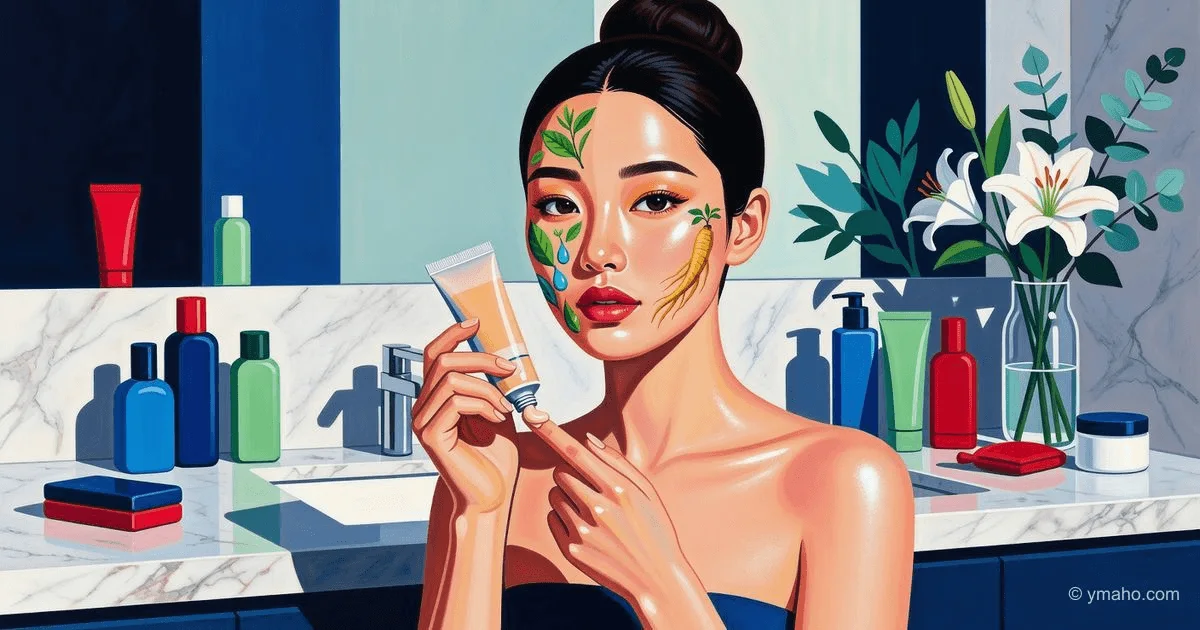
The leading trend from Korea states that women don't want to buy "just makeup"—they need skincare even in foundation products. Brands are creating cross-category products that care for the skin as well as they color it, with a special focus on textures and tints.
The Death of Foundation: Why "Skinification" of Makeup in 2026 Kills Classic Decorative Cosmetics
Remember when foundation was just "face paint"? Its job was simple: hide imperfections, even out skin tone, create a "mask." In 2026, that model is dead. The Korean beauty market, always at the forefront of trends, has finally buried the concept of "decorative cosmetics" as a separate category. Now, women don't want to buy "just makeup." They need makeup that works like a serum—hydrating, repairing the barrier, protecting against blue light, and even "treating" acne. This isn't just a trend; it's a complete industry reset where the line between skincare and cosmetics is erased.
I analyze this shift as an insider and see the non-obvious: the main victims of "makeup beautification" won't be mass-market brands (they'll adapt), but dermatologists and the device-based cosmetology industry. Because when your CC cream contains peptides and probiotics, the need for monthly visits to the esthetician "to maintain tone" drops sharply. We are entering an era where daily makeup becomes preventive medicine, and Koreans are winning this race by a huge margin.
[The Gist]: What's Really Happening
What's really happening is what LookFantastic analysts call "skinification" of makeup, but the scale is much deeper. It's about consumers no longer believing in the dichotomy of "skincare in the morning, makeup during the day." They want the process of applying foundation to be a continuation of skincare. Hence the explosive growth of BB, CC creams, and tints that have replaced heavy, full-coverage foundations.
The numbers speak for themselves: searches for "Kylie skin tint" are up 450%, "Korean BB cream" up 100%, and Erborian CC cream up 50%. People are voting with their wallets for light, breathable textures. But the main thing is the formula. A modern BB cream is not just a tinted moisturizer. As Missha (whose BB cream tops Amazon US charts) writes, their formula blends probiotics and superfood complexes from vegetables and botanical extracts that provide antioxidant protection. Missha achieved what many luxury brands couldn't: making consumers believe that makeup can be more beneficial than just cosmetics.
The second layer of this revolution is the shift from contouring to "3D highlighting." Professor Seung-A Lee from Kyungin University notes that the trend for facial sculpting (contouring) is fading. It's being replaced by "volumetric highlighting"—creating depth and shape with light and texture, not dark stripes under the cheekbones. This means even decorative techniques (blush, highlighters) become "skincare-oriented": they don't clog pores but work on light reflection, creating the effect of "rested, healthy skin."
Timeline and Context: How BB Cream Made a Renaissance
This trend has a clear historical spiral. BB cream (Blemish Balm) was invented in Germany to soothe skin after laser procedures. Then it migrated to Korea, where it became a hit in the 2000s as "quick makeup." But by 2020, it had grown tiresome, giving way to matte, full-coverage foundations from Western brands.
2024-2025: The Quiet Return. Consumers, tired of "masks" (especially after the COVID pandemic), began seeking light coverage. Brands noticed the demand for "skincare during wear."
2025-2026: Technological Breakthrough. Formulas are no longer gray or greasy. Modern BB and CC creams use niacinamide, peptides, hyaluronic acid, and even PDRN. For example, Korean brand Espoir (under Amorepacific) shot to the top of Olive Young's rankings with a BB cream focused on barrier care for sensitive and problem skin.
Early 2026: Economic Confirmation. Korean cosmetics exports in Q1 2026 reached a record $3.1 billion. Able C&C (operator of Missha) saw international sales grow 230% in the US thanks to a viral video of Cardi B calling BB cream her secret to a natural look. This isn't just a trend—it's an economic driver.
Who Wins and Who Loses
Winners (1): Korean Pioneer Brands (Missha, Espoir, Laneige, D'Alba). They own the formulations and have manufacturing capacity to quickly scale production of "smart" foundations. Missha, once considered an outdated road shop brand, is now a headliner on Amazon and Costco in the US.
Winners (2): The "Skin Prep" Category. This is the new battlefield. Shinsegae International with brand Yunjac created a category of products applied before makeup to improve adhesion and radiance. Their sales grew 118% last year. Brands understand: if foundation is now skincare, then what goes under it must be maximally effective.
Losers: Western Mass-Market Giants with Heavy Foundations. Estée Lauder and Giorgio Armani are forced to rethink their bestsellers. As LookFantastic writes, Estée Lauder is updating its 24-hour foundation, making it more breathable and packed with "skin-loving" ingredients. But Koreans are already two steps ahead. While Western brands move from "heavy" to "medium," Koreans sell "light as a serum."
Losers (2): The Salon Industry (Tinting Segment). If a home tint makes skin perfect in seconds and treats it too, demand for makeup artists for daily makeup drops. The industry shifts toward evening and creative makeup, leaving routine at home.
What the Media Isn't Saying: The Problem of "Overload" and Greenwashing
Enthusiastic articles in Marie Claire and other outlets often omit three shadow sides of this trend.
First: The Risk of Ingredient Cocktail. When 50 active ingredients (peptides, probiotics, PDRN, niacinamide, SPF, and pigments) are mixed in one bottle, the risk of allergy and irritation increases. Even if each ingredient is good on its own, their synergy can be unpredictable. "Sensitive skin" is the fastest-growing problem segment, and an "active bomb" in foundation can trigger a flare-up that will require a dermatologist's treatment.
Second: Marketing of "Greenness" and "Cleanliness" Without Evidence. Missha uses probiotics, but does bacterial growth stop in a jar of foundation that sits on a bathroom shelf for months? Preservatives that kill bad bacteria also kill beneficial probiotics if the technology isn't perfect. The media doesn't report that 70% of "probiotic" BB creams on the market contain dead bacterial cultures that provide no benefit beyond a marketing label on the jar.
Third (Most Important): Application and SPF Issues. A "skincare" BB cream often contains SPF. The consumer thinks, "Great, I applied skincare, foundation, and protection in one step." But dermatologists are sounding the alarm. To get the stated SPF (e.g., 30-50), you need to apply 2 mg of cream per 1 cm² of skin. That's about a quarter teaspoon just for the face. In reality, people apply 2-3 times less BB cream (to avoid a mask effect), and end up with SPF 10 instead of 50, exposing their skin to UV. The "3-in-1" marketing is dangerous because it creates a false sense of security.
Forecast: Next 30 Days and 90 Days
Next 30 Days (June 2026):
Major Western conglomerates (L'Oréal, Estée Lauder) will start urgently negotiating to buy Korean biotech startups to gain access to "smart" pigment technologies. A new wave of Korean tints labeled "probiotic-infused" will flood the US market. I expect TikTok to be flooded with videos comparing "before/after" using BB cream with PDRN, and it will look better than after some salon procedures.
Next 90 Days (Late Summer 2026):
Global Market Insights analysts forecast the BB cream market will grow from $5.03 billion in 2025 to $10.58 billion by 2034. We will see the first class-action lawsuits against brands that called their cosmetics "therapeutic" without proper medical approvals. The FDA may initiate inspections in the "cosmeceutical makeup" category.
The main takeaway: the era when a beautiful face required sacrifices (dryness, acne from comedogenic formulas) is over. Beauty in 2026 is health. And Koreans are selling us not just powder, but a long-term skincare contract. It's more expensive, but much smarter. Wake up, Western brands, or die.
— Editorial Team