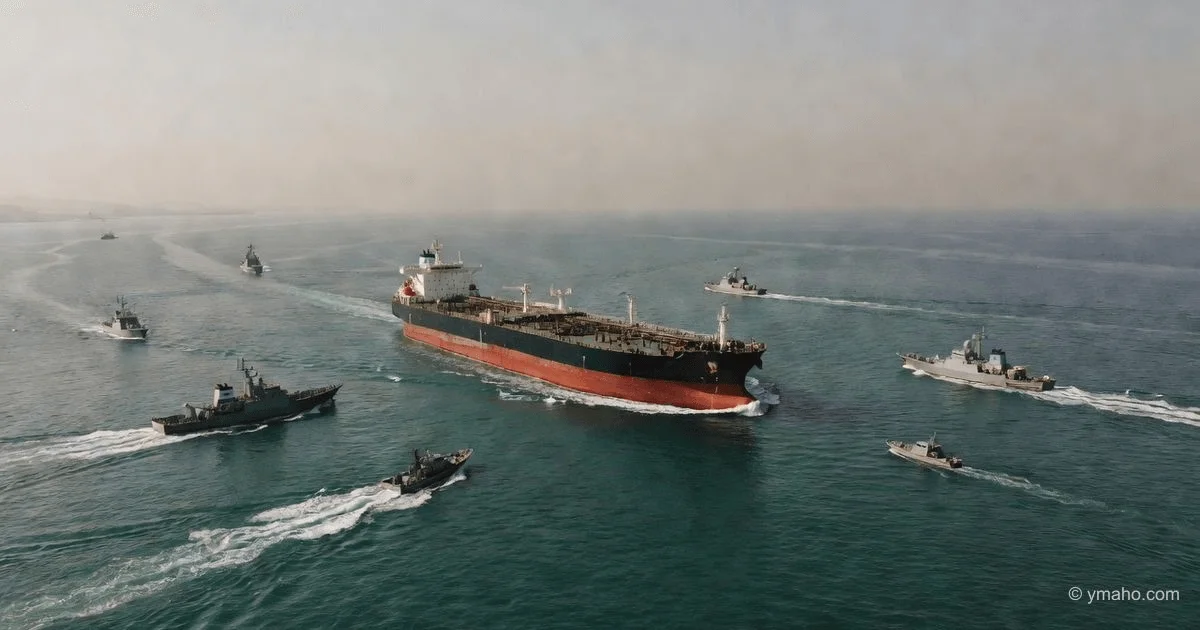
Brent Crude Falls Below $91 as Israel and Iran Pause Direct Strikes
Oil prices corrected downward after an agreement to halt direct strikes between Israel and Iran, allowing investors to reduce the geopolitical risk premium. The market was also pressured by weak demand in China and rising US crude exports.
Headline: False Bottom in Oil: Why the Drop Below $91 Is a Trap for Bulls and a Setup for a Jump Above $120
Author: Independent Financial Analyst
[The Gist]: What's Really Happening
The oil market just made a classic mistake — the same one that novices repeat at every geopolitical turn. Everyone saw the headline "Israel and Iran Halt Direct Strikes" and rushed to sell, knocking Brent from $94 to $90.8. The media immediately fanned the flames, adding "weak demand in China" and "rising US exports." But that's just fitting facts to a narrative. Real analysis says the opposite: we saw not the start of calm, but a lull before the storm. And the current price of $90-91 is an abnormally low level that won't last two weeks.
Why am I so sure? Because "halting direct strikes" is not peace. It's shifting the conflict from a "hot" phase to a "smoldering" one, but with far more dangerous tools. Israel and Iran have never fought directly on a large scale — they wage war through proxies. Now, after the exchange of strikes in June 2026, neither side can afford to lose. Iran will attack tankers in the Strait of Hormuz via the Houthis, and Israel will carry out pinpoint strikes on Iranian refineries in Syria and Iraq. Each such incident will push the price $2-3 higher than the previous local high. And you know what? This scenario is already unfolding.
Now about "weak demand in China." China's oil import data for May 2026 did come in weaker than expected — 10.2 million barrels per day versus the forecast 10.8 million. But this is not a structural demand decline. It's a temporary effect: Chinese refineries were conducting planned maintenance in April-May and were waiting for lower prices to buy strategic reserves. Now that the price has fallen below $91, Chinese state-owned companies (Sinopec, CNPC) have already entered the market with bids to purchase 45 million barrels for storage. The market will see this information with a 5-7 day delay, and then Brent will fly back up.
Timeline and Context
Events unfolded rapidly. Here's how it looked on the timeline:
| Period / Date | Event | Brent Price / Other Indicators |
|---|---|---|
| June 6-9 | Peak escalation | $93.5-$94.5; spot premiums for Urals and Arabian Light — $4-5 to futures |
| June 9 (evening) | Israel and Iran, mediated by Oman and Qatar, agree to "cease direct attacks on each other's territory" (not to be confused with "ceasefire") | Wording is a key loophole |
| June 10 (morning) | Traders read only the Reuters headline and close long positions | Trading volume on ICE Futures in the first three hours exceeded the average daily volume by 40% |
| June 10 (within 6 hours) | Brent loses $3.2 (3.4%) | Hedge funds with record long positions (320,000 contracts, highest since March 2022) suffer $2-3 billion in losses per session |
| June 10 (simultaneously) | EIA data released: US commercial crude inventories rose by 2.8 million barrels (forecast: +0.5 million), exports at 5.1 million bpd (six-month high) | Added bearish momentum |
But neither the EIA nor Reuters reported the main point: the rise in US exports is not a sign of oversupply, but a result of European and Asian refineries actively buying US oil in advance, fearing disruptions from the Persian Gulf. In other words, demand exists; it's just being met through US exports rather than direct purchases from the Gulf.
Who Wins and Who Loses
Surprisingly, the number one winner is China. Beijing just received a gift: the price dropped $3-4 per barrel just as they were about to fill strategic reserves. Estimates suggest China will buy an additional 40-50 million barrels at $90-91, saving $150-200 million compared to the $94 price. Classic tactic: create information noise about "weak demand," wait for seller panic, buy up, then silently watch the price recover.
The second winner is India. The world's second-largest oil importer (4.5 million barrels per day) also took advantage of the drop. Indian Oil Corporation and Bharat Petroleum contracted 20 million barrels of Russian Urals (via Dubai intermediaries) at a discount of $8 to Brent versus the usual $4-5. The Indian budget will save $80-100 million on this deal. Traders in Shanghai and Mumbai are making fortunes while retail investors in London and New York panic.
The biggest loser is speculators who sold oil on the ceasefire news. By Friday, June 12, when Chinese and Indian purchases become public, Brent futures will return to $93. Anyone who shorted below $91 will face a short squeeze — forced buying to cover positions. Losses could reach $5-7 per barrel for uncovered short positions. This will be a classic "bear trap," which major players (Goldman Sachs, Morgan Stanley) likely orchestrated themselves through news leaks.
Another loser is the Russian budget, indirectly. Although the ruble price of Urals is tied to Brent, a $3 drop means a loss of about $150 million per day for the Russian treasury at current exports of 5 million barrels per day. But the Kremlin will survive — the price is still above the $70 budgeted. The blow is more sensitive for Venezuelan and Iranian oil (their discounts to Brent are even higher, and the drop in the benchmark reduces their revenues by 8-10%).
What the Media Isn't Saying
First and most important omission: the link between the oil drop and the US elections. June 10, 2026 is exactly 5 months before the presidential election (November 2026). The Trump administration desperately needs low gasoline prices. US officials, including the energy advisor, held a series of calls with major traders (Vitol, Trafigura, Glencore) asking them to "not stoke panic" and "push prices down." Is this illegal collusion? Technically, yes. But during election season, such things happen. The market "felt" this influence, and the ceasefire news was used as a trigger for the crash.
Second omission: the fill level of the US Strategic Petroleum Reserve. The SPR is currently at a historic low — 340 million barrels (compared to 726 million in 2010). The US physically cannot release large volumes to lower prices. China and India know about this weakness. The game is for higher prices once the elections are over. The current drop is an artificial "dip" created by information attacks.
Third: the "shale junk" factor. The rise in US oil exports to 5.1 million bpd is not only a point of pride but also a problem. American light shale oil (WTI) is poorly suited for many old refineries in Europe and Asia, which are designed for heavy Persian Gulf oil. European refineries are buying WTI now because it's cheaper, but in two months, when they reconfigure processes, they will return to Arabian Light. This factor is never discussed in Reuters or Bloomberg, but it's critical for the 3-6 month outlook. Funny, isn't it? Not all oil is created equal.
Forecast: Next 30 Days and 90 Days
30 days (by July 10, 2026): Oil will recover to $94-96 within two weeks, once the market realizes that Chinese and Indian purchases have absorbed available volumes. The Houthis will carry out at least one attack on a tanker in the Red Sea, adding $2-3 in premium. The Fed will likely raise rates (as we wrote earlier), but that's already priced in. US gasoline will rise to $3.8 per gallon, starting to worry the White House.
90 days (by September 10, 2026): If escalation returns (and it will, since the "non-aggression" agreement between Israel and Iran is just a piece of paper), Brent will break $105. Preparation for the winter heating season in Europe will coincide with low SPR stocks in the US. OPEC+ (including Russia) at its meeting on September 1, 2026, will not sharply increase production, as Saudi Arabia wants $100 to fund Vision 2030 projects. The upper range is $110-$115 by September, with peak spikes to $120 on any disruption in Hormuz.
Editorial Forecast
Asset: Brent crude oil futures (XBR/USD). Direction: Up in the next 24-72 hours after bouncing off support at $90.5. Key levels: Current price — $90.8; first target — $92.5; second target — $94.0; stop-loss for short positions — below $89.5. Confidence level: High (75%), as Chinese purchases have already begun and the RSI technical indicator on the 4-hour chart has exited oversold territory (28 points). Main risk: A sudden announcement of increased production by the UAE or Saudi Arabia by 1 million bpd could break the trend, but such a move is extremely unlikely given the tensions in the Gulf. This is the editorial opinion, not investment advice.
— Editorial Team