US House Prepares Hearings on Tax Relief for Crypto Staking and Mining
The bill, to be reviewed on June 9 with participation from Fidelity and Coinbase, proposes deferring taxation on validator rewards and introducing exemptions of up to $10 for network fees.
Crypto Tax Reform in the US: June 9 Hearings and a Quiet Revolution
Author's Analytical Review
[The Gist]: What's Really Happening
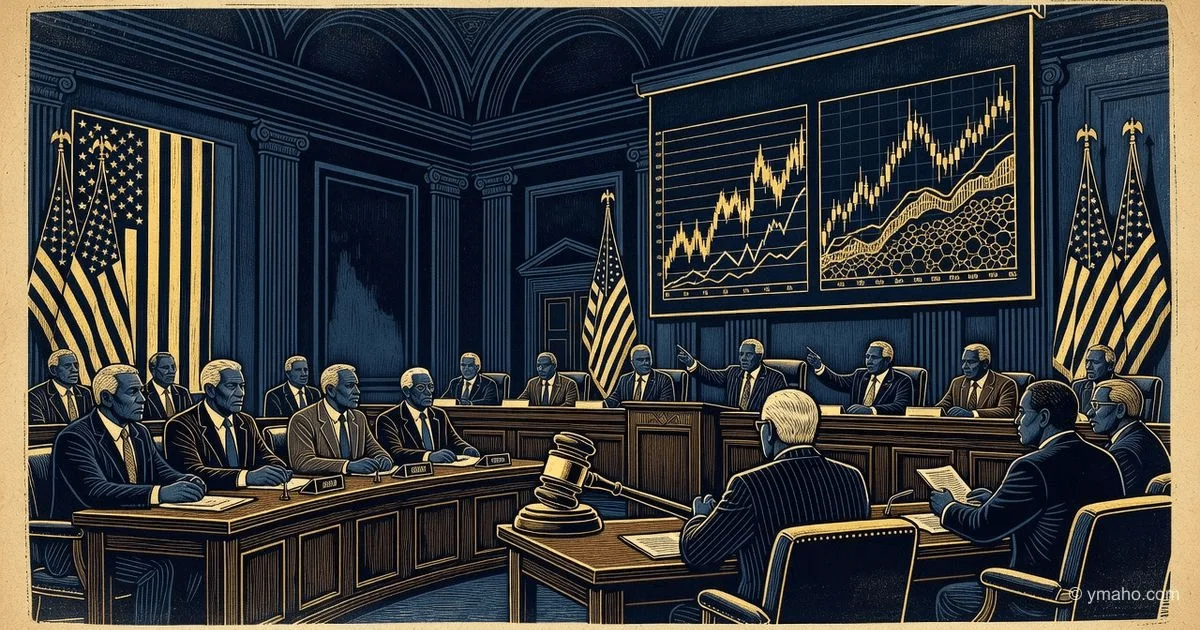
On June 9, 2026, the US House Ways and Means Committee held hearings on seven bills regarding digital asset taxation. Sounds boring? Not at all. This is an attempt to codify a new reality where 70 million Americans own cryptocurrencies, and the IRS has been receiving data on every transaction via Form 1099-DA since 2025. Tax compliance is no longer optional—it's mandatory, and Congress is trying to make it bearable. And you know what? It's not easy.
Notice the format: Committee Chairman Jason Smith introduced not one comprehensive bill, but seven separate ones. A tactical move straight out of the "divide and conquer" playbook—build coalitions around specific provisions. Someone might oppose changes to wash sale rules but support a $10 exemption on gas fees. Someone else might oppose staking incentives but back the exemption for small transactions. A smart political maneuver that increases the chances of passing at least part of the package.
But here's what really matters: these hearings involve more than just lobbyists. Witnesses include Lawrence Zlatkin (Coinbase), Sarah Reilly (Fidelity), Jason Somensatto (Coin Center), and Mike Kercher (NYU Tax Law Center). When a representative from Fidelity, which manages $5.7 trillion in assets, sits at the same table as Coinbase to discuss tax breaks for blockchain fees—that's a signal. Traditional finance and the crypto industry are finally speaking the same language. Just a couple of years ago, that would have seemed like science fiction.
Timeline and Context
Let's reconstruct the sequence. June 2, 2026: Chairman Smith announces the hearings. Between that date and the hearing day, the committee circulates the seven bills for internal discussion. Full texts haven't been published yet, but key provisions are known from leaks.
| Date | Event |
|---|---|
| June 2, 2026 | Chairman Smith announces hearings |
| June 9, 2026, 2:00 PM EST | Hearings begin; witnesses testify |
| November 2026 | Potential window for passing laws before elections |
A partisan divide immediately emerged. Republicans push for rapid modernization of the tax code. Democrats, including Richard Neal, warn that changes may carry unexamined market risks. An age-old debate: innovation versus caution.
Key point: hearings are not a vote. They're information gathering and a public rehearsal of arguments. But they kick off the formal legislative process. The context: since January 1, 2025, mandatory broker reporting via Form 1099-DA has been in effect. In 2025, the IRS identified $120 billion in unreported crypto income and issued $30 billion in fines. Current rules treat crypto as property, taxing every sale, exchange, or spend. It gets absurd: buy a $3 coffee with Bitcoin that appreciated $0.37 since purchase—technically, you must report the capital gain. Seriously?
Who Wins and Who Loses
Winners: First and foremost, stakers and miners. Under current rules (Rev. Rul. 2023-14), validators must pay tax on rewards when received—even if they haven't sold the tokens and the asset's price has dropped 50%. The proposed deferral until sale eliminates the "tax trap" where liabilities exceed liquidity. For professionals earning from staking on Ethereum, Solana, and other PoS networks, this is critical.
Second winner: ordinary users making small transactions. The de minimis exemption (from $200 to $600) and the exclusion for gas fees up to $10 directly target bureaucratic absurdity. Buying coffee or a $50 NFT will no longer require calculating capital gains. This could genuinely spur crypto use as a payment method.
Third winner: large donors. Eliminating mandatory qualified appraisal for crypto donations up to $5,000+ will simplify life for wealthy donors and foundations.
Losers: Stablecoin holders—potentially. Although bills propose treating them as cash equivalents, any exchange rate fluctuation (even 0.1%) could still create taxable events. The issue remains unresolved.
Second losers: traders using tax-loss harvesting strategies. If wash sale rules (disallowing loss deductions on immediate repurchases) extend to crypto, the popular "sell in December, buy back in January" strategy disappears. For hedge funds and active traders, this is a serious blow.
Third losers: non-compliant taxpayers. The voluntary disclosure program is an amnesty, but for those who don't apply, the IRS now has full data from exchanges. Penalties for past periods could be devastating.
What the Media Isn't Saying
The main non-obvious insight: the most important bill is not about staking or the $10 exemption. It's about the wash sale rule and its impact on institutional strategies. While everyone discusses "tax breaks," investment funds are closely watching whether the loophole allowing sale of loss-making assets and immediate repurchase will be closed. If it happens, year-end market volatility could drop sharply, and December trading volumes could fall 20-30%. The media is silent on this. Why? Because it's hard to explain in a headline. Much easier to write about "another Congressional hearing."
Second hidden factor: Joshua Jarrett has filed another lawsuit. You probably haven't heard that name, but you should. It's key to the tax future of staking. Jarrett is suing the IRS, arguing that staking rewards should not be taxed upon receipt, only upon sale. His argument: a farmer doesn't pay tax when the vegetable sprouts—he pays when he sells the harvest. Makes sense, right? The case Jarrett v. United States (2024) is still active. Congress is trying to pass a law, but a court could resolve this issue radically differently. If Jarrett wins, the staking bills become unnecessary. If he loses, they're desperately needed.
Third insight: Democrats aren't against tax reform; they're against "tax breaks for the rich." The partisan split at the June 9 hearings was real, but its cause isn't crypto per se. Democrats fear that deferring tax on staking and mining is a loophole for wealthy validators who receive millions in tokens and pay no taxes for years. Republicans see it as supporting innovation. A compromise is possible, but it will be painful.
Forecast: Next 30 Days and 90 Days
Next 30 days (through mid-July): After the June 9 hearings, expect a lull. Congress goes on recess at the end of July, and before that, they need to at least bring the bills to a committee vote. Probability: 40-50%. If none of the seven bills advance before recess, the process drags into fall. For the market, that means continued uncertainty—a moderately negative signal for Coinbase (COIN) and mining companies like Marathon Digital (MARA) and Riot Platforms (RIOT). They've already baked tax reform into their 2026-2027 forecasts.
Next 90 days (through September): The key moment is Congress's return after recess and the election campaign. Crypto tax reform is a "low-hanging fruit" that could pass as part of a larger package. But if Democrats continue blocking Republican proposals, the odds of passage before the election drop to 30%. In that case, we'll see companies (especially miners) start migrating to friendlier jurisdictions—UAE, Singapore. And then the US's position as a crypto hub weakens. Who benefits? Certainly not America.
Editorial Forecast
Asset: Coinbase stock (COIN, Nasdaq) Direction: Moderate growth (2-4%) in the next 24-72 hours. Key Levels: $210—resistance (test after hearings), $198—support. Confidence Level: Low. Main Risk: If leaks emerge that Democrats will block all seven bills in committee, Coinbase stock could fall 5-7%. The market has already priced in at least partial progress.
The June 9 hearings didn't yield immediate results. But the very fact they were held confirms lawmakers are serious. The participation of Fidelity and Coinbase as witnesses legitimizes the process. The market will react positively to any signs of forward movement—especially on de minimis exemption and staking tax deferral. We recommend keeping an eye on Coinbase stock as a beneficiary of reduced regulatory uncertainty. But with a 3-6 month horizon, not days. The current price already partly reflects optimism; better to wait for a correction on news of partisan disputes before entering.
— Editorial Team