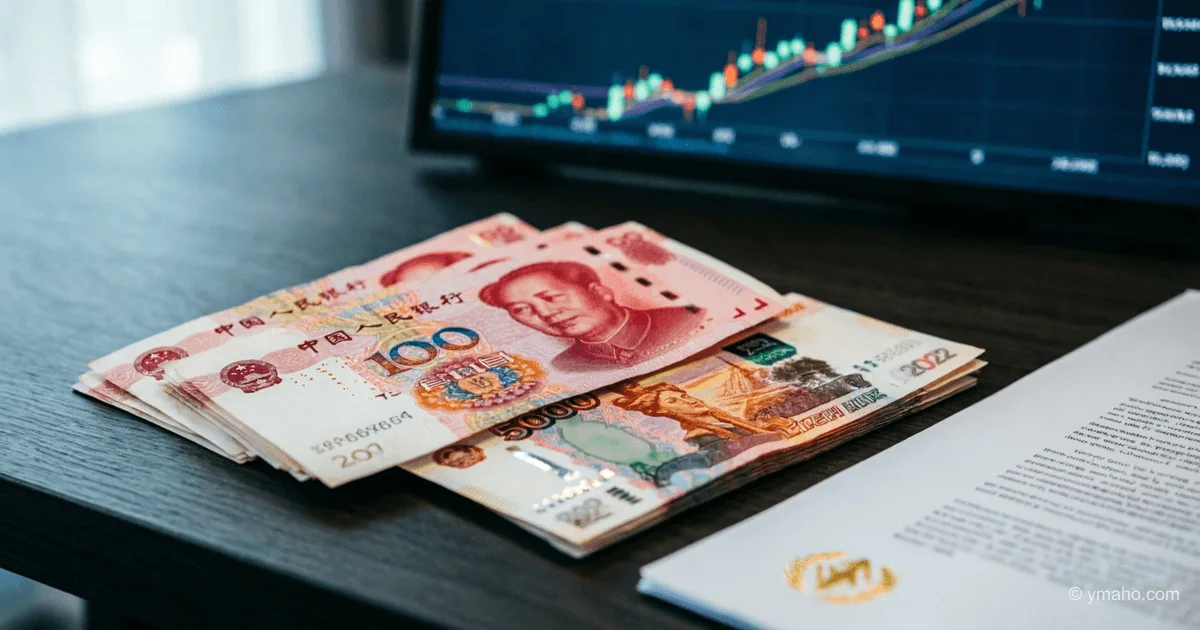
Central Bank of Russia Buys 1.2 Billion Rubles Worth of Currency Under Fiscal Rule
The Bank of Russia on May 18 conducted operations to purchase foreign currency in the 'Chinese yuan — ruble' instrument with 'tomorrow' settlement for a total of 1.2 billion rubles in order to implement the fiscal rule.
The following is a detailed analytical piece written from the perspective of an industry insider.
1.2 Billion Yuan: How the Central Bank of Russia Quietly Reshapes the Currency Reserve Map
The Essence: What Is Really Happening
The Central Bank of Russia's currency purchase operation worth 1.2 billion rubles on May 18 looks like a routine technical transaction under the fiscal rule. In reality, it is the tip of the iceberg. The regulator is fine-tuning the exchange rate, balancing two conflicting objectives: replenishing the National Welfare Fund with yuan and preventing the ruble from excessive strengthening amid the oil rally. The net purchase volume is 1.18 billion rubles per day — the difference between the Ministry of Finance's gross purchase (5.8 billion rubles) and the Central Bank's counter sale (4.62 billion rubles) as part of mirroring NWF expenditures. The market barely notices this volume because the daily turnover of the Moscow Exchange's currency section is measured in hundreds of billions of rubles.
The real story is not about the amount but the structure. The NWF is replenished exclusively with yuan and gold — currencies of unfriendly countries have been excluded from reserves since 2025. Every ruble spent by the Central Bank on buying yuan reduces the free volume of Chinese currency on the domestic market and increases the ruble's dependence on the trade balance with China.
Timeline and Context
The resumption of purchases in May 2026 is the result of a three-month pause that the market perceived extremely ambiguously.
February 2026: The Ministry of Finance suspends operations with currency and gold on the domestic market. The official reason is low prices for Russian oil due to sanctions discounts and the risk of depleting the NWF.
February 28, 2026: Closure of the Strait of Hormuz after US and Israeli strikes on Iran. Oil soars, but the Ministry of Finance holds off. The ruble remains artificially overvalued, drawing criticism from analysts.
March-April 2026: Operations are completely frozen. The Ministry of Finance discusses changing the base oil price in the fiscal rule, but ultimately Minister Anton Siluanov keeps the cutoff at $59 per barrel.
May 8 – June 4, 2026: The Ministry of Finance resumes purchases with double force. The plan includes deferred volumes for March and April, resulting in 110.3 billion rubles per month or 5.8 billion rubles per day in gross purchases.
May 18, 2026: The Central Bank of Russia buys yuan worth 1.2 billion rubles with 'tomorrow' settlement — the net position after mirroring.
Who Wins and Who Loses
Winners:
- Exporters receiving revenue in dollars and euros. The Central Bank's yuan purchases ease pressure on the ruble. This partially offsets the effect of expensive oil, which, given the current account, would create excessive strengthening of the Russian currency.
- The Ministry of Finance and the budget. Oil and gas revenues fell by 38.3% in the first quarter of 2026 to 2.298 trillion rubles (about $30.95 billion at an exchange rate of 74.2 rubles per dollar). The resumption of yuan purchases signals that the ministry sees a recovery in revenues and begins replenishing reserves.
- The People's Bank of China. The growing share of the yuan in Russian reserves strengthens the Chinese currency's status as a regional anchor. This is a long-term victory for Beijing in the de-dollarization project.
Losers:
- Importers of Chinese equipment. The Central Bank's demand for yuan reduces the supply of currency for commercial purchases. At an exchange rate of 10.625 rubles per yuan, every billion withdrawn by the regulator creates additional demand that can push the cross rate higher.
- Holders of ruble deposits. The mild weakening of the ruble against the yuan hurts the purchasing power of ruble savings. Unlike dollar savings, the public does not have mass access to yuan-denominated instruments.
What the Media Are Not Saying
Insider One: The actual oil price for the budget is no longer $59.
Formally, the cutoff under the fiscal rule remains at $59 per barrel. However, the Ministry of Finance was forced to resume purchases only when Brent firmly settled above $90 and the Russian grade began generating excess revenues with a three-month lag. If you combine the first-quarter oil and gas revenue shortfall (down 38.3% year-on-year) with the growth in non-oil and gas revenues (up 10.2%), it becomes clear: the fiscal rule is operating not in a pro-cyclical but in an anti-crisis mode. The Ministry of Finance is buying currency not because there is a surplus, but to create a cushion in case of another price drop.
Insider Two: The net purchase of 1.18 billion rubles is an understated figure.
Alexander Potavin, an analyst at Finam, estimated the actual purchase volume without mirroring at 13 billion rubles per day. The difference between 13 and 1.18 billion rubles is the hidden volume of currency that the Central Bank sells from the NWF to cover current expenses. In essence, the Ministry of Finance simultaneously buys and sells currency, masking the actual spending of reserves under the guise of mirroring. This allows keeping the ruble exchange rate below its fundamentally justified level.
Insider Three: Gold is quietly returning to the operations structure.
The Ministry of Finance buys not only yuan but also gold. Unlike currency operations, the precious metal is acquired through affiliated structures, which does not create visible pressure on the exchange rate. The share of gold in reserves will grow as Western sanctions make holding yuan increasingly risky due to the threat of secondary sanctions.
Forecast: Next 30 Days and 90 Days
30-day horizon (until June 18, 2026).
The Ministry of Finance's plan is in effect until June 4, after which a new volume for the next month will be announced. Given that Brent is hovering around $110 per barrel and inflation in Russia slowed to 3.11% in January-April, the Ministry of Finance will have room to increase purchases. The projected daily net volume could rise to 3-5 billion rubles. The dollar exchange rate, which the Central Bank set on May 19 at 72.3497 rubles, will likely shift to the range of 75-77 rubles per dollar. The ruble will also weaken against the yuan — the cross rate will rise to 11 rubles per yuan.
90-day horizon (until August 17, 2026).
By the end of summer, the cumulative effect of operations will begin to change the structure of the currency market. If Brent remains above $100 and sanctions discounts on Russian oil shrink, the currency inflow will become stable. In this scenario, the Central Bank could increase purchase volumes to 8-10 billion rubles per day in gross volume and 5-6 billion rubles net. The dollar exchange rate will move to 85 rubles, and the share of the yuan in reserves will reach an all-time high. Analyst Potavin from Finam expects this closer to the end of the year.
The main risk is a reversal of the oil trend. If the conflict in the Middle East is resolved and Brent falls below $80, the Ministry of Finance will switch back to sales. This would cause a sharp strengthening of the ruble and call into question budget revenues from export duties. In any case, the era of the dollar and euro in Russian reserves is over — and every operation worth 1.2 billion rubles confirms this.
— Editorial Team









