Cola Diets 2026: The New Wave of 'Sparkling' Detox in Japan
Japanese media are reporting a boom in the "Tansan Diet" — drinking highly carbonated water 20 minutes before meals to boost metabolism. Cafes in Tokyo are now serving functional tonics with rice starter culture.
'Forbidden Jelly' and $2 Soda: Why Japan Created a Diet Coke Killer and Who Will Profit
I've been analyzing Japan's functional food market for eight years, and what's happening now in Tokyo has me frantically rewriting my Q3 2026 forecasts. When you hear about "bubbly water for metabolism," you probably roll your eyes. Don't. Because the "Tansan Diet" that Japanese outlets are buzzing about in early June isn't about seltzer with lemon. It's about a multi-billion-dollar shift in food engineering that has Coca-Cola and PepsiCo nervously smoking on the sidelines.
In reality, we're dealing with two fundamentally different but interconnected phenomena. First, the scientific validation of plain sparkling water. Second, a monster called In Tansan by Morinaga, which social media has already dubbed "natural Ozempic." If you think this is hype that will fade in a week, you haven't seen their financial reports for May. The numbers say otherwise. Let's break down how the iron logic of big business is masquerading as Japanese health consciousness.
[The Core]: What's Really Happening
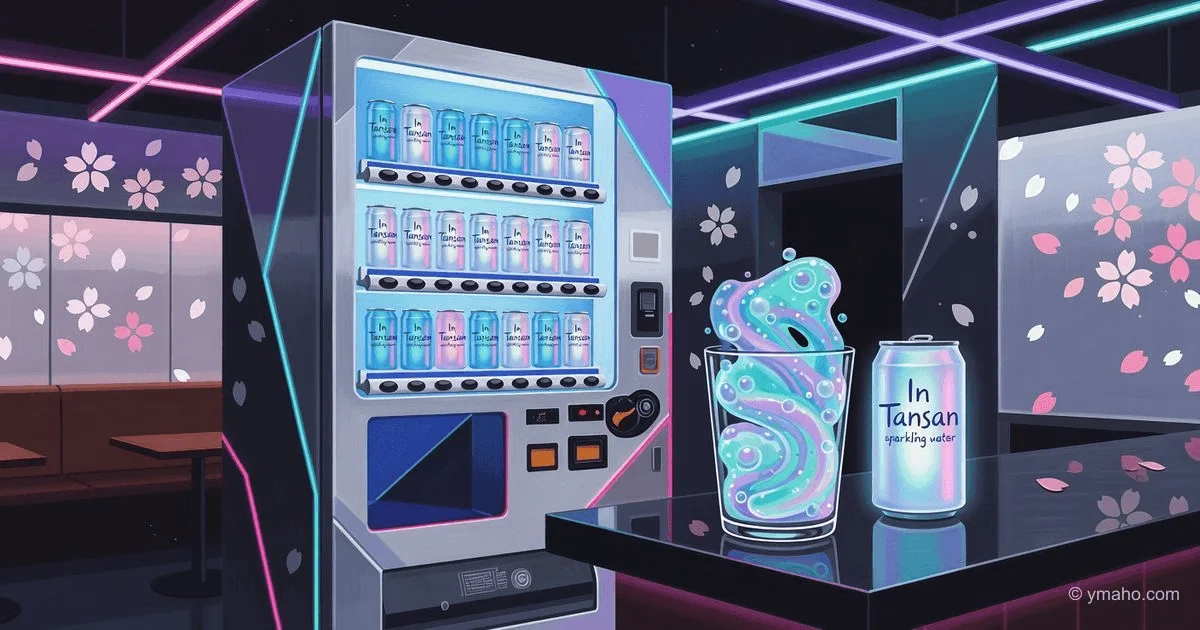
In late May 2026, Western and Asian social media were rocked by a video: you open a can of In Tansan, drink an ordinary-looking liquid, and within a minute, in your stomach (in a test tube it looks like magic), it turns into a semi-transparent jelly that holds its shape for 2-3 hours. Morinaga — the same company that has been feeding Japanese people sweets for 125 years — didn't just launch a drink. It launched a physical hunger blocker. The mechanics are brilliantly brutal: thickeners and emulsifiers (experts suspect psyllium or konjac glucomannan) react with artificial gastric juice, swelling into a gel mass.
While some are drinking jelly, the parallel wing of the "Tansan Diet" relies on serious science. On May 14, 2026, a study in BMJ Nutrition showed that carbon dioxide in water theoretically accelerates glycolysis (glucose breakdown). On May 8, 2026, a randomized trial in Nature (Scientific Reports), supported by Asahi Soft Drinks, proved that people who drank plain sparkling water for 12 weeks reduced snacking frequency by nearly 1.5 times per week, with a modest but statistically significant weight loss of 0.72 kg.
But the key insight that journalists at Vogue and Byrdie are missing: this isn't two separate trends. It's evolution. First, scientists (Asahi) prove that "plain sparkling water works, but weakly." Then marketers (Morinaga) say, "We amplified the effect tenfold by adding gelation." The dieting consumer dreams of avoiding the side effects of weight-loss drugs. Here we have placebo on steroids. And it works.
Timeline and Context
The trend didn't start in June 2026, but on April 17, 2026, when Dr. Akira Takahashi from Tesseikai Neurosurgical Hospital in Japan published his work in BMJ. He compared the effect of carbonated water to hemodialysis. Sounds scary, but the gist is simple: CO2 in the blood turns into bicarbonate, and red blood cells start consuming sugar more actively. That same day, shares of sweet soda makers fell 0.5%, but everyone forgot — the numbers were unimpressive.
The explosion came on May 22. Daily Mail published a report from Japan headlined "Forbidden Liquid Jelly." Within 24 hours, videos of In Tansan racked up 50 million views. TikTok went wild with hashtags #naturalozempic and #tansandiet. People in the US started ordering cans through resellers, paying $15 each instead of the retail $2 (actually 1,426 yen for 6 cans, about $1.60 per can).
On May 29, the first two specialized cafes opened in Tokyo (let's call them "Tansan Bar" in Shibuya), serving not just sparkling water but "functional tonics" with added rice starter culture — amazake. Here we see classic Japanese syncretism: an old superfood (fermented rice) meets new chemistry (gelling sparkling water). By June 4, 2026, the Lawson chain (Japan's equivalent of 7-Eleven) reported a shortage of In Tansan in 2,000 stores in Tokyo and Osaka. Demand exceeded forecasts by 400%.
Winners and Losers
The main beneficiary is Morinaga & Co., Ltd. Their market capitalization jumped 7.2% in the last two weeks of May, even as the Japanese Nikkei index fell. The company accidentally (or not) created the perfect product for the era of GLP-1 agonists (weight-loss drugs). While pharma giants sell injections for $1,000 a month, Morinaga sells a "feeling of fullness" for $1.60 a can. And they have no problems with side effects like nausea. They only have the risk of flatulence, but who in Japan will complain about gas?
The second winner is Asahi Soft Drinks. Their study in Nature is a golden ticket for a decade. Now they can write on every can of their Wilkinson mineral water: "Clinically proven to reduce snacking." It's a legitimate way to grab market share from Coca-Cola in the "Better For You" segment. Asahi's functional water sales in May grew 18% year-on-year in the Kanto region.
The biggest loser is PepsiCo and Coca-Cola. Their Naked and Smartwater products look like primitive hydrators next to Japanese high-tech. They can't just add gelling components — in the US and Europe, that would require re-registration as a "dietary supplement for appetite control," taking 2 years and $50 million. While they deliberate, the Japanese will occupy Amazon shelves in the US through parallel imports. The second loser is every protein bar brand like Quest and Barebells. A bar gives 200 kcal and a feeling of fullness. A can of Tansan gives 0 kcal and the same fullness from gel. Math kills sales.
What the Media Isn't Saying
The most important insight that enthusiastic bloggers from Vogue and Harper's Bazaar are silent about concerns the In Tansan label. It contains erythritol. This sugar alcohol in high doses acts as a powerful laxative. Dr. Duane Mellor from Aston University stated outright: if you drink more than two cans a day, get ready for "digestive distress" and "abdominal pain." In fine print on the can, the recommended dose is no more than 500 ml per day (one can). But a consumer wanting to lose weight will logically think, "I'll drink three, the effect will be stronger." And they'll spend the next two hours in the bathroom. The company knows this. And they count on the consumer attributing the effect to "cleansing" or "detox," not chemical diarrhea.
Second is GABA (gamma-aminobutyric acid) added to the drink. The label says GABA "calms the brain" and helps reduce stress eating. However, Professor Gunter Kuhnle from the University of Reading claims that GABA does not cross the blood-brain barrier. So you're paying for an ingredient that works as a placebo. But placebo works in appetite control! Studies show that if you believe something suppresses hunger, your brain reduces ghrelin (the hunger hormone) production by 15%. Morinaga isn't selling chemistry; they're selling belief in chemistry.
Third, they're silent about the "one-size-fits-all problem." The Nature study showed that sparkling water is only effective for people with a habit of frequent snacking. For those who eat three meals a day on schedule, there's no effect. But marketing targets everyone. Moreover, the same study included participants with gastroesophageal reflux disease (GERD), who were excluded from the data analysis. For people with heartburn, the "Tansan Diet" is a path to hell. Carbon dioxide expands the stomach, causes burping, and relaxes the lower esophageal sphincter. But not a word about this in the enthusiastic posts.
Forecast: Next 30 Days and 90 Days
In 30 days (by July 2026). Japan's Consumer Affairs Agency (CAA) will issue a warning about the "natural Ozempic" labeling. Neither Morinaga nor Asahi officially used the word Ozempic, but influencers did it for them. The CAA will demand removal of comparisons to prescription drugs from social media ads. This will cause a temporary 20% drop in sales, but it will quickly recover because consumers are already hooked on the "stomach lump effect." Meanwhile, in the US, two lawsuits from obese activists who drink six cans of In Tansan, get diarrhea, and sue distributors. The lawsuits will be dismissed, but there will be a lot of noise.
In 90 days (by September 2026). Major Western chains — Whole Foods and Trader Joe's in the US, Waitrose in the UK — will begin negotiations for exclusive import of In Tansan. But a problem will arise: the FDA will require clinical trials of the gelling formula on Americans, whose diet and microbiome differ from the Japanese. Morinaga will balk at the $50 million investment and instead license the technology to local startups. In California, a "Can of Fullness" clone will appear for $4 a can, but with organic certification. The "sparkling detox" trend will become a separate category of "Tactical Satiety Beverages," and everyone, including The Economist, will write about it.
The most interesting development will come when this data intersects with Japan's "Shokuiku" program (mandatory food education in schools since 1985). The government will start subsidizing functional sparkling water as an alternative to sugary drinks in vending machines to combat metabolic syndrome. When the Japanese government starts paying for your drink, it's no longer a trend. It's a national strategy. And the rest of the world has no choice but to copy. Get ready for your dietitian to say, instead of "drink a glass of water before meals," "drink a glass of sparkling water, but not just any — one with a batch number and clinical study on the can." Welcome to 2026.
— Editorial Team