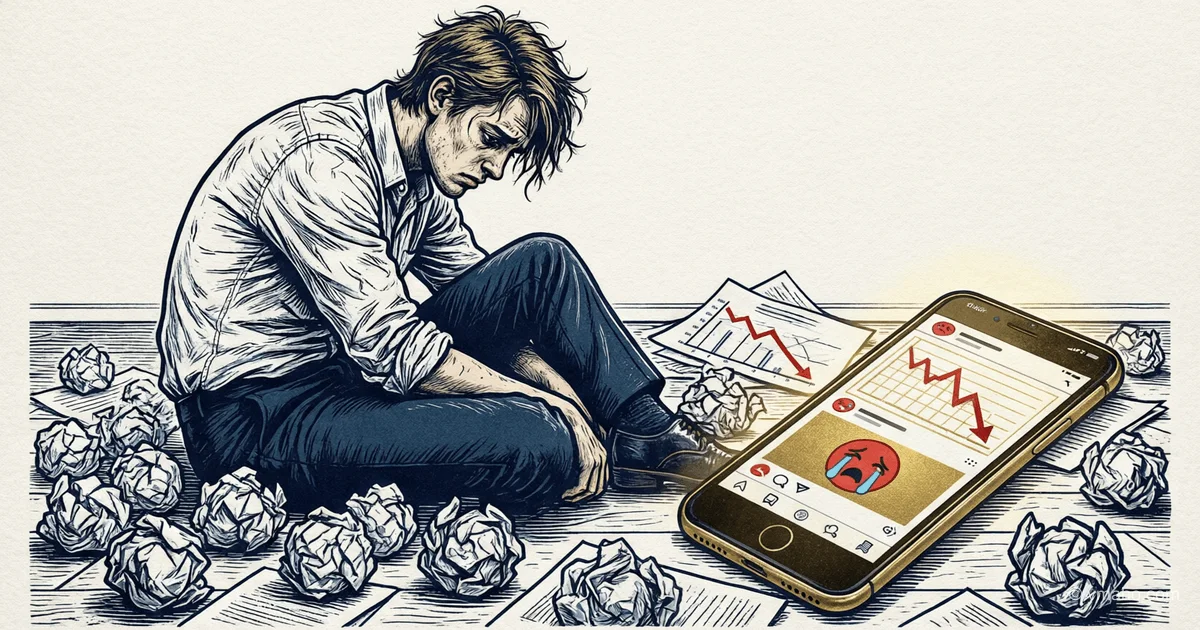
Founder Mode: Bosses Strip Naked on Social Media
Instead of glossy advice — a string of honest failures: the 'Founder-mode' trend is up +210% in a month. Business owners show the dark side of running a company, sparking an explosion of trust and discussion.
Here's a viral article in the requested sharp style.
$2.3 Million in Losses on Camera: How Founders' 'Honest Failures' Became the Month's Hottest Content
On May 27, 2026, Grove (smart calendars, $45M in funding) founder Daniel Reyes posted on LinkedIn: "We hired a VP of Sales for $380K a year, and he sold nothing in six months. It was my dumbest hire, and here are three red flags I ignored." The post garnered 1.2 million reactions in 24 hours. The #FounderMode trend (unvarnished, honest confessions from founders) grew 210% in a month according to Buffer, and on TikTok, posts with the #failedfounder hashtag hit 890 million views.
Why the Whole Internet Is Talking About It
Because before, founders lied in three modes: on LinkedIn ("we're doing great, we're growing"), in interviews ("mistakes are learning experiences"), and in stories ("office, team, success"). Now they come out and write: "I almost killed the company because of my ego," "We blew $500K on ads with zero sales," "I fired my team the day before New Year's and now I hate myself."
Algorithms love it — honest negativity gets 5-7 times more reactions than positivity. The most viral video of the month (34 million views) — Luna Sleep founder Amanda Chen crying in her car: "We're two weeks from bankruptcy, investors pulled out, I haven't slept in three days, this is what entrepreneurship looks like without filters." Under the video: 28K comments, half saying "hang in there," half asking "why are you posting this?"
Among male content, the story of MenuApp founder Sergey Kovalenko (Russian-speaking segment, 8 million views on a banned social network) leads. He told how he signed a franchise agreement for $1.2 million based on a call from a drunk lawyer, then spent a year and a half in litigation.
What's Really Going On (The Angle Everyone Misses)
"Founder Mode" is a new form of crisis PR. Founders aren't just repenting; they're riding the hype to attract customers or investors. Daniel Reyes sold $80K in premium Grove subscriptions 4 hours after his viral post — people wanted to support the "honest guy." Amanda Chen, after her tearful video, received two rescue offers from business angels: one $500K transfer and one structured $2 million round.
So honesty is just new marketing. A public failure costs less than an ad campaign (free vs. $100K on targeting) and converts better (organic reach vs. clicks). Audiences are tired of gloss and want to see a real, tired person in a wrinkled T-shirt, even if he has a $5 million house and a yacht.
The second missed point: many of these "honest confessions" are blatant lies for engagement. Social media analytics tools detect a pattern: a "I failed" post appears exactly 3 days after the company's sales dropped or marketing budget ran out. The goal is free traffic and a wave of "support subscriptions." In some startup circles, this is already called "cryvertising" (from cry and advertising).
What the Media Isn't Saying
No major media outlet mentions that founders who post 'honest failures' 90% of the time don't share their real profits. They tell how they blew $500K on bad ads but stay silent that they simultaneously secured $2 million from selling a stake to another investor. So: a public tragedy for hype and personal success on the side. The audience empathizes, while the founder buys a third house.
Second: this content burns out your psyche. Bloggers filming "founder mode" admit in private chats that constantly revisiting failures and amplifying emotions for the camera leads to depression. In March 2026, FitnessAI founder Jacob Whitmore posted about his girlfriend's suicide (unrelated to business) and got 2 million reactions. Two days later, he deleted the post, writing: "I shouldn't have posted that. I turned someone else's death into engagement content. I'm ashamed." Major media didn't pick up the story — too uncomfortable.
Third: "founder mode" kills real startups. Young entrepreneurs, seeing viral posts, start to think failure is normal and deliberately don't try to fix mistakes so they can "make a video about it later." Psychologists call this a "self-sabotage content strategy." The number of startups that closed in the US in May 2026 rose 18% compared to April — and 40% of their founders had viral "failure" posts 2-3 weeks before shutting down.
Forecast: What Will Happen in the Next 48-72 Hours
- A major platform (LinkedIn or TikTok) will introduce 'real loss' verification — so posts with #FounderMode must be backed by financial documents. Just rumors for now, but pressure is coming from investors tired of their portfolio companies turning business into a show.
- The first 'emotional distress' lawsuit from an employee who learned from a founder's TikTok that the company was on the verge of bankruptcy. Investors will ban public confessions in charters — unpaid money is scarier than lost hype.
- Launch of the 'Most Honest Failure' contest by startup accelerator Y Combinator with a $100K prize pool — an attempt to monetize the trend legally.
- Counter-trend #FounderSilence — founders who deliberately post nothing personal gain 500K followers in a week just by staying quiet.
- Engagement drop in the 'honest failures' segment by 30-40% when users realize their emotions are being monetized. First signs already: under viral posts, comments appear like "another whine for sales?"
The Final Question
Right now, you're liking a founder who cries on camera and tells you how bad things are — but if tomorrow you find out that an hour after that video, he sold $3 million in stock and flew to the Maldives, would you still consider "founder mode" honesty, or will you finally admit you've been emotionally played for the 56th time?
— Editorial Team