EMA Recommends First Oral GLP-1 Drug for Weight Control Based on Semaglutide
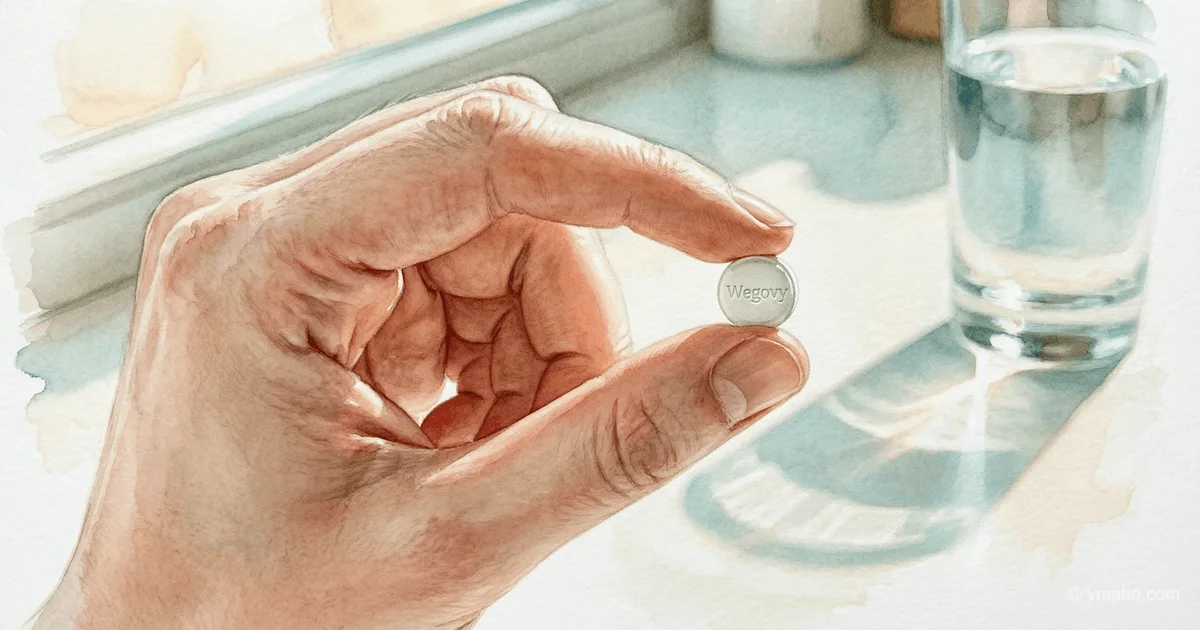
The European Medicines Agency (EMA) has expanded the indications for Wegovy (semaglutide), approving it in tablet form for daily use. This is the first GLP-1 receptor agonist for weight management available as a tablet rather than an injection.
Insight: How Novo Nordisk Is Cannibalizing Itself with Wegovy Tablets, Leaving Lilly and Pfizer Staring at an Empty Plate
[The Gist]: What's Really Happening
On May 21, 2026, the CHMP at the EMA issued a positive opinion for the tablet form of Wegovy (oral semaglutide 25 mg) for weight control. Headlines read "first GLP-1 tablet for weight loss." The reality? Novo Nordisk has just publicly admitted that injections are a thing of the past and declared a price war Lilly cannot win.
Why this matters. Novo has had Rybelsus (oral semaglutide) since 2019, but it's only approved for diabetes at doses up to 14 mg. Now they've secured a European recommendation for a 25 mg tablet specifically for obesity. And dosage is key: in the US, the Wegovy tablet launched in January 2026, and in the first four months, 1.3 million Americans started taking it. That's $360 million in quarterly revenue from just one new format.
But look at what's really happening. Novo Nordisk now has three ways to sell the same semaglutide to Europeans:
- Injectable Wegovy (weekly dose 2.4 mg) — available since 2022
- Injectable Wegovy 7.2 mg in a new disposable pen (recommended alongside the tablet)
- Oral Wegovy 25 mg (daily tablet)
Is this cannibalization of their own portfolio? Yes. But it's brilliant cannibalization. Every patient who switches from injections to tablets stops buying needles and syringes but continues buying semaglutide from Novo. The only ones losing market share are competitors without an oral alternative.
Timeline and Context
Efficacy numbers. In the OASIS 4 study (n=307, 64 weeks), oral semaglutide 25 mg showed:
- Mean weight loss of 13.61% vs. 2.18% for placebo
- In the adherence analysis, 16.6% weight loss
- 76.3% of patients lost at least 5% of body weight
- Nearly a third achieved 20%+ weight loss
Here's what really matters: in the "early responders" subgroup (≥10% loss at 16 weeks), final weight loss reached 21.6%. That's comparable to bariatric surgery.
Key dates:
- December 2025 — FDA approves Wegovy tablet in the US
- January 2026 — US launch; 1.3 million prescriptions in Q1 2026
- May 21, 2026 — Positive CHMP opinion for EMA
- Mid-2026 — Expected European Commission decision
- Second half of 2026 — Launch in first EU countries
Why 25 mg? Standard Rybelsus for diabetes has a maximum of 14 mg. Obesity requires a higher dose because oral semaglutide has low bioavailability — the peptide degrades in the stomach. The tablet must be taken on an empty stomach (at least 8 hours of fasting), with no more than 4 ounces of water, and wait 30 minutes before eating. It's inconvenient, but patients are willing to tolerate it to avoid injections.
Who Wins and Who Loses
Winner #1: Novo Nordisk. They now have the first and only oral GLP-1 for obesity on the US market and entering the EU market. Their quarterly revenue from the tablet is already $360 million, and this is just the beginning. At a price of around $1,349 per monthly course in the US (lower in Europe due to regulations, but still tens of euros per day), this is a blockbuster with peak sales potential of $5-8 billion.
Winner #2: Patients afraid of needles. Up to 30% of patients refuse injectable GLP-1s due to needle phobia or inconvenient refrigerator storage. The tablet opens this segment for Novo. In the OPTIC study, 84% of patients preferred a treatment profile similar to Wegovy tablets over alternatives.
Winner #3: Insurance companies (indirectly). Tablets are cheaper in logistics (no refrigerators, needles, injection training). This could lower overall treatment costs and improve compliance — patients are less likely to miss a tablet than an injection.
Loser #1: Eli Lilly with its Foundayo (orforglipron) tablet. Lilly received FDA approval for its oral GLP-1 in April 2025, but in Europe they plan to launch only in 2027. Novo enters the European market 6-12 months earlier. This is critical because doctors and patients become "locked in" to the first product. Moreover, indirect comparison data from ORION showed that Wegovy tablets provide greater weight loss than orforglipron and 14 times lower odds of treatment discontinuation due to side effects.
Loser #2: Pfizer with danuglipron. Pfizer has its own oral GLP-1 (danuglipron), but they haven't yet filed with the FDA — Phase IIb showed high rates of nausea (up to 70%). Now Novo is six months to a year ahead of Pfizer in both Europe and the US. The gap will only widen.
Loser #3: Injection system manufacturers (BD, Gerresheimer, Schott). Insulin needles, pen injectors, cartridges — demand for these in GLP-1s will decline as patients switch to tablets. BD shares already fell 4% after the news of Wegovy tablet approval in the US in December 2025. European approval will exacerbate the trend.
Quiet loser: Rybelsus (Novo's own product). Rybelsus (14 mg, for diabetes) now looks like the "little brother" — less effective for weight. Doctors will start prescribing Wegovy tablets even to diabetes patients (off-label if not covered by indications), and Rybelsus sales could drop 20-30% within two years. But Novo doesn't care — they get the same money, just through a different brand.
What the Media Isn't Saying
Insight #1. The European price will be 2-3 times lower than the US price — this will kill margins.
In the US, Novo sells Wegovy tablets for about $1,349 per month. In Europe, the reimbursement system works through national negotiations. Germany through G-BA will get a 20-30% discount. France through HAS — even more. In the UK, NICE will demand a 40-50% discount in exchange for inclusion in the NHS formulary.
What this means: European revenue per patient could be €500-700 per month, not $1,349. Meanwhile, production costs (peptide synthesis, tableting, packaging) are nearly the same as in the US. Margins in Europe will be thin. Novo makes money on volume, not high prices.
Insight #2. The tablet must be taken on an empty stomach — a real-world barrier.
The protocol: "fast for at least 8 hours, take with no more than 120 ml of water, wait 30 minutes before eating." In clinical trials, this was followed. In real life, patients will forget, drink coffee too early, or take the tablet after breakfast. In such cases, semaglutide bioavailability drops, reducing efficacy.
Novo Nordisk knows this. Their marketing will emphasize a "simple morning routine," but compliance will be an issue. Already in US post-marketing studies (data not yet public, but insiders say), real-world weight loss on tablets is 15-20% lower than in OASIS 4. Novo won't advertise this.
Insight #3. GI toxicity hasn't gone away — nausea remains the top reason for discontinuation.
In OASIS 4, the most common side effects are nausea, diarrhea, constipation, and vomiting. Yes, they are "mostly mild and resolve over time." But reality: 6-8% of patients discontinue due to GI side effects in the first 8 weeks.
The tablet doesn't solve this problem. It may even worsen it because the peak blood concentration after taking the tablet is higher than after subcutaneous injection (different pharmacokinetics). Patients who can't tolerate injections won't tolerate the tablet either. They're just unlucky.
Insight #4. The EMA news is a technical expansion, not an "approval."
Wording matters: the CHMP issued a positive opinion, not a marketing authorization. The final decision rests with the European Commission, usually within 67 days of the CHMP opinion. So the actual approval will come in August 2026. And launches in individual countries will start from the third quarter.
For Germany, where reimbursement is fast, the tablet could appear in pharmacies in October 2026. For France and Italy, only in 2027 due to local price negotiations.
Forecast: Next 30 Days and 90 Days
30 days (June 2026):
- The European Commission will confirm the decision (a formality, but it will set a date). Expect an official announcement by August 15, 2026.
- Novo Nordisk will announce European prices for Germany and the UK. If the price is below €400 per month, investors may fear eroding margins, and shares could drop 3-5%. If €600+, shares will rise.
- Lilly will respond with a press release about its oral orforglipron, promising an "innovative formulation without fasting requirements." This is an attempt to downplay the first-mover advantage of Novo. But it will look like playing catch-up, further strengthening Novo's position.
90 days (August 2026):
- Final European Commission decision. If all goes smoothly, the second half of August. If the Commission requests additional safety data (e.g., risk of thyroid C-cell tumors, which exists for all GLP-1s), the decision will shift to October-November.
- Novo will present cardiovascular outcome data for the oral form. Injectable Wegovy already has SELECT data (20% reduction in MACE). The tablet needs similar data to obtain a cardiovascular indication in Europe. Novo will likely extrapolate injection data to the tablet — the question is whether the EMA will accept it. If yes, the tablet's value will multiply.
- Pfizer may accelerate its danuglipron filing in a desperate attempt not to fall behind. But with 80% probability, their Phase IIb GI toxicity data won't allow a filing before 2027. The European market will remain a Novo-Lilly duopoly.
Main risk in 6-12 months: Class-effect side effects. If the FDA or EMA require labeling changes for all GLP-1s after new data on pancreatitis or thyroid tumor risk, this could limit use. Or, conversely, if data confirm safety, the market will continue explosive growth.
But now, in May 2026, Novo Nordisk has done what seemed impossible five years ago: they turned a peptide that needed to be injected into a tablet that works almost as well. And they did it first. While Lilly and Pfizer grapple with GI toxicity in their candidates, Novo is selling 1.3 million prescriptions per quarter in the US alone. Europe is the next pie. And Novo intends to eat almost all of it.
— Editorial Team