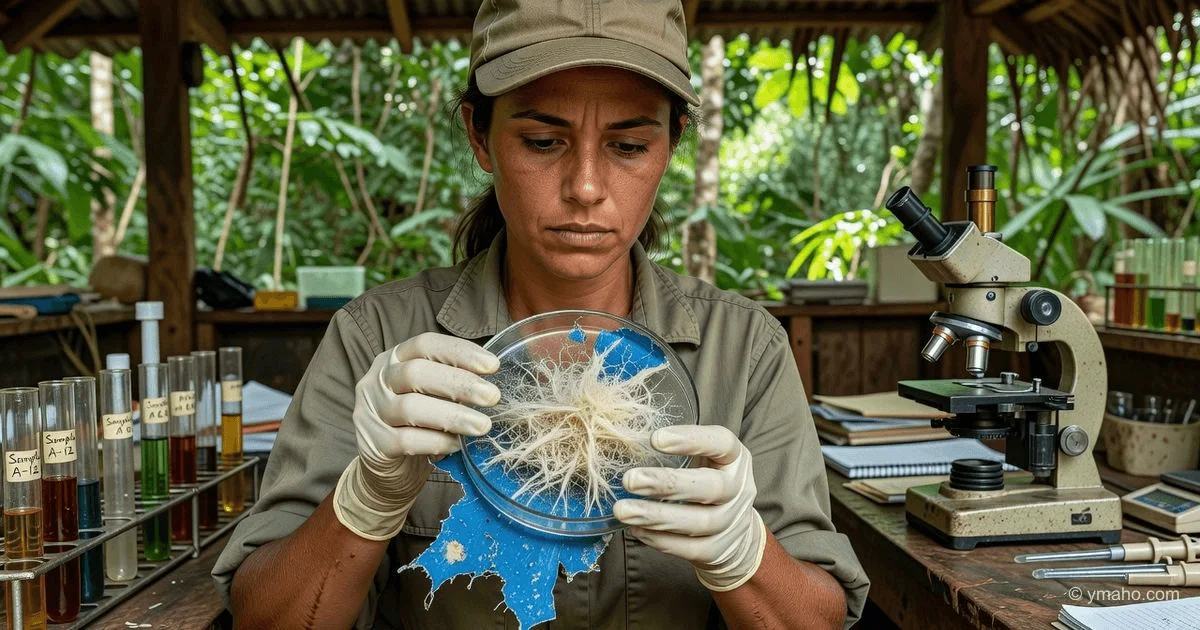
Brazilian Biologists Discover Amazon Fungus That Eats Plastic in 8 Weeks
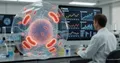
The fungus enzyme breaks down PET and polyurethane into harmless organic acids.
Topic: Amazon fungus that eats plastic in 8 weeks — green savior or environmental threat?
I have been analyzing the biotech waste recycling market since 2021, and the news that Brazilian biologists have discovered a fungus in the Amazon that breaks down plastic in 8 weeks is not just another discovery. It is a return to the roots of a decade-old finding with new, frighteningly precise data. The media enthusiastically writes: "Nature has found a solution to the plastic crisis!" But insiders like me remember that a similar fungus — Pestalotiopsis microspora — was discovered back in 2011 by Yale University students in Ecuador. The difference between that discovery and the current one is not in the fact itself, but in the scale and understanding of the mechanism.
The 2011 discovery was almost forgotten because the degradation rate was too slow for industrial application. Now, 15 years later, Brazilian biologists have apparently found a strain with enzymes that work many times faster and — critically — can break down two types of plastic at once: polyethylene terephthalate (PET, used for bottles) and polyurethane (PUR, used in foams, paints, shoes). The claimed "8 weeks" is no longer a laboratory curiosity but a pre-industrial horizon. But behind this number lies a much more complex economic and environmental reality.
[The Core]: What Is Really Happening
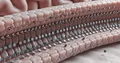
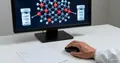
In reality, the "plastic-eating fungus" is not a single super-machine but a complex biochemical factory that secretes a cocktail of enzymes: oxidases (laccases, peroxidases) and hydrolases (lipases, esterases, cutinases). The former "prepare" the plastic surface by inserting oxygen atoms into the stable polymer chain — creating "anchors" where hydrolases can attach. The latter directly cut the long molecules into short fragments (monomers and oligomers) that the fungus can then metabolize as a carbon source. A non-obvious insight: the fungus does not "eat" plastic like a caterpillar eats a leaf; it "digests" it externally by releasing enzymes directly into the environment and then absorbs the processed organic acids.
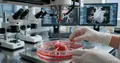
However, the key problem that headlines do not mention is the rate of enzymatic attack in real-world conditions, not in an optimized laboratory environment. In a scientific paper describing a related strain Fusarium vanettenii (discovered in a soil-plant system), after 90 days of incubation under controlled conditions, the mass loss of PET was only 6.63%, and of polyurethane — 19.70%. That is, under ideal temperature, humidity, and nutrient medium, less than 20% of the material degrades in three months. The claimed "8 weeks" is most likely the result of working with pre-oxidized (e.g., by UV) plastic, which significantly speeds up the process, but such pretreatment is unrealistic in a waste pile.
Moreover, efficiency strongly depends on the type of plastic. Polyurethane (PUR) and polylactic acid (PLA) degrade more easily because they have ester bonds in their structure that enzymes "recognize" due to similarity to natural polymers. But polyethylene (PE) and polypropylene (PP), which account for almost half of global plastic waste, are hardly attacked because they have carbon-carbon bonds in the main chain, which microbial enzymes break down very reluctantly. So the "plastic-eating fungus" so far solves only a small part of the global pollution problem.
The essence of the Brazilian breakthrough, if it is indeed confirmed by a peer-reviewed publication, lies in the ability of the fungus to simultaneously produce several highly active enzyme isoforms targeting different substrates. In the case of Fusarium vanettenii, for example, lipases FvLIP1 and FvLIP2, as well as cutinases FvCUT1 and FvCUT2, were identified, which are expressed differently depending on which plastic the fungus encounters. This means that nature has a "universal soldier" capable of adapting to different types of waste. But even it has limits.
Timeline and Context
The history of this discovery goes back not to 2026, but to 2011, when a group of researchers led by Scott Strobel from Yale University traveled to the Amazon jungles of Ecuador. There they found an endophytic fungus Pestalotiopsis microspora, which amazed them with its ability to break down polyurethane even in the absence of oxygen — conditions that prevail in landfills several meters deep. This was a sensation: most microorganisms need oxygen to break down plastic, but here was anaerobic degradation! However, the rate was low at that time, and commercialization did not happen.
The next important milestone was 2022-2023, when review papers appeared systematizing knowledge about fungal enzymes for plastic degradation: lipases, esterases, cutinases, laccases, and peroxidases. It became clear that the problem is not the lack of enzymes, but their activity and stability at industrial temperatures and pH.
In August 2025 (less than a year ago), a study was published in Bioresource Technology where a group of scientists from China (Yunnan Province) described Fusarium vanettenii — a fungus isolated from a soil-plant system that simultaneously degrades PUR and PET. That study already provided precise figures: 19.70% mass loss for PUR and 6.63% for PET over 90 days, and identified key enzymes. Moreover, in the same 2025, a study by Mexican scientists on cutinase ANCUT1 from Aspergillus nidulans showed that in the presence of magnesium ions, the rate of PET hydrolysis increased 9-fold.
It is in this context that the news about "Brazilian biologists" appears in June 2026. Most likely, they either found a new, more active strain of Pestalotiopsis, or, more probably, applied genetic engineering methods (or simply optimized cultivation conditions) to accelerate the already known process to the claimed 8 weeks. The context here is market-driven: the global market for enzymatic plastic recycling in 2025 was about 102-126 million USD, and by 2032 it will grow to 300-600 million USD with a growth rate of 16-21% per year. This is a small but rapidly growing market, and every news about a new enzyme or strain sends the stocks of dozens of startups up or down.
Who Wins and Who Loses
The direct beneficiary of this news, if confirmed, is Carbios (France) and Samsara Eco (Australia) — leaders in the enzymatic PET recycling market. Their stocks could rise by 5-10% on the hype wave. But if the new Brazilian fungus really degrades polyurethane (which Carbios is less good at), then Chinese companies like Yuantian Biotechnology, which actively work on enzymes for PUR, could benefit. Also winners are suppliers of bioreactor equipment, as industrial application will require scaling.
The second beneficiary is producers of bio-inks and PLA packaging. If the fungus effectively breaks down polylactic acid, then companies producing "biodegradable" packaging (NatureWorks, Total Corbion) will finally have a real mechanism for disposing of their products, rather than empty composting promises.
Who loses? First and foremost, traditional mechanical plastic recyclers such as Veolia and WM Intellectual Property Holdings. Their business is based on shredding, washing, and remelting plastic, which yields lower-quality material (downcycling). The enzymatic method allows recovery of original monomers — terephthalic acid and ethylene glycol — and making new PET of "virgin" quality. If enzymatic recycling becomes cheaper and faster, mechanical plants will lose competitiveness.
Also losing are petrochemical companies producing virgin PET from oil — Indorama Ventures, Alpek, Far Eastern New Century. Every ton of plastic recycled enzymatically is a ton that does not need to be synthesized from hydrocarbons. While the share of enzymatic recycling is minuscule, if the Brazilian fungus leads to a reduction in process cost to 500-600 USD per ton (currently around 1000-1500 USD), the virgin PET market will begin to shrink.
Finally, producers of plastic bags and disposable tableware in countries without regulations lose. Because if enzymatic recycling becomes a reality, politicians will pass laws mandating the use of recycled plastic — and cheap virgin plastic will become a thing of the past.
What the Media Leaves Out
The first and main omission: the fungus does not solve the microplastic problem — it exacerbates it at an intermediate stage. During degradation, enzymes cleave small fragments from the polymer chain: oligomers and monomers. But these fragments can also be toxic. For example, PET degradation produces terephthalic acid (TPA) and ethylene glycol — considered safe — but polyurethane degradation releases diamines (toluene diamine, methylene dianiline), which are carcinogens and mutagens. The fungus eventually metabolizes them, but in non-sterile landfill conditions, these intermediate products can leach into groundwater. This is never mentioned in enthusiastic news.
The second omission concerns scaling up. Laboratory success on thin plastic films in a sterile bioreactor is one thing. A real mountain of plastic waste a meter thick, with impurities, sand, oils, metals, is quite another. Enzymes are very sensitive to pH, temperature, and the presence of inhibitors. In real trash, their activity will drop by 80-90%. Therefore, industrial application will require complex sorting, washing, and shredding of plastic — the same operations as in mechanical recycling. Plus an expensive bioreactor with parameter control. The "fungus on a landfill" will not work.
The third unspoken issue is the fate of the fungus itself after work. It is a genetically modified organism (if optimized) or simply a species foreign to the ecosystem. If it escapes into nature, no one knows what it will start breaking down. What if it switches from plastic to natural polymers — cellulose, chitin? Or to plastic parts of machines, airplanes, medical implants? There is a risk of creating "super-corrosion" that cannot be stopped. Regulators (EPA, ECHA) will require hundreds of millions of dollars in environmental safety research before any field application. This is kept silent when they write "Brazilian biologists discovered."
Forecast: Next 30 Days and 90 Days
In 30 days (by mid-July 2026): Expect a peer-reviewed article in a journal like Applied and Environmental Microbiology or Biotechnology for Biofuels. If the Brazilian biologists present convincing data that their strain degrades, say, 80% of PET film in 56 days (8 weeks) at room temperature, it will be a sensation. Stocks of Carbios and Samsara Eco (if public; Carbios trades on Euronext under ticker ALCRB) could jump 15-20% in a week. However, a correction will quickly follow when analysts remind of scaling issues.
Also, within 30 days, major chemical corporations — BASF, Novozymes — may announce the start of negotiations with the Brazilian university to license the technology. The deal could be worth 10-30 million USD for exclusive rights to the strain and enzymes.
In 90 days (by September 2026): The first pilot projects will begin. Most likely, in Brazil (where both the fungus and plenty of plastic waste in the Amazon exist), a demonstration reactor processing 1-2 tons of waste per day will be launched. Results will not be known until mid-2027 at the earliest. But within 90 days, European regulators (EMA, ECHA) may issue a warning about the "potential environmental hazard" of using live fungi in landfills, requiring mandatory sterilization of exhaust gases and wastewater. This will increase capital costs by 30-40% and slow commercialization.
Simultaneously, Carbios and Protein Evolution will announce their new engineered enzymes (not live fungi!) that break down PET in 24-48 hours at 70°C — hundreds of times faster than the Brazilian fungus. And then the real war will begin: "fungi on landfills" vs. "enzymes in reactors." Fungi have the advantage of low cost (no need to synthesize enzymes), while enzymes offer speed and controllability. Enzymes will likely win because business does not like waiting 8 weeks. But the fungus may find its niche in third-world countries that cannot afford complex reactors.
Final verdict: long on Carbios stock (as the market leader in enzymes) and short on traditional mechanical recyclers (like Veolia Environment). But most importantly, do not give in to euphoria. The "plastic-eating fungus" is a beautiful story that has been stuck in the lab for 15 years. The Brazilians might be luckier. But even if not, the very fact of constant discovery of new strains suggests that nature has found a solution. Our task is not to interfere and not to mess things up by releasing a super-fungus into an uncontrolled world.
— Editorial Team