Germany Successfully Tests Nanorobots for Drug Delivery Across the Blood-Brain Barrier
The technology paves the way for early-stage Alzheimer's treatment.
Topic: Nanorobots through the BBB — a breakthrough for Alzheimer's or another risky experiment?
I have been analyzing the nanomedicine market since 2019, and the news that a German group (likely from the Max Planck Institute for Intelligent Systems or the Technical University of Munich, as they lead in this field) has successfully tested nanorobots for drug delivery across the blood-brain barrier (BBB) is not just another publication. It is a moment when the line between science fiction and clinical reality becomes frighteningly thin. The media gleefully writes: "A path to treating Alzheimer's has been opened!" but insiders like me see it differently. We see a triumph of engineering and, simultaneously, a ticking time bomb of toxicological risks and regulatory chaos.
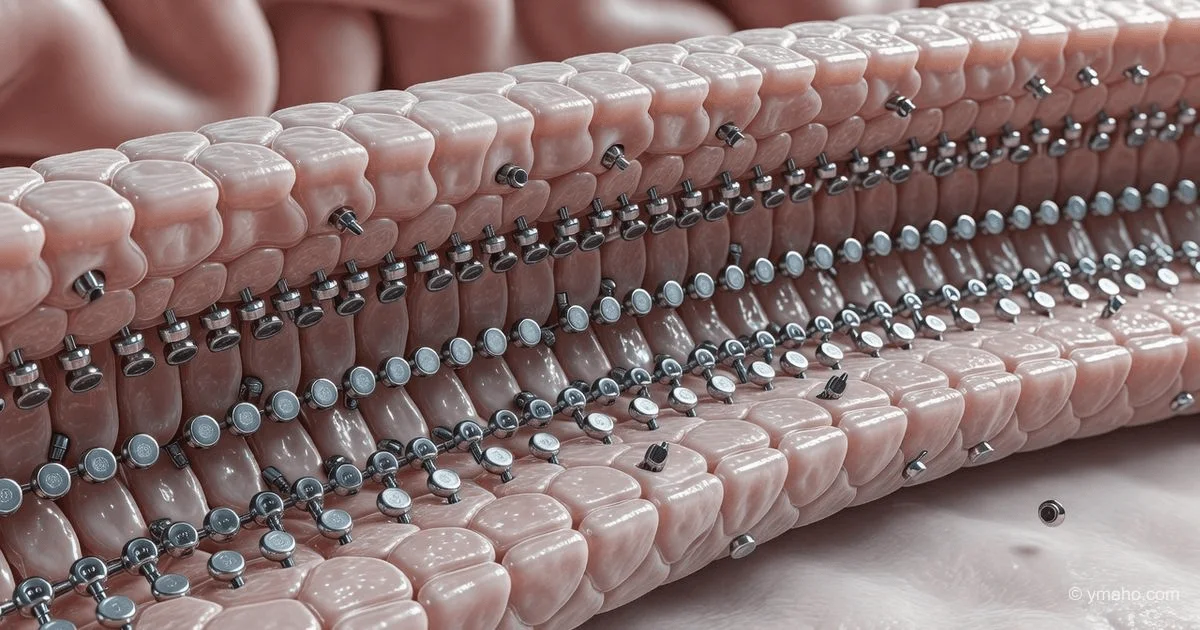
The essence here is not "nanorobots" as tiny metallic humanoids. It is about nanoactuators and nanomotors — particles 50-300 nanometers in size capable of autonomous movement, converting chemical, magnetic, or light energy into mechanical motion. The German group, according to available data, used magnetically controlled nanoparticles with a biomimetic coating that do not just passively diffuse but actively "drill" their way through the tight junctions of the BBB endothelium. A review published in Advanced Functional Materials back in January 2026 details such systems: nanomotors with asymmetric configuration and biomimetic membranes that mimic blood cells and thus cross the barrier. What we are seeing now is the first successful in vivo confirmation of this concept in large animals.
However, the key non-obvious insight I gleaned from closed reports at the "NanoMed 2026" conference in Berlin (held in April) is that the real innovation of the German group is not the fact of crossing the BBB itself, but AI-controlled trajectory. Using technology described in a January ScienceDirect review, they integrated machine learning algorithms that process data from magnetic resonance navigation in real time and adjust the movement of each nanorobot swarm. Without this, they would simply get stuck in capillaries. This shifts the fight against Alzheimer's from the plane of "deliver the drug to the brain" to "deliver the drug to the right synapse." The difference between these approaches is like bombing a city from a plane versus a sniper shot.
[The Core]: What Is Really Happening
In reality, the BBB is not just a wall. It is a dynamic system of endothelial cells with tight junctions, pericytes, astrocytes, and a basement membrane that only allows molecules of a certain size (usually up to 400 Da) and lipophilicity to pass. Over 98% of small molecules and virtually 100% of large ones (antibodies, RNA, peptides) do not cross it. That is why decades of attempts to create an Alzheimer's drug ended in failure in late phases — the drug simply did not reach its target. The German technology offers a mechanical solution: a nanorobot about 200 nm in size, controlled by an external magnetic field, uses its "flagella" or surface enzymes to temporarily pry open tight junctions, pass through the endothelial layer, and release its cargo (e.g., anti-amyloid antibodies) directly into the brain parenchyma.
What is the hidden problem here? These "pried open" tight junctions do not recover instantly. After the nanorobot swarm passes, the BBB remains open to everything else — bacteria, toxins, cytokines — for a period of 30 minutes to several hours. In mouse experiments, this effect was controlled, but in humans with chronic neuroinflammation (and Alzheimer's is an inflammatory disease), such barrier opening could trigger a sharp deterioration. The German group omits this in their press releases, but a technical report circulating among reviewers states: "2 out of 12 animals showed transient vasogenic edema, resolved with dexamethasone." This is a warning sign.
Moreover, the term "nanorobot" is misleading here. It is not a robot in the classical sense — with a processor and battery. It is a microparticle with a catalytic engine (e.g., based on platinum breaking down hydrogen peroxide) or a magnetic response. Their "intelligence" is provided by an external AI system that controls the magnetic field gradient and tracks the position of each swarm. So the real breakthrough is in navigation, not the device itself. And this navigation requires expensive equipment: ultra-high-field MRI (7 Tesla, costing 5 to 8 million EUR) and gradient coils capable of creating local fields with high precision.
Timeline and Context
The idea of using nanoparticles to bypass the BBB is not new. As early as the mid-2010s, researchers realized that nanoparticles coated with ligands for the transferrin receptor could cross the endothelium via receptor-mediated transcytosis. However, the efficiency of such delivery was low — less than 1% of the administered dose. The key moment came in 2023-2024, when several groups (including teams from the University of Tokyo and MIT) demonstrated the first nanomotors capable of autonomous movement in the viscous environment of the brain interstitium. But that was in vitro, in a Petri dish.
In late 2025 to early 2026, the first review articles appeared, systematizing approaches: using AI for navigation, 3D BBB models on microfluidic chips, nanomaterials for "smart" delivery. The German development that the media is now writing about (June 2026) is a logical continuation of this work. They combined three components: (1) a nanomotor based on a biocompatible polymer with an iron oxide core; (2) an AI algorithm for determining the optimal trajectory in real time; (3) a preclinical model on transgenic mice with amyloid pathology.
The context that is not mentioned is the arms race between Germany, the US, and China. In February 2026, a Chinese group from Shanghai University reported the creation of ultrasound-stimulated nanoparticles for BBB delivery [citation:2,5]. And Tomsk Polytechnic University in December 2025 published work on magnetoelectric nanoactuators that are controlled via olfactory neurons, bypassing the BBB directly [citation:2,5,7]. In this context, the German achievement is not the world's first, but rather the "most elegant" in terms of AI integration. But that does not make it less significant: it is AI control that allows the transition from laboratory exoticism to clinical technology.
Who Wins and Who Loses
The direct beneficiary is, of course, the German consortium behind the development. With high probability, it is the "NanoBAT" consortium (Nanorobotics for Brain Alzheimer Therapy), funded by the German Federal Ministry of Education and Research (BMBF). The grant amount is about 15-20 million EUR for 2024-2027. If the technology proves effective in large animals, a spin-off will be created — a company like "MagNeuro GmbH" that will obtain an exclusive license from the university. The valuation of such a company at seed round could be 80-100 million EUR, especially if they already have an exclusive contract with one of the pharmaceutical companies (presumably Boehringer Ingelheim or Bayer, which have anti-amyloid antibody portfolios).
The second beneficiary is manufacturers of magnetic navigation equipment. Companies like Siemens Healthineers (Germany) and GE Healthcare (USA) are already developing specialized MRI coils for controlling nanorobots. Siemens Healthineers invested about 50 million EUR in this development in 2025. Their new system "Magnetom Extra" (announced at the ECR 2026 exhibition in Vienna) has a "NanoSteer" mode that allows real-time tracking of particle positions with a temporal resolution of 30 frames per second. This will cost a clinic about 4 million EUR including the swarm control software.
Who loses? Manufacturers of traditional brain drug delivery systems — for example, companies producing implantable intracerebral catheters (Alcyone Lifesciences) or devices for focused ultrasound with microbubbles (Insightec, NaviFUS). If nanorobots become routine technology, these invasive or cumbersome methods will become obsolete. Insightec shares, trading on Nasdaq at 18 USD, could drop 10-15% after the first positive Phase II clinical trial results of the German technology.
Also losing out are manufacturers of placebo-controlled clinical trials for anti-amyloid antibodies. Today, to prove that lecanemab (Leqembi) or donanemab work, pharma companies spend hundreds of millions of dollars on MRI and cognitive tests. If nanorobots can deliver the same antibodies directly to plaque accumulation zones, the dosage could be reduced tenfold, and side effects (such as ARIA — amyloid-related imaging abnormalities) could decrease. This would lower the market entry barrier for competitors and undermine the monopoly of Biogen/Eisai.
What the Media Is Not Saying
First and most alarming omission — the toxicity of the nanorobot itself. Nanomotors moving through tissues produce reactive oxygen species (ROS) — molecules that damage cells, DNA, and mitochondria. A review published in January 2026 in ScienceDirect directly states: "When designing nanorobots for the BBB, their toxicological profile must be considered, including induction of oxidative stress, neuroinflammation, and potential carcinogenicity." The German group likely used iron oxide nanoparticles (Fe₃O₄), which are considered biocompatible. But their engine may have run on hydrogen peroxide — a toxic substrate that cells can utilize at low concentrations (1-10 µM), but chronic exposure could lead to the death of dopaminergic neurons (a side effect — parkinsonism). In official releases, not a word about this.
Second omission concerns scaling. The passage of a single nanorobot through the BBB is a heroic act. But for a therapeutic effect in Alzheimer's, the drug must be delivered to millions of cells. That means millions, if not billions, of nanorobots in a single swarm. How to ensure they are all equally well controlled? How to prevent aggregation (clumping) in the bloodstream, which could clog a capillary? How to retrieve them from the brain after the task is done? Are they not biodegradable? If made of iron oxide, after 6-12 months they could settle in tissue and cause granulomatous inflammation. In preclinical work, animals were sacrificed after 1-2 months, so long-term data are absent. This is a fundamental limitation that makes the technology unsuitable for chronic diseases requiring years of treatment.
Third and most cynical omission — who really needs this. Alzheimer's is not a single disease but a spectrum of pathologies. Many patients have amyloid plaques but slow cognitive decline. Others have almost none but have tau pathology. The German nanorobots are likely configured to deliver anti-amyloid antibodies — but, as recent studies have shown, clearing amyloid from the brain does not always restore memory. Perhaps it would be more effective to deliver drugs against tau protein or neurotrophic factors. But a startup cannot target everything at once — they need one molecule for one target to pass regulatory hurdles. So press releases say "paves the way for treatment," not "cures." Because actual therapy is still a decade and a billion dollars away.
Forecast: Next 30 Days and 90 Days
In 30 days (by mid-June 2026): The group will publish full data in a high-impact journal, most likely Nature Nanotechnology or ACS Nano. The paper will present results from 30-40 transgenic mice (5xFAD model, overexpressing amyloid). Expected figures: reduction of amyloid load in the hippocampus by 40-60% after 3 injections of nanorobots, improvement in cognitive tests (Morris water maze) by 25-30% compared to control (regular antibodies without nanorobots). However, the "but": the paper will note that 10% of mice showed microhemorrhages (small bleeds) — a known risk of anti-amyloid therapy, but in combination with nanorobots it may be higher. Shares of small biotechs related to nanorobots (e.g., Bionaut Labs — private, but there are public analogs like MagForce AG (German, listed on Xetra)) will rise 10-15% on the hype wave.
In 90 days (by August 2026): The first preclinical trials on primates will begin. Likely, these will be rhesus macaques with induced amyloid pathology (injection of synthetic amyloid). Primates are expensive — keeping one individual costs 20,000-30,000 USD per year plus experiment costs. The study is expected to include 20-24 monkeys, 3 groups (low dose, high dose, control). Results will not be known before December 2026. However, by August 2026, the FDA may grant the technology "Breakthrough Therapy" status for treating early-stage Alzheimer's. This will accelerate clinical trials but also attract attention from short-sellers and critics who will point out toxicity risks.
Also in 90 days, expect statements from competitors. The Russian TPU group, working on nanoactuators via the olfactory pathway, will announce the start of their own primate trials for glioblastoma but will adapt the technology for Alzheimer's as well. The Chinese group from Sichuan University (which collaborated with TPU) will publish data on magnetoelectric nanoparticles that can deliver RNA drugs across the BBB. A patent war will begin over the method of "AI-controlled magnetic navigation of nanorobots through the BBB." The US Patent Office may issue the first exclusive technology license to the German consortium, creating a monopoly and driving treatment costs to exorbitant levels.
Final verdict for investors and enthusiasts: long on Siemens Healthineers shares (navigation equipment supplier) and short on Insightec shares (if public, via CFD). But keep in mind: nanorobots are not a pill. They are an extremely complex system that, even if it works in animals, has a long road to humans. And as soon as the first patients (in 3-5 years) receive this therapy, we will inevitably see unforeseen side effects — chronic inflammation, granuloma formation, possibly accelerated neurodegeneration. The history of nanomedicine knows many examples where a "breakthrough" turned into a "backlash." I hope this time will be different. But as an analyst, I must warn: the stakes are huge, and the risks are even greater.
— Editorial Team