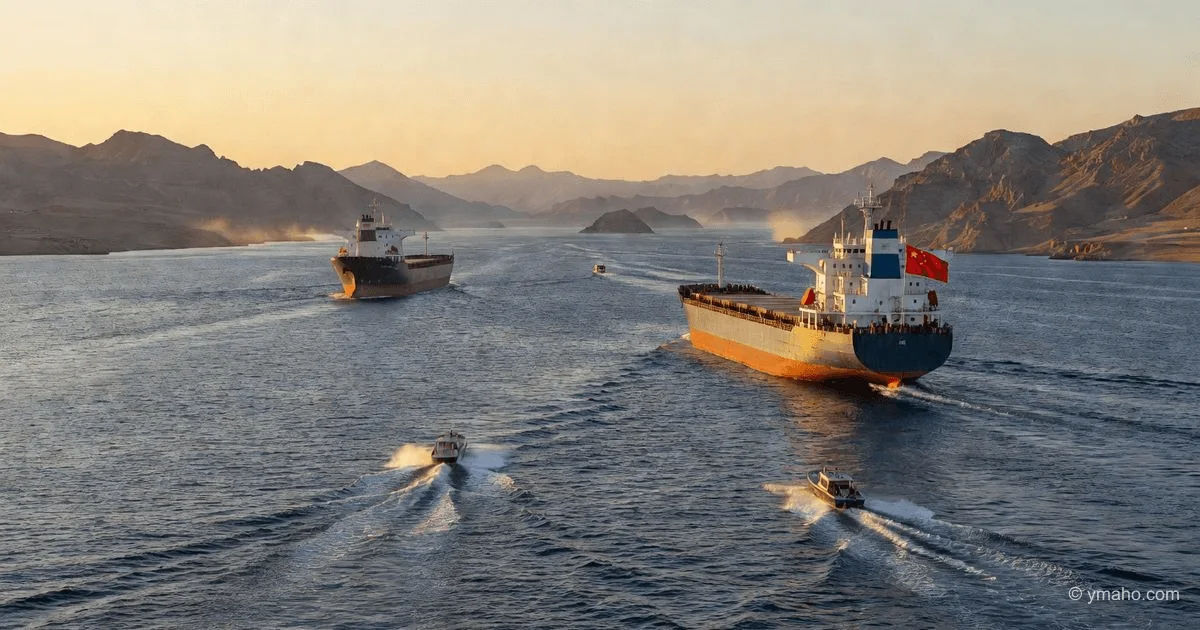
Yemeni Houthis and Al-Shabaab Forge Cooperation for Red Sea Attacks
According to UN reports, the Houthis and the Somali group Al-Shabaab are exchanging military technology and logistics, which could expand their capabilities to strike shipping in the Red Sea and the Gulf of Aden.
Headline: The Red Sea is turning into a public-private extortion syndicate. Insurance premiums are the new oil.
Author: Analytical Commentary (Insider View)
UN reports on cooperation between Yemeni Houthis and Somali Al-Shabaab are usually presented in the media as just another story about a terrorist threat. However, from inside the marine insurance and logistics industry, I see not just an alliance of ideological enemies, but the birth of the first-ever global 'criminal franchise' with elements of state governance.
The average person thinks the Houthis are 'rebels with rockets.' An analyst will say they are an Iranian proxy. But I argue that we are witnessing the formation of a transnational rent-extraction corporation that monetizes global trade more effectively than many stock indices. The Houthis provide technology and military training, Al-Shabaab provides logistics on the African coast, and together they create a cartel controlling the Bab el-Mandeb Strait.
[The Gist]: What's Really Happening
On the surface—'ideological opponents unite.' Zaydi Shia (Houthis) and Sunni jihadists (Al-Shabaab, affiliated with Al-Qaeda) have set aside religious feuds for practical gain. The UN records technology exchange and training: the Houthis teach Somalis to make complex explosive devices and operate drones.
In reality, this is the formalization of Piracy-as-a-Service. Al-Shabaab receives from the Houthis not just toys, but 'software' for modern naval warfare: GPS trackers for precision targeting, reconnaissance data, and attack drones. In exchange, the Houthis gain access to the African coast as a hub for smuggling and, critically, the ability to strike from both sides of the strait.
Insider nuance: Iranian weapons now reach the Houthis via Somalia. Conflict Armament Research experts have found that modern missile systems enter Yemen through Somali ports, whether controlled or uncontrolled. This means intercepting ships in the Gulf of Aden becomes pointless, as there are dozens of delivery routes.
Key economic shift: this cooperation moves the threat from the 'military' category to 'permanent operating costs.' Previously, a shipowner risked getting hit by a missile. Now he risks entering a system where he gets billed. According to closed sources, the Houthis have already institutionalized a 'pass scheme': European companies pay about $500,000 for safe passage, and it works. Al-Shabaab will insure (or attack) ships passing the Somali coast. This is classic protection racket, but on a continental scale.
Timeline and Context
The path to the alliance did not start yesterday. The UN recorded initial contacts as early as 2024. But the 'moment of truth' came in 2025-2026, when Israel and the US entered direct confrontation with Iran.
Key date: 2022—non-aggression agreement. The Houthis and Al-Qaeda in the Arabian Peninsula (AQAP) signed a non-aggression pact, allowing the Houthis to focus on the war with the coalition. This was the trigger. Then AQAP acted as a mediator between the Houthis and Al-Shabaab.
Milestone 2025: The UN Security Council officially records that Al-Shabaab militants are training in Yemen on drone operation. Simultaneously, in Somalia's Puntland region, a shipment of explosives is intercepted, containing Yemeni nationals.
May 2026 (literally last week): Yemeni media report a high-level meeting in Shabwa and Al-Bayda governorates, where the parties agree to move from intelligence sharing to joint operations and logistics. Immediately, the Trump administration includes this alliance in the list of current threats in the White House's new counterterrorism strategy.
Now (June 2026), we are at the stage where Al-Shabaab is testing the received weapons in northern Somalia, preparing to extend activity to the Gulf of Aden. The security umbrella that existed for ships off the African coast is collapsing.
Who Wins and Who Loses
Winners:
- Chinese and Russian shipping lines. They have long been 'accredited' by the Houthis and pay less or nothing. While Western giants (Maersk, Hapag-Lloyd) reroute ships around Africa, spending an extra $2 million on fuel and 15 days, the Chinese go through Suez, saving resources and gaining a competitive edge.
- Iran. Tehran denies direct control of the Houthis, but using the Somali coast as a transit hub for weapons allows Iran to bypass blockades and create a 'long arm' even after weakening in the Levant.
- War risk insurance traders. Premiums remain high. As long as the Al-Shabaab threat exists, insurance companies won't lower rates.
Losers:
- European consumers and industry. $175 billion in indirect costs (longer routes, insurance) are baked into the price of goods annually. Inflation in Europe gets a permanent 'maritime' component.
- Economies of Kenya and Tanzania. Piracy and instability in Somalia cut them off from safe trade routes. Tourism and transit through Mombasa port are declining.
- Somali government. The alliance with the Houthis gives Al-Shabaab technological superiority over the government army, which is barely holding on. The country risks becoming the world's number one failed state.
What the Media Isn't Saying
First non-obvious insight: this alliance was created in case Iran falls. If the US or Israel delivers a crippling blow to Tehran, the Iranian 'umbrella' over the Houthis will weaken. The Houthis are diversifying risks by creating an alliance with Al-Shabaab and AQAP to remain a significant force even without Iranian support. This transforms them from 'Iranian proxy' into 'independent actor of global jihad.'
Second silence: the UAE and Saudi Arabia are panicking. They had just started building a dialogue with the Houthis, hoping to pull them out of Iran's orbit. Al-Shabaab's entry into the coalition is a red line for Riyadh. The Saudis cannot sit with a group that fought against them in Yemen and is linked to Al-Qaeda. This destroys all chances for a peace process.
Third and most important for traders: a 'tariff union of rogues' is forming. The Houthis block the north of the strait (the Red Sea gate), Al-Shabaab and Somali pirates block the south (Aden). Any ship going from Asia to Europe either gets a missile (Houthis), a capture (pirates with Houthi GPS), or is forced to pay 'taxes' to both. This is a cartel. The price of passage will only rise.
Forecast: Next 30 Days and 90 Days
30 days (until July 6, 2026):
Expect the first joint operation of the Houthis and Al-Shabaab. Scenario: Houthis attack a ship with drones in the Bab el-Mandeb narrows; the ship tries to flee toward the African coast, where it is met by Al-Shabaab speedboats. This will shock the security system. Freight on routes through Suez will rise another 15-20%, as the risk premium extends to the African side.
90 days (until September 5, 2026):
If diplomacy does not prevent this (and chances are almost nil), we will see official UN recognition of Al-Shabaab as a maritime pirate structure and likely the emergence of the first 'licensed' ship passage system. Ships will pay an illegal fee through intermediaries in Dubai, and it will be cheaper than going around Africa. Global trade will adapt to banditry as a fact of life. Shares of insurance companies (AIG, Lloyd's) will rise another 20-25% amid the 'perpetual crisis.'
Editorial Forecast
Asset: Freight rates on the Asia-Northern Europe route / Maersk shares (AMKBY).
Direction: Freight up, Western carrier shares down.
Key levels: Freight will break $4,000 per FEU (40-foot container), approaching 2021 peaks.
Confidence level: High (85%). Coordination between groups is confirmed by the UN, and the market has not yet fully priced in the threat of synchronized attacks from both sides of the strait.
Main risk: Unexpected military intervention by Turkey or Egypt, sending ground troops to Somalia to clear bases. Probability: 10%. In that scenario, a temporary 30% drop in freight on the news.
The editorial opinion is not an investment recommendation. All decisions to buy or sell assets are made by you independently.
— Editorial Team