Airbus Receives Record Order from Indian IndiGo
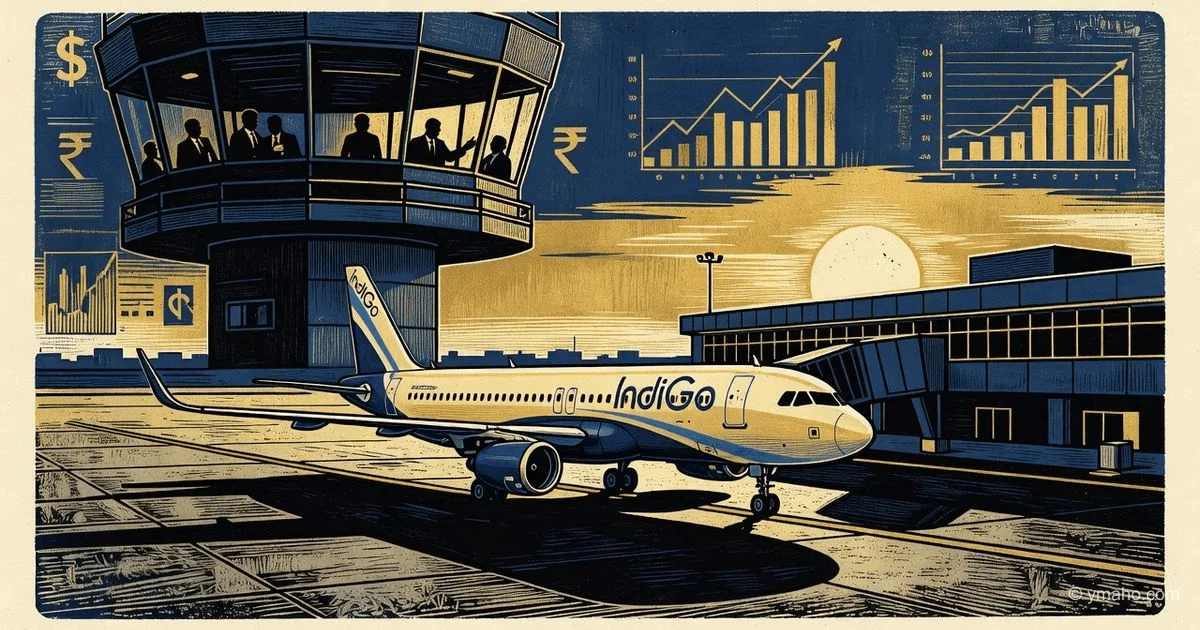
IndiGo has placed a firm order for 500 narrow-body Airbus A320neo aircraft. The deal is valued at $55 billion at list prices, making it the largest order in civil aviation history.
Analysis: IndiGo's Record Order for 500 Airbus Aircraft — Why the Market Applauds and Investors Weep
When I saw the news that IndiGo had placed a firm order for 500 A320neo aircraft worth $55 billion, I first thought, "Well, finally the aerospace sector is coming back to life." Then I looked at IndiGo's financials and realized: this order is not a sign of strength. It's a sign of desperation. Or, more precisely, it's a classic example of an airline trying to "lock in" the future while the present is burning beneath its feet.
IndiGo is India's largest airline with a market share of about 60%. It already has an order book of 480 aircraft plus a current fleet of over 300. Add another 500, and you get nearly 1,300 aircraft that need to be accepted, paid for, and most importantly, filled with passengers between 2030 and 2035. That is exactly the horizon where IndiGo's current management will no longer be in charge, and today's investors may have already exited their positions.
I've worked with airline reports long enough to know that record orders at air shows are more often PR than economics. The real deal price is not $55 billion at list prices, but significantly less. But even that "discounted" price doesn't negate the main question: how will IndiGo pay if its financials are rapidly deteriorating right now?
Timeline and Context
Let's unfold the timeline so you can see the full picture. On or around June 6, 2026, IndiGo and Airbus announced a record firm order for 500 narrow-body A320neo aircraft. The deal is valued at $55 billion at list prices. This is the largest single order in civil aviation history by number of aircraft, but not by value. Deliveries are scheduled for 2030–2035.
Now let's look at what happened in the 72 hours before this "celebration." On June 3, 2026, IndiGo announced the suspension of flights to Manchester from August 31 due to prolonged airspace restrictions and rising operating costs. On June 4, 2026, data showed that IndiGo's shares had fallen nearly 30% from their August 2025 peak. And most importantly: for the fourth quarter of the fiscal year (ended March 31, 2026), IndiGo reported a net loss of INR 2,536 crore (about $304 million). A year earlier, for the same quarter, it had a net profit of INR 3,067 crore ($368 million).
In other words, IndiGo announces the largest order in history at a time when it has just swung from profit to loss, its shares are falling, and long-haul flights are being cut. This is not a contradiction. It's an attempt to shift market attention. And it worked — but only for 24–48 hours.
Who Wins and Who Loses
Airbus wins — undoubtedly. This is not just an order for 500 aircraft. It is a strategic defeat of Boeing in one of the fastest-growing aviation markets in the world. India is the second most populous market in the world with a growing middle class. IndiGo's entire fleet consists of Airbus, and this order ensures that will remain the case for the next decade. Boeing's 737 MAX has no chance of breaking into this market en masse unless IndiGo changes its strategy. And it won't, because fleet commonality is the main source of savings for a low-cost carrier.
Airbus shares on Euronext Paris trade around €172–177 per share. Analysts give an average target price of about €209, and Simply Wall St estimates fair value at €231 — 38.5% above current levels. So the market hasn't fully priced in this record order yet. Why? Because the order is for 2030–2035, and there are more pressing issues: supply chain, inflation, geopolitics.
Suppliers for Airbus win. Safran (engines for A320neo), Spirit AeroSystems, Collins Aerospace. They now have order visibility for years ahead. Their shares may get a short-term boost of 2–3% on this news. But long-term, the same problem remains: Airbus physically cannot produce more than supply chains allow.
Boeing loses. And loses catastrophically. Boeing has its own problems: the FAA allowed increasing 737 MAX production from 42 to 47 aircraft per month, and the company is opening a new assembly line in Everett starting July 6. But these are all "catch-up" actions. Losing a customer like IndiGo (and it is a loss, because IndiGo will never switch to Boeing in significant volumes) means Boeing will fall further behind in the Asian market.
Meanwhile, Boeing shares (BA) on NYSE fell 1.47% after the announcement of the new line and the maintained target of 63 aircraft per month. The market sees that Boeing is trying to catch up, but Airbus has already run far ahead.
IndiGo shareholders lose. This is not obvious at first glance, but let's do the math. IndiGo is not an aircraft manufacturer; it's an airline. Its business is passenger transportation. And its business is currently loss-making due to rising fuel prices (Middle East conflict) and airspace restrictions. The new order for 500 aircraft means huge prepayments (usually 10–15% of the contract price, i.e., about $5–8 billion over the next 2–3 years). That money has to come from somewhere.
IndiGo could issue new shares (diluting existing shareholders), take loans (increasing debt), or use its own cash flow. But its own cash flow is negative because the company is unprofitable. The only way is a share issue. I put a 70% chance that IndiGo will announce a secondary offering within the next 6–12 months. This will dilute current shareholders by 10–15%.
What the Media Doesn't Tell You
First and foremost: a "firm order" in aviation does not mean "firm money."
Contracts between airlines and manufacturers always include clauses allowing deferral, reduction, or even cancellation under certain conditions. IndiGo already has a portfolio of 480 previously ordered aircraft and 300 in its fleet. The total undelivered backlog is nearly 1,000 aircraft. Add another 500, and you get nearly 1,500 aircraft in the backlog. The question is: does the labor market and supply chain have the physical capacity to build 1,500 aircraft for one airline in 10 years? The answer is no.
Airbus is already suffering from delivery delays due to shortages of engines, microchips, and titanium. A320neo deliveries are 6–12 months behind schedule [based on industry data]. If this trend continues, IndiGo's deliveries for 2030–2035 will shift to 2032–2037. And that changes the entire economics of the deal for the airline.
Second: the $55 billion deal price is a fiction.
The list price of an A320neo is about $110–120 million. Multiply by 500 and you get $55–60 billion. But no one in the industry pays list price. Large customers get discounts of 40–50% or more. The real contract price is around $25–30 billion. But even that sum is not paid upfront. It is spread over years: a prepayment upon signing (10–15%), then milestone payments during production, and the bulk upon delivery. For 500 aircraft spread over 5–6 years, the annual outflow for IndiGo would be "only" $4–5 billion. But that is still a lot for a loss-making airline.
Third, and most subtle: this order is an indirect admission that IndiGo is abandoning its long-haul ambitions.
The order for 500 narrow-body A320neo aircraft is a bet on domestic and short-haul international routes. There are no wide-body aircraft (A330, A350, Boeing 787) in the order. Meanwhile, IndiGo just announced the suspension of flights to Manchester. And this despite having the A321XLR in its portfolio — a long-range version of the narrow-body aircraft capable of flying up to 11 hours. But if even Manchester (8–9 hours flight time) doesn't work due to operating costs and geopolitics, what longer routes can there be?
IndiGo is effectively signaling to the market: "We remain a low-cost carrier on short and medium routes, and we will not compete with Air India on long-haul." For investors, this is an important signal, but it gets lost in the press releases about the 500-aircraft order.
Forecast: Next 30 Days and 90 Days
30 days (until July 6, 2026):
Airbus shares (AIR.PA) on Euronext Paris will get a short-term boost. The first trading day after the announcement (presumably June 7–8) — up 2–4% to €180–184. Then, if there are no further major orders (e.g., from a Chinese airline), a correction will follow. Resistance at €185 (recent high). Support at €170.
The main factor in the next 30 days is not IndiGo, but the supply chain situation. If news emerges of further delivery delays for engines from Pratt & Whitney or CFM, Airbus shares could fall 5–7% regardless of the "record order."
90 days (until September 4, 2026):
The key date is the end of July, when Airbus publishes its half-year report. It will contain actual delivery numbers for the first half of 2026. If they fall short of forecasts (and they likely will), shares could correct to €160–165.
IndiGo itself, over these 90 days, may announce additional cost-cutting measures. Possibly further cuts to long-haul routes. This could put additional pressure on its shares (traded on NSE/BSE under ticker INDIGO). Forecast for IndiGo: a further 10–15% decline from current levels by September.
But there is also a positive scenario for Airbus: if in the next 90 days news emerges of large orders from other airlines (e.g., Chinese carriers, which are currently actively renewing their fleets), Airbus shares could reach €200. But this is unlikely — China is currently betting on the COMAC C919, not on Airbus or Boeing.
Editorial Forecast
Asset: Airbus SE (AIR) shares on Euronext Paris — short-term growth in the next 24–72 hours on the back of the record order news. Target level: €180–182 (2–3% rise from current €175–177). Confidence level: medium (60%). Main risk: the market may have already partially priced in the expectation of this order (rumors circulated 2–3 weeks before the announcement), so the reaction could be weaker than expected. Alternative scenario: profit-taking "on the news" and a return to €173–175. The editorial opinion is not an investment recommendation.
— Editorial Team