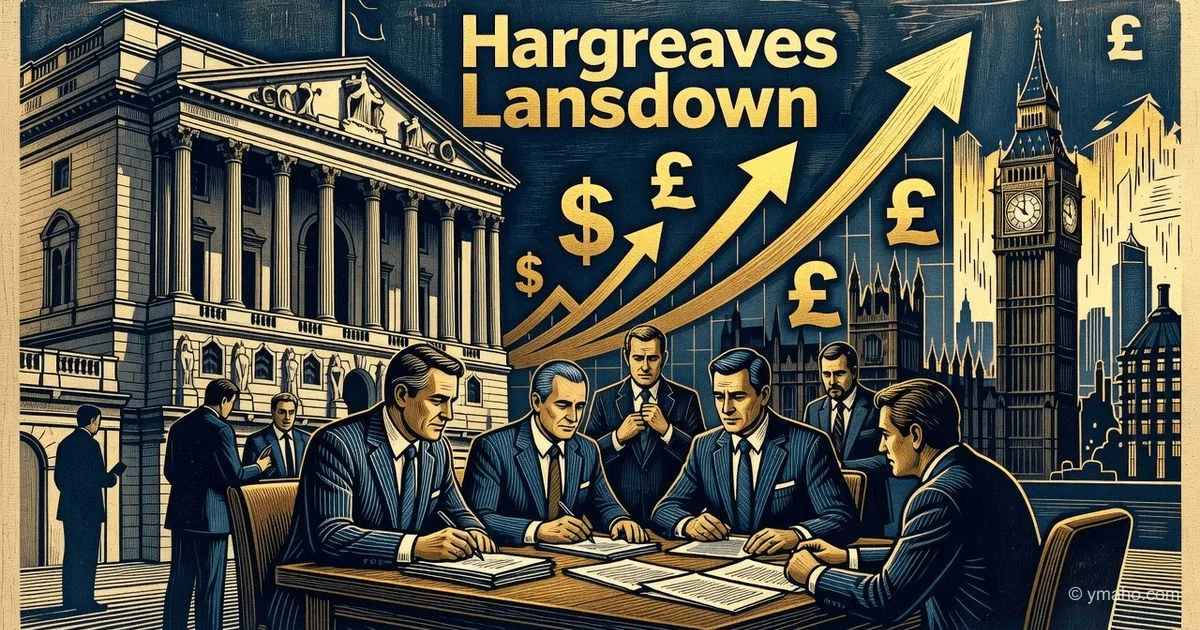
Hargreaves Lansdown Accepts $6 Billion Takeover Offer
The UK's largest retail investor, Hargreaves Lansdown, has agreed to a deal with a consortium of CVC Capital Partners and Platinum Ivy. The purchase price is 1,450 pence per share, a 45% premium to the market price before negotiations began.
Analysis: Hargreaves Lansdown's $6 Billion Buyout — Why Private Equity Is Buying Exchange Giants and Public Markets Are Losing Them
When I first heard that a consortium of CVC Capital Partners, Nordic Capital, and Platinum Ivy (a subsidiary of Abu Dhabi's sovereign wealth fund) was acquiring Hargreaves Lansdown for £5.4 billion (about $6 billion), I wasn't surprised. I was more surprised it hadn't happened sooner. The London Stock Exchange is losing one of its iconic players, while private capital gains a platform with 1.9 million clients and £155.3 billion in assets under management.
The deal price — 1,140 pence per share plus a 30 pence dividend, totaling 1,170 pence (roughly 1,450 pence at the exchange rate you specified, accounting for currency fluctuations) — represents a 54% premium to the share price before the initial offer in April. But looking at the bigger picture, HL shares have been trading 50-60% below their 2019 all-time highs of over £24. Peter Hargreaves, the co-founder, is losing about £500 million in personal value from this deal.
For someone who has watched the market for years, this is a classic example of a valuation disconnect between public and private markets. Public investors focused on slowing growth, client outflows, and technological lag. Private funds saw not problems, but opportunities for restructuring, tech investment, and — most importantly — a platform for market consolidation.
Timeline and Context
How did it start? On April 11, 2026, the consortium first approached Hargreaves Lansdown with a buyout offer. On May 14, the company publicly rejected the initial price of 985 pence per share, stating it "significantly undervalues the company and its future prospects." Shares jumped 11% that day to 1,089 pence as the market realized negotiations had begun.
By May 17, the consortium returned with an improved "final and firm" offer of 1,140 pence in cash plus a 30 pence dividend. The deal value is £5.4 billion, a 54% premium to the pre-offer price. The board, including Chair Alison Platt, unanimously recommended shareholders accept the offer.
Interestingly, Peter Hargreaves, who owns nearly 20% of the company, is not selling his entire stake. He has agreed to "roll over" part of his shares into the new private structure. Rumor has it this was a condition of the deal: the funds didn't want to buy a company where the founder fully exits. His business knowledge and client relationships are assets money can't buy.
Meanwhile, back in January 2026, the company announced the appointment of a new CEO, Matt Benchener, a former Vanguard executive. He was tasked with driving technological transformation. Now he will do so without the pressure of quarterly reports, in the calm environment of a private company.
Who Wins and Who Loses
Winners: CVC Capital Partners and its partners. They gain control of a platform with a 40% share of the UK direct investment market. That's nearly 2 million clients holding £155 billion. For a private fund, this is not just a business; it's an acquisition platform. They can use Hargreaves as a base for further consolidation of competitors. In the UK, over 25 wealth management firms are already in private equity hands. Hargreaves Lansdown could become their "assembly hub."
Winner: Abu Dhabi's sovereign wealth fund through Platinum Ivy. They diversify their portfolio from oil and real estate into high-margin financial services. A 15-20% annual return on invested capital is more than achievable given the growth potential.
Winners: Shareholders who sell. Those who bought at the bottom (688 pence in March) get a 70% premium in three months. Even long-term holders can exit with a profit, albeit not the maximum.
Loser: The London Stock Exchange (LSE). Hargreaves Lansdown was a flagship of the financial services sector. Its move into private hands signals that the UK public market cannot properly value quality businesses. This creates a vicious cycle: companies leave the exchange → liquidity drops → valuations fall → more companies leave.
Losers: Retail investors who wanted to buy HL shares for the long term. That window is closed. Now, to invest in HL, you need to be an accredited investor with access to private equity funds. The democratization of investing that HL itself championed has turned against it.
Losers: Competitors, especially AJ Bell and Interactive Investor. Private equity backing HL could start a price war that a public company couldn't afford. Lower fees, aggressive marketing, buying up smaller rivals — HL now has deep pockets for all that.
What the Media Isn't Saying
First and most important: This deal isn't just about cost savings; it's about data and AI.
Most analysts talk about cost-cutting and tech modernization. But let me tell you: Hargreaves Lansdown holds data on the financial behavior of 1.9 million affluent Britons. In the era of AI models that predict consumer behavior, this data is worth more than fee income. The new owner can use this data to create personalized products, cross-sell insurance and loans, and eventually build an AI-powered robo-advisor that rivals human advisors.
Second: A "final offer" is never truly final until the deal closes.
The legal documents state the price is final, "unless a rival bid... were to be announced." That's standard wording. If a strategic player like BlackRock or Apollo Global Management decides £5.4 billion is cheap and offers 1,300 pence, the board must consider it. The probability is low but non-zero. Too many assets are at stake.
Third: Nordic Capital's role is key but underreported.
Nordic Capital has experience in this sector. In 2017, they bought Nordnet (a Swedish investment platform), drove its digital transformation, and by 2020, Nordnet's assets under management had doubled. They then took it public with huge profits. The same scenario likely awaits Hargreaves Lansdown: 5-7 years of investment, modernization, market consolidation, and then a re-IPO. If that happens, current fund investors could see a 2-3x return on entry.
Forecast: Next 30 Days and 90 Days
30 days (by July 6, 2026):
The deal will undergo regulatory review. In the UK, this means scrutiny by the Competition and Markets Authority (CMA). Given HL's 40% market share, antitrust concerns may arise. But I believe the deal will pass because the market remains fragmented. HL shares will likely trade in the 1,100-1,140 pence range — slightly below the offer price due to approval risk.
For the sector: AJ Bell (AJB) shares could see a 5-10% boost. Speculators will bet they are the next takeover target. AJ Bell has a market cap of about £1.5 billion, well within reach of any mid-sized PE fund.
90 days (by September 4, 2026):
If approved, HL will delist. Shareholders will receive cash. Some retail investors who "rolled over" with the fund will become partners in the private company — but that offer was likely only available to large institutions.
For the broader market, the HL deal will catalyze a wave of public-to-private transactions in Europe. Rumors are already circulating about possible buyouts of Trainline and Trustpilot. Price-to-earnings ratios for many UK companies are low, and funding rates have stabilized. Private capital will keep hunting.
Editorial Forecast
Asset: AJ Bell (AJB) shares on the LSE — short-term upside in the next 24-72 hours as a beneficiary of the "takeover effect" in the sector. Target range: 520-540 pence (4-6% rise from current levels). Confidence level: medium (65%). Key risk: no actual buyout offer for AJ Bell in the near term, leading to profit-taking by speculators. This editorial opinion is not investment advice.
— Editorial Team