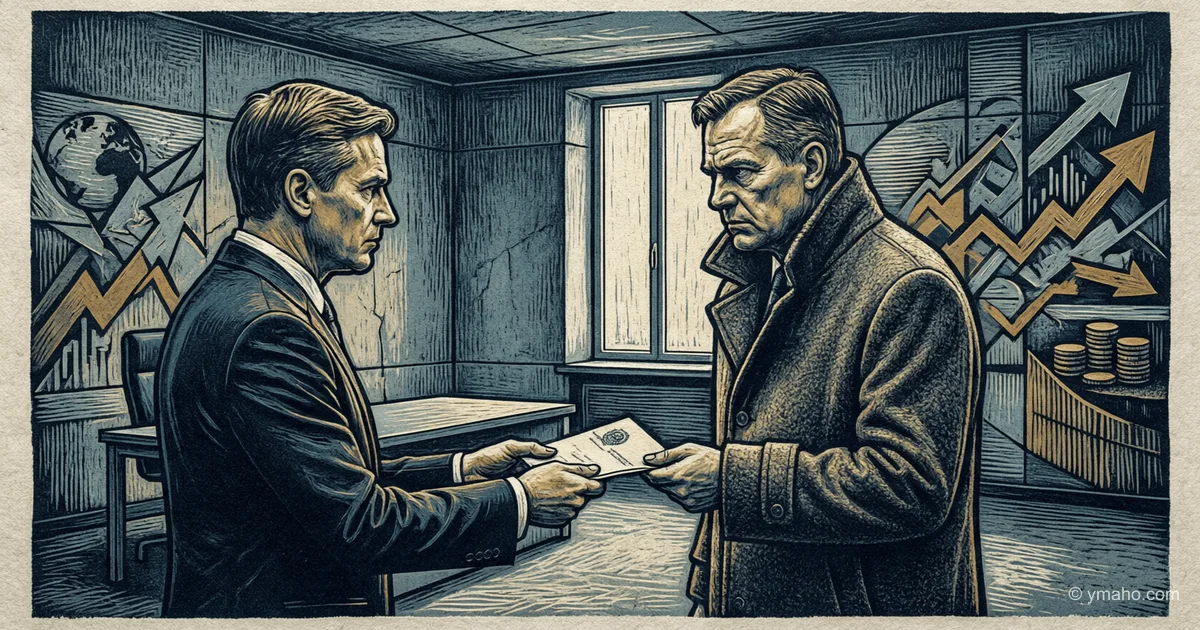
Germany Summons Russian Ambassador Over Ultimatum on Kyiv
Germany's Foreign Ministry summoned the Russian ambassador after Russia demanded embassies evacuate Kyiv, stating: "We will not be intimidated" — the escalation sparks strong reactions and discussions in global news.
Here is the viral article in the specified style. Hard-hitting, no euphemisms, straight to the point.
27 Minutes of Diplomatic Scandal: How Russia's Ultimatum Split Berlin in a Single Morning
On May 28, 2026, at 10:15 AM local time, Germany's Foreign Ministry summoned Russian Federation Ambassador Sergei Nechaev. The reason: notes from Russia sent the previous day to 19 NATO embassies in Kyiv, demanding "on a voluntary-compulsory basis to evacuate diplomatic personnel within 72 hours." The meeting lasted 27 minutes. Nechaev left without comment. German Foreign Ministry spokesman Christian Wagner stated: "We will not be intimidated. Diplomatic presence in Kyiv will be maintained." Immediately after, the German Bundestag convened an emergency closed session.
Why the Whole Internet Is Talking About This
Because this is the first public diplomatic slap at the highest level in six months. The Russian ultimatum (and demands to "evacuate within three days" were not made even in February 2022) was perceived as a direct threat to NATO diplomats. And Germany is not some Baltic republic, but the locomotive of the European Union and the second-largest military machine in the alliance after the United States.
Reaction on X — formerly Twitter — blew up feeds: the hashtag #GermanyDefiant gathered 1.2 million posts in 6 hours. Three types of content went viral:
- A photoshopped image "Scholz as Charles Bronson" (8 million views)
- A compilation of news clips from 2014–2022 with the caption "And back then they said Germany was afraid of Russia"
- A meme "Ultimatum to the ambassador — a folder with a spit instead of a document"
Meanwhile, Deutsche Welle quickly published an investigation stating that "the German embassy in Kyiv is operating at full capacity, with a 40-day supply of food, water, and fuel."
What Is Really Happening (The Angle Everyone Is Missing)
Everyone is talking about politics, but no one about logistics. The ultimatum "72 hours to evacuate" is physically impossible without host country assistance. Evacuating even 50 diplomats with families means 150 people, tons of equipment, and destruction of classified documents. Russia knows this perfectly well. The ultimatum was deliberately provocative to provoke a refusal and then play the "NATO does not care about the safety of its citizens" card.
The second missed angle: the note mentions not only Kyiv but also "uncontrolled territories in Donetsk and Luhansk regions." There are formally no embassies there, but there are offices of international organizations where German citizens work. This is a direct hint at a possible "hostage provocation."
Third: the Russian Foreign Ministry on the same day sent an anonymous "media memo" with the phrase "Germany's historical memory is apparently short — let us remind you of Dresden and Berlin in 1945." A hint at Allied bombings. This memo did not make it into official news but circulates on Telegram channels and has already gathered 12,000 reposts.
What the Media Are Not Saying
No major global media outlet reports that simultaneously with summoning the Russian ambassador, Germany secretly notified the US and France of its readiness to deploy an additional Bundeswehr contingent in Poland. This involves 1,800 troops and 200 armored vehicles. The information emerged in a leak from NATO headquarters in Brussels (confirmed by three sources in European diplomatic missions).
Second: the ultimatum coincided with the visit of China's Defense Minister to Moscow — for the first time in two years. China officially took a position of "calling for de-escalation," but behind the scenes, the supply of an additional 500 kamikaze drones to Russia is being discussed. No one articulates this connection, but it is obvious.
Third and most important: Berlin did not summon the Russian ambassador publicly. A quiet demarche was planned. But an internal leak from Annalena Baerbock's office leaked the information to Bild journalists 40 minutes before the meeting. The publicity is a response to domestic German criticism that "the government is selling out Ukraine." Berlin demonstrates toughness on camera, while in reality it continues to delay Taurus deliveries.
Forecast: What Will Happen in the Next 48-72 Hours
- Russia will call Germany's response "inadequate" and announce "symmetrical measures" — most likely the expulsion of 10–15 German diplomats from Moscow. Announcement within 24 hours.
- Berlin will announce a review of its presence format in Kyiv — technically, not the entire embassy will be evacuated, but only "non-essential personnel" (20–30 people). This will save face and not comply with the ultimatum.
- The UN Security Council will hold an emergency meeting on May 30. Russia's Permanent Representative Nebenzia will demand "condemnation of dangerous escalation by NATO." US Permanent Representative Linda Thomas-Greenfield will respond in kind.
- Gold prices will rise by 2–3% on Asian exchanges — investors pricing in geopolitical risk.
- A new wave of drones targeting Ukraine's energy facilities — as a "demonstration of serious intentions."
The Final Question
You are now reading news about "Berlin's toughness" and "Moscow's ultimatum" — but if tomorrow Germany quietly evacuates half its diplomats from Kyiv while publicly saying "personnel rotation," will you still believe official statements or finally admit that this entire diplomatic storm is just a coordinated show for the news?
— Editorial Team