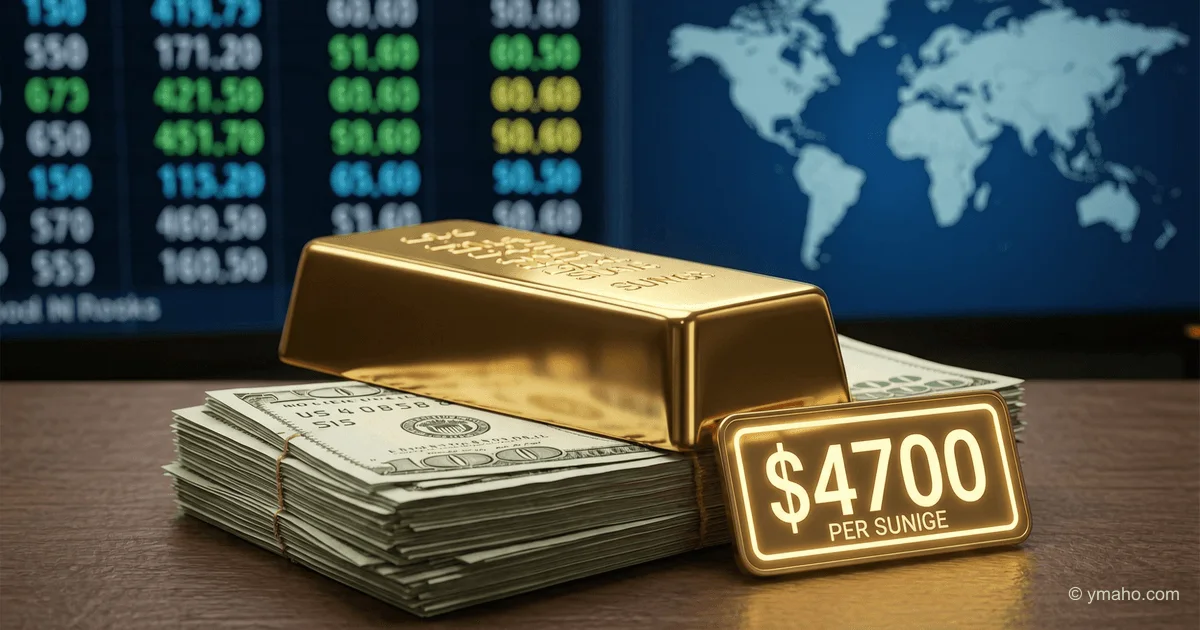
Gold Breaks $4,700 Again: Russian Gold Miners Gain Value
Global gold prices have exceeded $4,700 per troy ounce, boosting interest in shares of companies like Polyus and Seligdar on the Russian market
Gold's breakout above $4,700 per ounce is not a routine reaction to reports of a possible truce. We are witnessing a historic "divorce" of gold and geopolitics. The market no longer needs war as fuel for growth because it has switched to a fundamentally different fuel—structural de-dollarization and US fiscal risks, which mainstream media prefer not to discuss.
The Core: What's Really Happening
At first glance, it's simple: on May 6-7, news emerged about a memorandum between the US and Iran. As expected, oil crashed, the geopolitical premium evaporated, the dollar weakened, and gold, denominated in dollars, soared. But ActivTrades analyst Ricardo Evangelista accurately noted: the Strait of Hormuz deal removes inflationary pressure and opens the door for the Fed to cut rates in 2026. Gold began its rally even before any documents were signed.
This signals a regime change. Gold no longer falls on escalations because its "fundamental floor" has shifted from the $4,130–4,200 level recorded in March 2026 to the current $4,700. The moment the market stopped reacting to news of strikes on Iran, it became clear: physical demand from central banks and the devaluation of fiat currencies outweigh any short-term geopolitical impulses.
Timeline and Context
Late April to early May 2026 perfectly illustrates this tectonic shift. While Brent crude fell below $101 on expectations of a peace deal with Iran, gold rose both on de-escalation news and amid hawkish Fed statements. In March, any mention of a possible US military strike on Iran triggered a flight from gold into cash. Now, when data on May 5 showed record institutional inflows into crypto ETFs alongside gold purchases, it became evident that big capital is betting not on war, but on long-term monetary policy instability.
According to analysts' calculations, central banks have bought over 225 million ounces of gold since 2008, reducing the dollar's share in reserves from a peak of 60% to about 40% today. The Middle East conflict only temporarily slowed this process, creating an illusion of dollar strength. As soon as a chance for a truce appeared, the "toxicity" of dollar assets for major sovereign funds came to the forefront.
Winners and Losers
Russian gold miners are becoming the main beneficiaries. While the MOEX index falls under pressure from cheaper oil, Polyus and Seligdar show steady growth. This creates a unique "safe haven" situation within the Russian market. With production costs well below $1,300 per ounce, the current environment gives them a margin of over $3,400 per ounce.
Losers are the bears betting on a decline. Any gold correction is now technical in nature. As soon as the price touches significant support levels, sovereign funds step in, for whom gold at any price below $5,000 is an opportunity to increase their share of a neutral reserve asset. Also losing are those holding long positions exclusively in dollar instruments—de-dollarization is accelerating before our eyes, and Treasury yields no longer compensate for currency risk.
What the Media Isn't Saying
Deutsche Bank released a conceptual note last week modeling gold's return to the role of a full-fledged reserve asset (up to 40% of central bank reserves). The target price in this model is $8,000 per ounce within five years. Newspapers present this as a sensation but omit the main point: this is not a one-time jump, but an acknowledgment that the current valuation of gold still does not reflect the scale of US fiscal expansion.
Insider detail: algorithmic systems at major hedge funds have changed their patterns. Previously, they automatically shorted gold when bond yields rose. Now, any hint of US fiscal weakness triggers gold buying, regardless of whether yields rise or fall. Gold is turning into an "anti-fiscal" asset. The key catalyst is not Iran, but the upcoming Fed meeting on June 16-17 with new chair Kevin Warsh, which could alter the rate trajectory.
Forecast: Next 30 Days and 90 Days
Next 30 days (by June 7, 2026). Gold will test the $4,900 per ounce level. The reason is not a new war, but rather de-escalation and the injection of cheap liquidity into the economy. A weak dollar and falling Treasury yields will create ideal conditions. Polyus shares could gain another 7-10% on a revaluation of future cash flows.
Next 90 days (by August 7, 2026). This will be the moment of truth. Deutsche Bank's forecast of $5,400 by end of 2026 may be revised upward as early as August. In summer, the overhang will come not from speculative capital but from physical demand: get ready for news of record purchases by central banks ahead of the autumn business cycle. The Fed will be forced to ease policy, finally cementing a new "Bretton Woods" arrangement. Russian gold miners risk being the most overvalued yet continuously rising stocks on the market, as the ruble price of gold will break historical records, offsetting any country risk discount.
— Editorial Team









