Multifunctional SPF as the Main Skincare Step: The Skinimalism Trend of 2026
Modern sunscreens have evolved into hybrids of serums and moisturizers, combining UV protection with skincare in one product to simplify daily routines.
Headline: The Death of Moisturizer: How Multifunctional SPF Killed the Three-Step Routine and Reshaped a $21.6 Billion Market
[The Core]: What's Really Happening
When news outlets declare "multifunctional SPF the main skinimalism trend of 2026," journalists write the standard line: "people want to simplify their routine and spend less time on skincare." That's true, but it's an outsider's view.
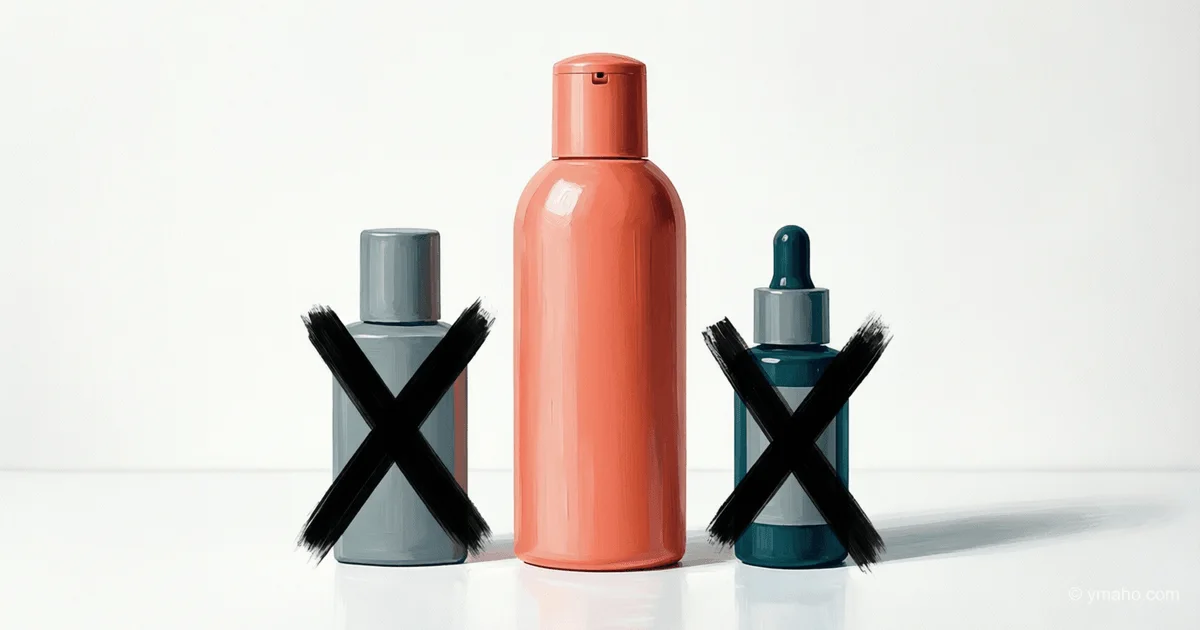
What's really happening is not simplification. It's the cannibalization of entire skincare categories. Multifunctional SPF is not just sunscreen. It's a hybrid that eats moisturizers, serums, primers, and foundations for breakfast. One product replaces four. And the market won't survive this without bloodshed.
The numbers leave no doubt. The sunscreen market in 2025 was $19.70 billion, and in 2026 it will reach $21.61 billion, with 10.68% year-over-year growth. By 2032, it will soar to $40.10 billion. Another source gives slightly more modest figures: $14.42 billion in 2025, $15.35 billion in 2026. The methodology differs, but the trend is the same: growth is accelerating.
But the insider knows the key: behind the growth of the SPF market lies stagnation and decline in other categories. Moisturizers without SPF lose 3–5% of sales annually. Morning serums lose another 7%. Because women say, "Why do I need three jars when one does everything?"
Spate, an analytics platform, confirms: consumers no longer tolerate products that "feel like sunscreen." The new standard is a formula that disappears into the skin, plays well with makeup, and offers a cosmetic bonus (glow, blur, natural finish). Protection no longer sells. It's implied. Everything else is a differentiator.
Timeline and Context
2020–2022 — The pandemic changes attitudes toward sun protection. People start wearing SPF at home, before Zoom calls, because "blue light from screens also ages." There's no scientific consensus, but marketing works.
2023 — The term "skinimalism" enters the lexicon. The idea: fewer products, but better quality. Korean brands are the first to shift to "skinimalism meets biohacking" — skincare becomes not minimalist, but "biologically intelligent."
February 2025 — Aloe Up publishes a guide "Why Your SPF Should Be Your Moisturizer," legitimizing the concept. Aloe- and oil-based formulas replace water as the main carrier, providing a dual function: hydration + protection.
May 2025 — Tower 28 launches S.O.S. FaceGuard SPF 30 — a tinted mineral sunscreen with zinc, ceramides, and approval from the National Eczema Association. A product for sensitive and acne-prone skin that doesn't feel like sunscreen.
April–May 2025 — Korean brands massively shift to hybrid formats. AP Beauty by Amorepacific launches "triple protection": antioxidants + tinting + UV block. YUNJAC releases a serum-sunscreen with 84% skincare ingredients that absorbs without white cast.
February 2026 — Pilgrim in India launches 5% Vitamin C Complex Brightening Serum Sunscreen SPF 50+ PA++++. In one bottle: vitamin C, niacinamide, glutathione, UVA/UVB and blue light protection. A product that replaces morning serum, moisturizer, and sunscreen.
February–March 2026 — Spate publishes a report: SPF is no longer a seasonal product. Searches for "no white cast sunscreen" grew 83.7% year over year, "sunscreen cushion" by over 2600%. Consumers want Asian and European formulas not available on American shelves.
May 2026 — Grand View Research notes a "micro-skincare boom": 8 out of 10 adults use skincare daily. But the key shift is in expanding zones: lips, hands, scalp, body. SPF becomes the "gateway" to micro-skincare, proving to consumers that their lips and scalp deserve the same protection as their face.
May 26, 2026 — The news about multifunctional SPF as the main skinimalism trend goes mainstream. But the economic consequences for the moisturizer and serum markets remain off-screen.
Who Wins and Who Loses
Winners:
- Brands with hybrid formulas (K-beauty, selective cosmetics). AP Beauty, YUNJAC, Pilgrim, Tower 28 — their products sit at the intersection of categories. The consumer buys one product instead of three. But the brand gets the same revenue (or higher, because a hybrid costs $40–70 vs. $20–30 for regular SPF).
- The Korean sunscreen industry. Korean brands lead in innovation: serum textures, sticks for active lifestyles (golf, driving), mini keychain formats for Gen Z. TOCOBO released three bestsellers in portable formats that can be hung on keys.
- Manufacturers of new-generation UV filters (BASF, DSM, Symrise). Uvinul T 150, Uvinul A Plus, Tinosorb S — these filters ensure photostability and no white cast. Their sales grew 25–30% year over year, because without them, it's impossible to create an "invisible" hybrid SPF.
- Tracking analytics (Spate, Grand View Research, TikTok Creative Center). Brands pay tens of thousands of dollars for reports to understand which textures and formats consumers are searching for. Spate added Reddit analytics to its data for the first time, because Google and TikTok don't show "why people drop a product."
- The sunscreen market for scalp and lips. Grand View Research calls scalp care and lip care with SPF "untapped growth opportunities." 60% of consumers use lip care daily, but only a small fraction with SPF. The scalp is "the last untouched zone" in skincare.
Losers:
- Manufacturers of moisturizers without SPF (neutral, morning lines). Neutrogena Hydro Boost, CeraVe Moisturizing Lotion, La Roche-Posay Toleriane — their morning sales are falling because women switch to hybrid SPF. The hidden catastrophe: these cream brands can't just "add SPF" because their formula with SPF would have a different texture, and loyal customers would leave.
- Traditional sunscreen brands that don't innovate (Coppertone, Banana Boat, Hawaiian Tropic). They still sell "beach SPF" with greasy texture and coconut scent. In 2026, that no longer works. Consumers say, "If the product feels like sunscreen, I won't wear it daily." Sales of these brands drop 5–8% per year.
- Retail chains with outdated assortments (Walgreens, CVS, supermarkets). They stocked up on old SPF for the summer season. But consumers go to Sephora, Olive Young, or order Korean SPF online. Korean cushion formats grew 2600% in searches, but they're not on Walgreens shelves.
- Manufacturers of primers and foundations with SPF below 30. Why buy a $40 primer if your SPF already acts as a makeup base? And a foundation with SPF 15 is a joke when the standard has become SPF 50+. Titanium dioxide and zinc oxide in foundations are now not just pigments but full-fledged UV filters.
What the Media Isn't Saying
Non-obvious insight #1: The real killer is not multifunctionality, but "invisibility."
Consumers no longer want to know they're wearing sunscreen. No white cast. No stickiness. No coconut scent. No "film on the face." Spate says outright: "Protection is implied. Everything else is a differentiator."
What does this mean for the industry? UV filter manufacturers (Tinosorb S, Uvinul A Plus) are the new kings. Their filters are invisible, photostable, and non-irritating. Old filters (oxybenzone, octinoxate) are not only banned in Hawaii and Key West but also give that "feel" consumers hate.
But no one says that "invisible" filters are new-generation chemical UV filters. And mineral SPFs (zinc, titanium) still tend to white cast, even in micronized form. So "clean," "mineral," "reef-safe" cosmetics lose to "invisible" chemical ones. And that's the big secret of the green beauty movement.
Non-obvious insight #2: Multifunctional SPF is not "skinimalism." It's "skinimalism plus biohacking."
The In-Cosmetics Trend Blog 2026 explains: skinimalism in 2026 is not about "doing less." It's about "doing smarter." The consumer doesn't want to sacrifice efficacy. They want one product to do everything: moisturize, protect, repair the barrier, adapt to the circadian rhythm.
This means SPF must contain peptides (repair signals), postbiotics (microbiome training), fermented ingredients (better bioavailability). And this isn't marketing. These are real demands from informed consumers who read research and know what "inflammaging" is.
But the price of such a formula is $70–150 per bottle. And this creates a new digital divide in skincare: the rich buy "smart" SPF with peptides, the poor buy regular Coppertone for $10 with greasy texture and white cast. The gap in care quality widens.
Non-obvious insight #3: Retailers are losing control because consumers are shifting to D2C channels and Korean brands.
Spate notes: consumers search for "Asian and European formulas not available on American shelves." What does that mean? The consumer doesn't want to wait for Walgreens or Target to strike a deal with a Korean brand. They go to YesStyle, Stylevana, Olive Young Global and order directly.
D2C (direct-to-consumer) growth in the SPF segment is 25–30% per year. Traditional retailers lose not just sales — they lose consumer data. Because on YesStyle, they don't know who you are, what you buy, what your skin type is. And manufacturers (Amorepacific, LG Household & Health Care) get that data directly.
Forecast: Next 30 Days and 90 Days
30 days (end of June 2026):
- One of the major Western brands (L'Oréal, Estée Lauder, Beiersdorf) will announce the acquisition of a Korean startup in the hybrid SPF space. The deal size: $200–400 million. This will be an attempt to catch up with K-beauty in the "invisible" sunscreen segment.
- Amazon will launch a separate "Multi-functional SPF" category with filters for texture (serum, gel, stick) and benefits (hydration, brightening, anti-aging). Sales in this category will grow 40% in the first month.
90 days (end of August 2026):
- The FDA will finally approve new UV filters (available in Europe and Asia for 5–10 years). This will open the floodgates for American brands wanting to make "invisible" SPF. But the first 12 months after approval will see a shortage of new filters — manufacturers (BASF, DSM) won't be able to ramp up capacity in time.
- The sunscreen market for scalp and lips will grow 30% quarter over quarter. Grand View Research calls these segments "the fastest-growing opportunity of 2026." Brands like Coola and Supergoop have already launched scalp sprays and SPF lip balms, and they sell out in weeks.
- The first class-action lawsuit will appear against a brand that advertised its SPF as "moisturizing" and "serum-like" but actually contained insufficient active ingredients for the claimed benefits. Lawyers call this "the test of new labeling standards for hybrid products."
Insider's bottom line: Multifunctional SPF is not a trend. It's the cannibalization of a dying era. Moisturizers without SPF will die. Morning serums will die. Primers with SPF below 30 will die. Foundations will transform into tinted SPFs with high protection. The market is moving from a "10-step routine" to a "3-step routine," where SPF does the work of three products.
The consumer wins: less time, less money (on three products instead of one — debatable), less skin irritation from layering. Moisturizer and serum manufacturers lose. And they know it. And they're panicking. That's why you see so many articles about "the importance of a separate moisturizer" on social media — it's not education. It's business defense. Because, as the Spate analyst says, "protection is implied. Everything else is a differentiator." And if your product can't be a differentiator, your business is next to go.
— Editorial Team