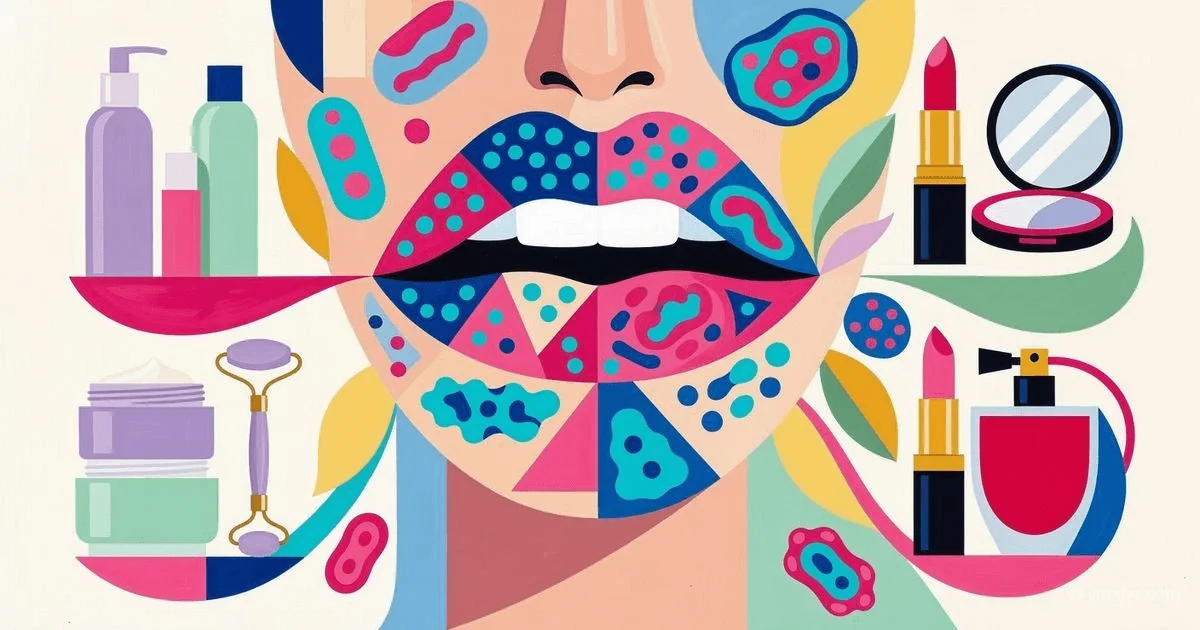
Spotlight on the Oral Microbiome: A New Chapter in Health Care
Western publications are shifting focus from the previously popular gut health to supporting the oral microbiome. Research shows that the balance of bacteria in the mouth critically affects overall inflammation and systemic health.
Analytical Digest: Oral Microbiome — Why the Next Billion-Dollar Market Is Already in Your Mouth
The wellness industry is making a predictable yet underestimated move. What Western media presents as a "shift from gut to mouth" is actually an acknowledgment of a fundamental mistake: a decade of talk about the gut microbiome ignored the fact that the oral cavity is the entry point for 70% of bacteria that later colonize the gut. We are witnessing the birth of a new giant market, which by 2034 will reach $4.3 billion in the microbiome-based oral care segment alone.
But the key insight that mass media misses is this: the "oral microbiome" is not just a new trendy topic for dentist visits. It is an industrial revolution that is killing the traditional market of antibacterial mouthwashes and creating demand for a fundamentally new product category — prebiotics and probiotics for the mouth. And here, as with the gut five years ago, the winner will not be the one with the most aggressive marketing, but the one who first proves the clinical efficacy of their strains.
[The Core]: What Is Really Happening
The scientific foundation of this trend is the rejection of the "specific plaque hypothesis" that has dominated dentistry for the last 40 years. According to the old paradigm, caries and periodontitis are caused by specific "bad" bacteria (Streptococcus mutans, Porphyromonas gingivalis), and the goal of hygiene is their total elimination with alcohol-based mouthwashes and aggressive toothpastes.
The reality revealed by 16S rRNA sequencing is much more complex and scarier for manufacturers of Listerine and Corsodyl. Disease is not the result of the presence of a specific pathogen, but a consequence of dysbiosis — an imbalance of the entire ecosystem of hundreds of bacterial species organized into structured biofilms. When you kill everything indiscriminately with alcohol, you create a vacuum that is quickly filled by even more aggressive pathogens. This is called the "broken cloak effect" in microbial ecology.
Moreover, scientific data from 2025-2026 convincingly show that oral dysbiosis is linked to diseases you wouldn't think of. A systematic review published in BMC Oral Health in April 2026, covering 34 studies, confirmed that changes in the oral microbiome correlate with frailty in the elderly, as well as tooth loss. Other studies have found a link between Porphyromonas gingivalis in the mouth and the risk of chronic atrophic gastritis — a precancerous condition of the stomach — through the mechanism of bacterial translocation via the gastrointestinal tract.
Timeline and Context
This trend did not spontaneously emerge in June 2026. It has been brewing for the last three years, and now we are seeing its entry into the plateau of productivity:
- 2021-2022 (Scientific Foundation): The first studies linking P. gingivalis to Alzheimer's disease appear. 16S rRNA sequencing methods become cheap and accessible.
- 2023 (Awareness): The journal BDJ In Practice publishes a review officially establishing the "dysbiosis → disease" paradigm instead of "pathogen → disease."
- 2024 (First Products): BioGaia and Hyperbiotics launch oral probiotics with strains Streptococcus salivarius K12 and M18 in the US market. Price: $25-35 for 30 tablets.
- Early 2025 (Clinical Data): Results of RCTs show a 40% reduction in gingivitis with L. reuteri DSM 17938.
- February-March 2026 (Explosive Growth): Colgate-Palmolive launches toothpaste with thermostable lactobacilli; Haleon launches a mouthwash with selective botanical antimicrobials instead of alcohol. The microbiome-based oral care market is estimated at $1.4 billion in 2026 with a CAGR of 15% until 2034.
- May-June 2026 (Mainstreaming): Compendium hygienists report: patients come to appointments asking about "bacterial balance." Glamour UK and other outlets pick up the topic.
Who Wins and Who Loses
Winners #1: Oral Probiotic Manufacturers. BioGaia AB (Swedish company, stock up 35% in the last 6 months on the news), BLIS Technologies (New Zealand, holder of patents on strains K12 and M18), and Hyperbiotics (USA). Their business model is selling expensive (up to $50 per monthly course) tablets that dissolve in the mouth, delivering billions of live bacteria. The margin on this product is over 60% — you pay not for ingredients, but for clinical research.
Winners #2: Manufacturers of "Smart" Mouthwashes. Haleon (brand Parodontax) and Colgate have already restructured R&D. Their new formulas use botanical extracts that suppress pathogens without touching commensals. This is like narrow-spectrum antibiotics versus broad-spectrum — more expensive but more effective in the long run.
Radical Losers: Traditional Alcohol-Based Mouthwash Manufacturers. Johnson & Johnson (Listerine) and Procter & Gamble (Scope). Their products, based on ethanol and cetylpyridinium chloride, kill 99.9% of bacteria indiscriminately. The 2026 consumer, having heard about the microbiome, no longer wants a "sterile mouth" — they want a "balanced mouth." Sales of alcohol-based mouthwashes in Europe, according to unofficial data, fell by 8-10% in the first quarter of 2026. This is just the beginning.
Unobvious Loser: The professional dental cleaning market. If a patient effectively maintains their oral microbiome with probiotics and prebiotics, they need professional ultrasonic cleaning less often. Dental associations are already discussing this challenge.
What the Media Aren't Saying
Insight #1: The Japanese already have a classification of "tongue microbiome types," and they are 5 years ahead.
What Western publications are only now discovering has been systematically researched in Japan since 2022. In February 2026, Nature publishes a study on 729 Japanese individuals classifying the tongue microbiome into three "orthotypes": Neisseria-dominant (healthy), Prevotella-dominant (medium risk), and Streptococcus-dominant (high risk of metabolic syndrome).
And most importantly: the S-type (Streptococcus-dominant) is associated with increased odds of abdominal obesity, elevated HbA1c, and liver inflammation markers (AST, ALT, GGT). In other words, simply analyzing the bacteria on your tongue can predict the risk of diabetes and fatty liver disease. Western companies are just beginning to realize the commercial potential of this diagnostic. Why? Because it allows selling not just toothpaste, but a personalized care protocol for $100+ per month.
Insight #2: The term "oral microbiome" is a marketing euphemism. The real science talks about the "oral-gut axis."
A study published in Frontiers in Immunology in January 2026 details the mechanism: bacteria from periodontal pockets and dental plaque are swallowed with saliva, survive the acidic stomach environment (some, like H. pylori, even thrive), and colonize the small and large intestines. There, they trigger a cascade of inflammation via the NF-κB pathway, alter the metabolism of short-chain fatty acids and trimethylamine N-oxide (TMAO) — a known risk factor for cardiovascular disease.
This means the "oral microbiome" is not a separate story. It is the front line of defense for the entire body. And when you buy a "probiotic for the mouth," you are actually buying a "probiotic for systemic health." But manufacturers cannot yet say this directly because it would require FDA approval as a medical device or drug, not as a cosmetic or supplement.
Forecast: Next 30 Days and 90 Days
Next 30 Days (June 2026):
Expect a wave of "hygienist tips" on TikTok and Instagram. They will show how to scrape your tongue (correctly: from root to tip) and why an electric toothbrush with a pressure sensor is not a luxury but a necessity. Companies producing water flossers (Waterpik, Philips) will launch ad campaigns focusing on "microbiome-friendly" interdental cleaning.
Also, within the next 30 days, the FDA or EFSA (European Food Safety Authority) will issue a warning about the unproven efficacy of cheap oral probiotics sold on Amazon. Expect at least 2-3 consumer lawsuits against manufacturers promising "periodontitis treatment" without clinical studies.
90 Days (By Fall 2026):
An inevitable market consolidation will occur. Big Oral Care (Colgate, P&G, Unilever) will start buying small innovative startups in the oral probiotics space. BioGaia is the most likely acquisition target with a price tag of around $1-1.5 billion.
In the Asian region (China, Korea), we will see a boom in products with exosomes and PDRN, not for skin but for gums. Korean laboratories that have established production of salmon exosomes will start releasing gum gels with PDRN. Price: from $40 per tube.
Final forecast: By December 2026, the term "oral microbiome" will enter the top 10 search queries in the Health & Wellness category in the US and Europe. Sales of alcohol-based mouthwashes will drop another 15-20%. And dental clinics will begin offering "oral microbiome analysis" as a separate paid service for $150-200 — and patients will pay. Because, unlike the gut microbiome, where a diagnosis of "dysbiosis" is often vague, here science has already provided clear criteria and correction methods.
— Editorial Team