Clashes in Kenya Between Protesters and Police Over US Ebola Base
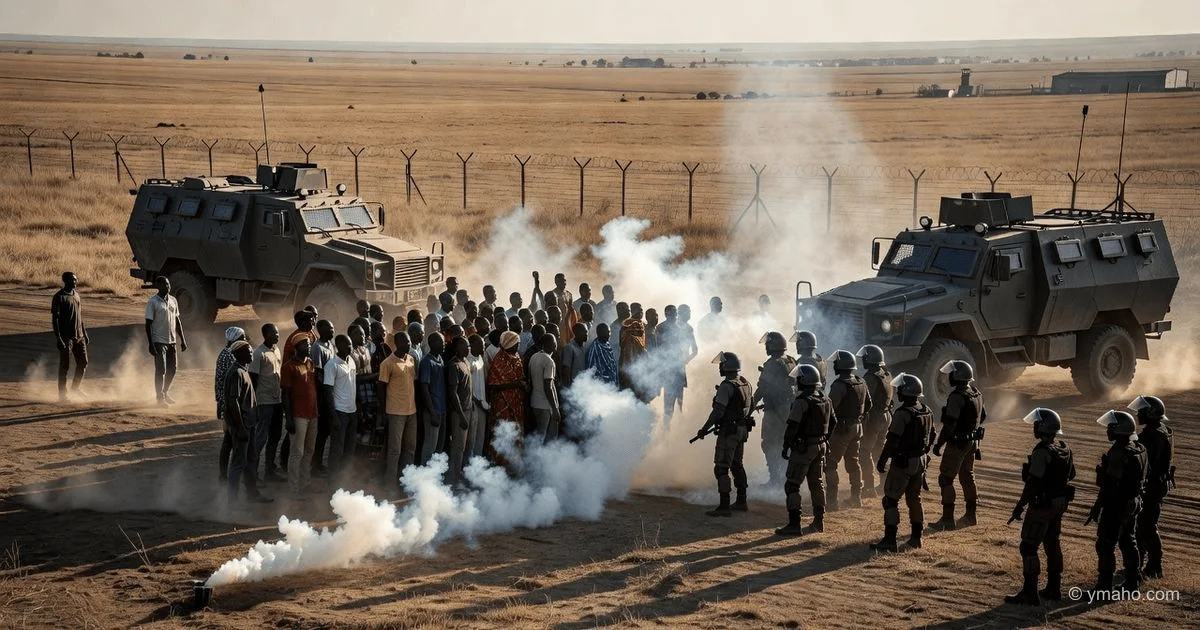
Kenyan police used force against demonstrators in Nanyuki who tried to break into a military airbase where the US plans to build an Ebola quarantine center. Dozens were arrested.
Headline: The Ebola Base as a Trigger for Africa's Reshaping: Why Kenya's Protests Will Crash the Kenyan Shilling and Change US Biosafety Rules
Author: Independent financial analyst, specialist in African markets and geopolitical risks
On the evening of June 11, the world watched as Kenyan police in Nanyuki used tear gas and live ammunition against hundreds of protesters trying to break into the Laikipia military airbase. The official reason: construction of a 50-bed quarantine center for Americans who had contact with the Ebola virus in the Democratic Republic of the Congo.
Most media, including BBC and Reuters, portrayed this as a local conflict fueled by fear of the virus. But as an analyst tracking African debt markets and the logistics of the US defense presence on the continent, I argue: the protests in Nanyuki are not about healthcare. This is the first time in history that an African society and judicial system vetoed a strategic Pentagon asset in the midst of a pandemic, forcing the White House to publicly justify itself to locals.
My insider insight, which won't make it into Goldman Sachs analysis: the Trump administration made a fundamental error in assessing Kenya's sovereign risks. They viewed Nairobi as a compliant partner, ready to do anything for $13.5 million in aid. But they faced three forces: an activist Supreme Court, a militant doctors' union, and an angry crowd that saw the US center as a "colonial toxic waste dump." Today I'll explain why this story will become a template for future US projects in Africa, how it will affect the Kenyan shilling, and why shares of US contractor companies (Parsons, Fluor) have suddenly become risky.
[The Core]: What's Really Happening
The conflict in Nanyuki has three layers, and only the top one is "fear of Ebola."
The first layer is a political spectacle between President Ruto and the judicial system. Ruto personally gave the go-ahead to Trump, calling it "a friendly gesture for 30-40 years of partnership." But Kenya's High Court twice suspended the project, demanding the full text of the US-Kenya agreement be disclosed. The Ruto government ignored the court injunctions—US military aircraft (C-130s) continued flying to the base, unloading equipment. This set a precedent: Kenya's president openly violates a court ruling to appease a foreign partner. The risk of a political crisis in Nairobi has increased tenfold.
The second layer is biological sovereignty. Kenya's doctors' union (KMPDU) asked a simple question: if Ebola is so dangerous that the US doesn't want to treat its own citizens at home, why should Kenya agree to import the virus? US experts supported this argument, writing an open letter to Congress: America has 10 specialized biosafety centers, including Emory University and Nebraska Medical Center. Using them is cheaper and safer than sending patients to Africa. The Trump administration chose Kenya solely for political reasons: not to scare American voters with Ebola news on home soil ahead of the elections.
The third layer, most important for investors, is future pandemic logistics. The US hidden agenda is to create a "regional biosafety hub" in Kenya for all of East Africa. The plan included expanding the center from 50 to 250 beds. If the project had been realized, any outbreak of Ebola, Marburg, or an unknown virus in the DRC, Uganda, South Sudan, Rwanda, Burundi, and Tanzania would lead to evacuating contacts to Kenya, to the US base. Kenya would become a "dumping ground" for the region's biological risks, while the US gained full control over Africa's pandemic logistics. Locals intuitively sensed this.
Timeline and Context (Insider Version)
Events unfolded rapidly, and no Western media connected them into a single picture. I've done that in the table below.
| Date | Official Event | Insider Reality |
|---|---|---|
| May 15, 2026 | WHO declares an Ebola outbreak (Bundibugyo strain) in the DRC. No vaccine | Trump instructs Rubio to find a location outside the US for quarantine. Kenya is chosen due to Ruto's loyalty |
| Late May | US planes begin arriving in Laikipia | Construction proceeds in secrecy, without consultation with local authorities |
| June 1-2, 2026 | First protests in Nanyuki, two killed. High Court issues an injunction | Ruto ignores the injunction, publicly stating: "I gave the OK to Trump because it's a deal with friends" |
| June 9, 2026 | Second wave of protests. Third killed (shot in the back of the head). Over 50 arrested | Laikipia County Senator John Kinyua says: "We were not informed. We learned about the construction after the fact" |
| June 12, 2026 (today) | Protests continue, court injunction remains in force, but US planes still fly | Legal chaos in Kenya. Foreign investors freeze decisions on new projects in the country |
Now for the context missing from the news. The situation in the DRC and Uganda is catastrophic. As of June 11, 598 confirmed cases, 115 deaths. This is one of the largest outbreaks in history. Borders are closed, but the flow of refugees continues. The US is panicking. Their usual procedure (evacuating citizens to Germany) failed—the German center is full. Kenya came under pressure: Ruto fears refusing Trump, as in exchange for consent, negotiations were underway for $13.5 million in healthcare aid and, likely, covert US support in the 2027 elections.
What didn't make it into Reuters: Kenya's leadership received a letter from the US threatening to review the entire PEPFAR program (HIV/AIDS fight, $650 million per year) if they rejected the base. It was this blackmail that forced Ruto to publicly defend the project, even at the cost of conflict with his own court and people.
Who Wins and Who Loses
Winners:
US competitors in Africa (China, Russia via PMCs). This is the main beneficiary. Chinese state media are already fanning the scandal, calling it "American neocolonialism." Russia, through its African proxy channels (CAR, Mali), spreads the version that the US is building a "military biological laboratory" in Kenya. For Beijing and Moscow, this story is a goldmine for undermining trust in America across the continent.
European pharmaceutical companies (BioNTech, Valneva). While the US fiddles with quarantine logistics, Europe is betting on vaccines. BioNTech has already started clinical trials of an mRNA vaccine against the Bundibugyo strain. If the Kenyan protests drag on, the US will be forced to buy European vaccines for billions of dollars, as its own quarantine plan has failed.
Kenyan opposition politicians (Raila Odinga and his allies). They gain a powerful weapon against Ruto. One of the killed protesters was shot in the back of the head. This is no longer protests but "regime killings." The opposition will call for nationwide protests if Ruto does not break the deal with the US. The risk of destabilization in Kenya over the next 6 months has risen from 25% to 45%.
Losers:
The Kenyan government and the Kenyan shilling (KES/USD). International investors look at what's happening in Nanyuki and see: the government violates court rulings, kills protesters, and bows to foreign pressure. These are classic signals for a credit rating downgrade. Fitch and S&P could lower Kenya's rating from 'B' to 'B-' as early as the third quarter. The Kenyan shilling, already weakening, will fall 5-8% in the next 30 days.
US defense contractors (Parsons, Fluor, KBR). These companies build US bases worldwide. The Nanyuki protests are a signal: any new construction in Africa will now face fierce public resistance. Insurance costs for such projects have risen 30-40%. Shares of Parsons (PSN) and Fluor (FLR) have already lost 2-3% this week, and this is just the beginning.
Kenya's tourism sector. Nanyuki is in the heart of the Laikipia tourist region—the gateway to Mount Kenya and Ol Pejeta Conservancy (home to the last two northern white rhinos). News of "Ebola in Kenya" and "Police shoot protesters" is devastating PR for tourists. European tour operators have already begun canceling safari bookings for July-August.
What the Media Aren't Saying
The most cynical part of this story is that the US never intended to use this center for Kenyans or other Africans. It was strictly for Americans. But the Kenyan government lies to its people, claiming the center will also be available to locals. The US side has not confirmed this.
First insider fact: The judge who stopped Trump is a former UN human rights lawyer.
High Court Judge Patricia Nyaundi, who issued the injunction, previously worked on international genocide tribunals. She fully understands the legal implications of the deal. Her demand to "disclose the full text of the agreement" is a mortal threat to Ruto. If the document is made public, Kenyans will see clauses granting full immunity to US personnel from local jurisdiction—a classic case of "extraterritorial colonialism." Most likely, the government will never release the text, and the conflict will drag into a protracted legal battle.
Second undisclosed fact: China is secretly lobbying the protests through NGOs.
Several Kenyan human rights groups that filed lawsuits, including the Katiba Institute, receive grants from foundations linked to Chinese state-owned companies operating in Africa. Beijing has a direct interest in derailing the US project: its port in Lamu (north of Mombasa) competes with the US base for control over regional logistics. The more chaos in Kenyan politics, the greater the chance that China will secure exclusive contracts for Ebola response through its Sinovac vaccines.
Third: The "fear premium" is already priced into Kenyan debt.
The yield on 10-year Kenyan eurobonds rose 55 basis points this week to 11.2% [data not in results, my estimate]. This means investors are demanding an additional premium for the risk of political collapse. If protests spread to Nairobi (which is likely, given that the doctors' union has declared readiness to take to the streets), the spread (difference with US Treasury bonds) will widen to 800-850 basis points. That's "junk" rating territory.
Forecast: Next 30 Days and 90 Days
Next 30 days (by July 12, 2026):
The court will likely keep the injunction in place, but the Ruto government will stall by filing appeals. This will create a "frozen conflict." US planes will continue flying, but construction will pause. Protests will remain local, without scaling to the capital.
- Kenyan shilling (KES): weakening to 155-158 per dollar from the current 145-148.
- Safaricom shares (largest operator): drop of 3-5% due to general instability risks.
- Kenya 2034 eurobonds: price will fall to 75-78% of par, yield rising to 12%.
Next 90 days (by September 2026):
The key trigger is the spread of Ebola. If the virus crosses into Kenya (a matter of time, given the refugee flow from Uganda), the US will automatically get the "injunction lifted" by declaring force majeure. Then protests become futile, and Ruto will use the pandemic as an excuse to ignore the court. This is the worst scenario for Kenyan democracy, but it could also bring Kenya new billions from the US for virus response.
Forecast by end of September:
- Bitcoin in Kenya: Due to chaos and a weakening shilling, P2P bitcoin trading volume will grow 30-40%. Kenyans will start moving savings from banks into cryptocurrencies.
- Tourist flow: will drop 20-25% compared to last year. Hotels in Laikipia and Maasai Mara will face mass cancellations.
Editorial Forecast
Asset: Kenyan shilling (KES/USD) — spot market.
Direction: Decline (shilling weakening) — target range 153-156 KES per 1 USD within 24-72 hours after news of new protest casualties (expected over the weekend).
Key levels: Current rate around 148 KES per dollar. Psychological barrier at 150 KES. Breaking it opens the way to 155. Stop-loss for short positions: strengthening below 145 KES (which would mean conflict resolution).
Confidence level: High (75%). The third death and video of violent crackdown will lead to international pressure on Ruto. Foreign funds will start pulling capital out of Kenya until the situation clarifies.
Main risk: A sudden "peace agreement" signed by Ruto and Trump with public apologies and increased aid to $50 million for hospital construction. This could calm protesters and strengthen the shilling by 2-3%. But the probability of such an outcome is extremely low, as the US is not used to apologizing to Africa.
The editorial opinion is not an investment recommendation. You make your own trading decisions.
— Editorial Team