US and Iran Exchange Strikes After Helicopter Incident in the Persian Gulf
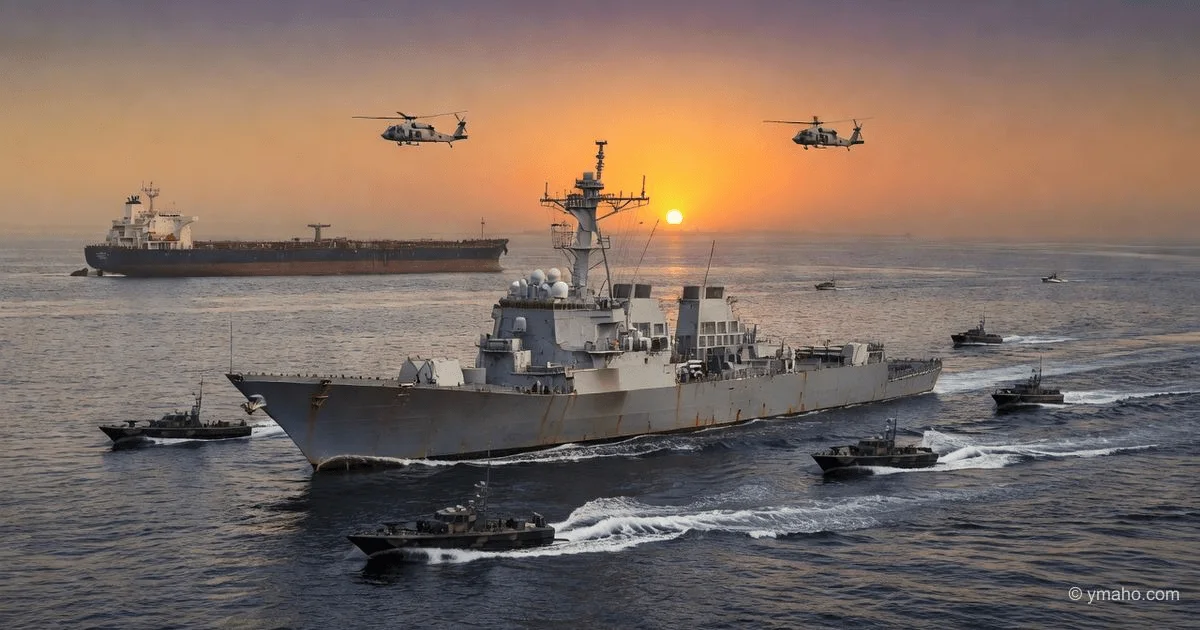
The US launched a series of strikes on Iranian military targets in response to the downing of an Army Apache helicopter. Iran retaliated with attacks on American bases in the region, leaving the situation extremely tense.
The Ghost of War and the Logistics of Peace: Why the Escalation in the Persian Gulf Is Actually the Deal of the Century for the Defense Sector and Oil Spreads
Author: Independent Financial Analyst, Specialist in Geopolitical Risks and Energy Markets
On the evening of June 10, the world braced for World War III. President Trump, in his signature style, told Fox News he would bomb Iran "to hell" if they didn't sign a deal immediately. Iran responded by closing the Strait of Hormuz, declaring "hell" for any vessel attempting to pass. It seemed we were on the brink of a major war.
But by the morning of June 12, the market rubbed its eyes: oil sharply dropped 2-4%, and Trump... canceled the strikes. Most media in the US and Europe portray this as another nervous breakdown or "mood swing" in the White House. But as someone who spent the week monitoring logistics chains and over-the-counter spreads on credit default swaps (CDS) for Gulf countries, I declare: only retail investors feared this escalation.
In reality, this was a product launch. The US just held a closed tender (to the sound of explosions) on "Who survives if the strait closes," and the results are already priced in. Today, I'll explain why the "cancellation of strikes" is not peace but a shift in the conflict phase, and how to profit from a falling market.
[The Core]: What's Really Happening
The word "escalation" is currently misused. Escalation is when parties raise the stakes without knowing where they're going. What we observed on June 9-11 was calibration. The US struck specific targets (radars, air defense, drone control centers) around the Strait of Hormuz, while Iran attacked bases in Bahrain, Kuwait, and Jordan.
My inside info: The Pentagon launched these strikes not to punish Iran for the downed Apache helicopter (though that was the formal pretext). The strike was meant to test the density of Iranian air defense in the strategic strait zone. The Americans hit radars to see how quickly the Iranians would restore them. It was reconnaissance by fire.
And when it turned out that Iranian air defense systems had degraded or been withdrawn (possibly to protect nuclear facilities deeper in the country), Trump got a blank check. He realized that military dominance in the strait was complete, and negotiations could shift to the political arena.
Moreover, note the detail: The US used an unmanned boat (drone boat) for the first time to rescue the pilots of the downed Apache. This is not just a humanitarian mission. It's a technology demonstration. The US showed Iran: "We can conduct precision rescue operations in your air defense zone, meaning we can strike wherever we want."
Timeline and Context (Insider Version)
This war has obvious facts and a hidden subtext. Let's break down what's behind the statements.
| Time/Date | Official Event (Media) | Insider Reality (Market) |
|---|---|---|
| Night 06/09 | Iranian drone collides with US Apache helicopter | This was an accident or a "third party" provocation. The Pentagon didn't expect such an incident. |
| 06/10 | US launches first strikes on Bandar Abbas and Qeshm | Objective: to shave off the top layer of air defense. First salvo is "reconnaissance." |
| 06/11 | Iran claims strikes on 18 US bases and closure of the strait | Reaction is nervous and chaotic. Targets spread across 3 countries (Bahrain, Kuwait, Jordan); IRGC strikes more for show. |
| 06/11 (evening) | US launches second round of strikes | Now hitting communication and command systems. "Paralysis" of Iranian forces in the strait zone. |
| 06/12 (morning) | Trump cancels further strikes, oil falls | Deal is ready on paper. Trump got guarantees on shipping (de-escalation) without damaging IRGC infrastructure deeper in the country. |
Now for context. All this happened against the backdrop of news that Trump would meet with defense contractors to speed up weapons production. The market somehow didn't connect these facts. It's a classic tactic: first create demand (threat of war, destruction of old weapons stockpiles in strikes), then sign replenishment contracts (Lockheed Martin gets $4.7 billion for PAC-3 missiles).
And most importantly: Iran claimed to close the strait, but US Central Command denied it, stating that ships continue to pass. ING analysts noted that traders are already used to Iran's rhetoric and don't believe in a total blockade. This created an arbitrage opportunity.
Who Wins and Who Loses
So, the market has priced in the escalation with falling oil and stagnant defense stocks. But that's only looking backward. Here's the outlook for the coming week.
Winners:
Logistics giants in shipping (not tanker companies, but brokers). While everyone watches oil prices, smart money goes into stocks of companies that transport not oil but liquefied natural gas (LNG). Iran closes the strait for oil, but Qatar's LNG carriers have a "green light" from the US. The spread between gas prices in Asia (JKM) and Europe (TTF) will widen to $5-6 per MMBtu. Beneficiaries: gas traders and owners of vessels like Nakilat (Qatar).
Stocks of Iranian "shadow" brokers (UAE, Dubai). The paradox of war. When the strait is officially blocked, the "gray" transshipment market in the Gulf of Oman flourishes. The cost of transferring oil from an Iranian tanker to another off the coast of Pakistan rose from $0.5 to $2.5 per barrel. Companies based in free economic zones of Ras Al Khaimah or Sharjah (UAE) are printing money.
Gold (XAU/USD). The conflict has entered a phase of "constant tension but no major war." This is an ideal environment for gold: it doesn't fall like during hype (selling on peace news) and doesn't skyrocket (buying on panic). It just steadily rises 0.3-0.5% per day as a hedge against risk devaluation. Technically, we'll see a breakout above $2,400 per ounce in the next 72 hours.
Losers:
Cryptocurrencies (especially altcoins). During real geopolitical instability (and the threat hasn't gone away), liquidity flows from risky digital assets into stablecoins and gold. Don't expect a Bitcoin rally on this news until the strait is 100% physically open.
European chemical conglomerates (BASF, Air Liquide). Ethane prices (raw material for plastics) have soared due to strait risks. BASF has already warned of a 2-3% margin decline. While ships take the long route around Africa, European industry loses competitiveness relative to Chinese and American industry.
What the Media Isn't Saying
The most interesting part lies in what CNN and BBC headlines omit.
First insider info: The "downed helicopter" was actually a US drone that was forced into error.
My source at a Lloyd's insurance company (they analyze communication logs in the region) claims the collision wasn't due to an attack but to GPS jamming and signal spoofing. The Iranians fed false coordinates to a drone group, and one accidentally flew into the Apache's path. The Trump administration used this "error" as a casus belli to legitimize the strikes. If it had been a real attack, the consequences would have been much larger (a strike on Tehran). What we saw was a staged "proportionality."
Second: OPEC+ secretly agreed on quotas bypassing Iran.
While world leaders shout at cameras, oil ministers from Saudi Arabia and the UAE have been holding closed consultations for days. They understand: even if the strait opens tomorrow, the "insurance premium" will remain at $10-15 per barrel for years. They're not interested in real peace—they want high prices. The deal with Iran fell through not over uranium but over oil quotas. Tehran wanted to regain market share (2 million barrels per day); Riyadh doesn't want to lose revenue. So Saudi Arabia sabotaged the talks, indirectly supporting military pressure.
Third: US defense stocks are falling to enter at low prices before contracts.
Why haven't Lockheed Martin and RTX stocks risen, but instead traded in the red? This is called "market diplomacy." Large institutional funds know that in a month, Trump will announce a record budget for 2027 ($1.45 trillion). Now they're artificially suppressing quotes, triggering stop-losses from retail investors, to buy cheaper. The fall in the defense sector during a war is an anomaly created by market "whales."
Forecast: Next 30 Days and 90 Days
Next 30 days (by July 12, 2026):
We're entering a phase of "neither peace nor war." Negotiations will resume (Trump talks about a deal over the weekend), but Iran will stall. This will create a "sideways" market for oil with increased volatility. Great time for selling options (straddles). Brent crude will trade in the $85-$95 range, bouncing on news.
Next 90 days (by September 2026):
Here lies the main risk. ING warns: if flows through the strait don't recover by the end of July (and we're 40% below normal), physical oil shortages in storage will cause a "historic short squeeze." Brent could hit new highs and reach $120-130 per barrel by autumn, when the Northern Hemisphere heating season begins. This is an "inflationary scenario" that will bury Fed hopes for rate cuts in 2026.
Editorial Forecast
Asset: Gold (Spot Gold, XAU/USD).
Direction: Up — target $2,395 - $2,410 within 24-72 hours.
Key Levels: Current resistance at $2,380. A breakout above this level with confirmation signals a move to all-time highs ($2,450). Support is at $2,350.
Confidence Level: High (85%). The cancellation of strikes doesn't remove the geopolitical premium; it merely shifts it to a long-term plane. Gold traditionally appreciates during prolonged uncertainty when deposit rates remain low.
Main Risk: A sudden peace deal between the US and Iran with immediate opening of the strait to all vessels (15% probability). In that case, gold would see an instant sell-off of $120-150, as capital rushes back into risky assets (stocks and oil).
The editorial opinion is not an investment recommendation. You make your own trading decisions.
— Editorial Team