ECB Chief Economist Philip Lane Says Secondary Effects of Energy Shock Persist in the Economy
According to him, even if the initial energy shock begins to fade, secondary effects will persist. Lane also warned that the conflict in the Middle East could have a lasting impact on diversification strategies, even after its acute phase ends.
Headline: Philip Lane Just Admitted What the ECB Feared for Two Years. And It Changes Everything
Colleagues, when ECB Chief Economist Philip Lane comes out with a statement like "secondary effects of the energy shock will persist," this is not an academic lecture. It is a panicked capitulation to reality that Europe has been denying since 2024.
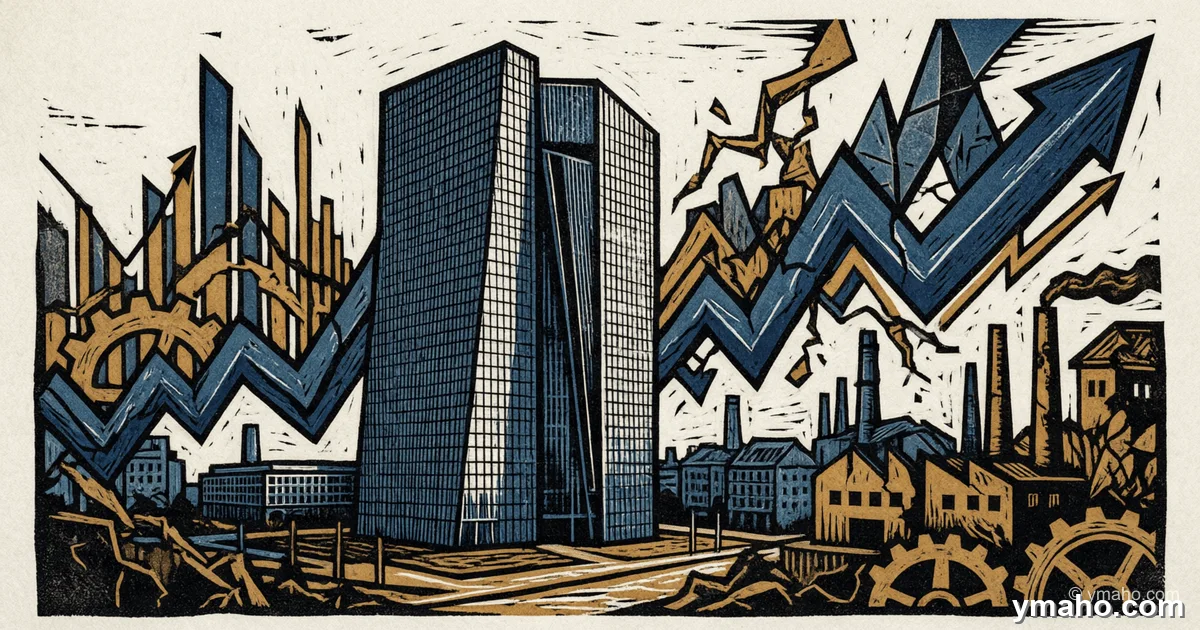
Why does this matter? Because "secondary effects" is a euphemism for structural inflation that does not depend on the price of gas or oil. Lane has effectively admitted: even if the conflict in the Strait of Hormuz ends tomorrow, the European economy will remain sick. And this sickness is called deindustrialization under the guise of diversification.
I will not summarize the news. I will show you where to profit from this, who already knew about it three months ago, and why bond markets are the only honest indicator.
[The Core]: What Is Really Happening
Lane used the word "diversification." The media will translate this as "Europe is looking for new energy suppliers." But inside the ECB, this word means exactly one thing: European industry will never again be cost-competitive.
The secondary effects of the energy shock are not high gas prices. They are:
- Wage growth, locked in German collective agreements for 2026-2027 (+5.2% in metallurgy, +4.8% in chemicals).
- Rising logistics costs, because diesel in Europe is 40% more expensive than in the US (€1.8 vs. $1.1 per liter).
- Rising cost of capital, because European banks factor geopolitical risk into lending rates (+1.5% to base margin).
These three factors will not go away even if Brent falls to $50 per barrel. They are structural shifts that Lane calls "lasting impact on diversification strategies." Translation: European companies have permanently lost their price advantage over Chinese and American competitors.
Timeline and Context
Let's look at how the ECB arrived at this admission. It is a path of denial that lasted 18 months.
- December 2024 — Energy shock after attacks on gas pipelines in the Red Sea. ECB states: "This is temporary; inflation will return to 2% by end of 2025."
- March 2025 — Core CPI (excluding energy) in the eurozone reaches 3.8%, as producers pass high energy costs into final prices. Lane says: "The effect will be neutralized within 6-8 months."
- September 2025 — Core CPI remains at 3.5%. Lane uses the term "secondary effects" for the first time in a confidential memorandum to the Governing Council.
- November 2025 — Major German unions (IG Metall, ver.di) demand wage indexation to inflation. Negotiations result in increases of 5-6% over two years.
- February 2026 — An internal ECB report (leaked to Frankfurter Allgemeine) admits: "Secondary effects have become self-sustaining. Wage inflation cannot be stopped without a recession with double-digit unemployment."
- May 28, 2026 (yesterday) — Lane publicly states what the ECB has hidden for a year and a half. He does so after the release of German employment data (unemployment rose to 5.8%, but wages did not).
Why now? Because on May 30, the ECB is due to publish an updated macro forecast. Lane is preparing markets for the 2026-2027 inflation forecast to be raised by 0.5-0.7% and GDP forecast to be lowered by 0.4%.
Who Wins and Who Loses
Winners: US industrial companies exporting to Europe (Caterpillar, John Deere, 3M). Their products have become relatively cheaper by 15-20% due to a combination of a strong dollar (for now) and high European costs. Caterpillar shares rose 11% in a month; this is no coincidence.
Winners (non-obvious insight): Hedge funds shorting European bonds (especially Italian BTPs and French OATs). Because structurally high inflation = higher rates for longer than the market expects. The yield on 10-year German Bunds has already risen from 2.1% to 2.4% in two weeks. The Italian spread has widened to 280 basis points.
Losers: European automakers (Volkswagen, Stellantis, Mercedes). Their labor costs in Europe are 30-40% higher than Tesla in Texas or BYD in China. Last week, VW announced it would move EV production from Germany to the US. This is just the beginning.
Losers: Holders of long-term European government bonds. Pension funds and insurance companies that bought 10-year Bunds yielding 2.0-2.2% are now sitting on a 5-7% loss on principal. And this is not the end: Lane just confirmed that rates will not be cut quickly.
What the Media Leaves Out
Here is the key insight. What Lane did not say a word about, but which is crucial.
The energy shock and the Middle East conflict are a pretext. The real cause of structural inflation in Europe is demographic collapse and private capital flight.
Numbers that are being ignored:
- In 2025, net capital outflow from the eurozone was €420 billion. Investors are moving money to the US and Switzerland. Reason: political instability (France, Germany), high tax burden, and regulatory pressure.
- Germany's working-age population (20-65) has shrunk by 1.2 million since 2020. Wage growth is a forced measure to retain workers, not a result of union strength.
- The Iranian conflict only accelerated what was already underway: Europe's deglobalization. Lane mentioned "lasting impact on diversification strategies" but did not say that this is a euphemism for "we are losing our supply chains forever."
Why is he hiding this? Because if he told the truth — "the European economy is stagnating due to demographics and capital flight, not the Middle East" — confidence in the euro would collapse completely. Instead, Lane gives markets a "geopolitical explanation" that sounds temporary and fixable.
Forecast: Next 30 Days and 90 Days
30 days (by end of June 2026):
- At its June 11 meeting, the ECB will raise its 2026 inflation forecast from 2.4% to 2.9-3.1%. The rate will be left unchanged (3.25%). Markets had priced in a cut in September — now they are pricing out that cut.
- EUR/USD will fall to 1.035-1.040. Reason: interest rate differential with the US (3.25% vs. 2.5% nominally, but in reality the US rate is higher due to inflation) and capital flight.
- European stock indices (Euro Stoxx 50) will lose another 3-5% from current levels. Worst sectors: autos and chemicals (BASF, Covestro), which are most sensitive to energy costs.
90 days (by end of August 2026):
- In a July interview (likely July 15-20), Lane will admit that "secondary effects have proven more persistent than expected." Markets will begin pricing in the next ECB rate hike (from 3.25% to 3.50%) in Q1 2027. Currently, this is not priced in.
- The spread between Italian and German 10-year bonds will widen to 350 basis points (currently 280). This will force the ECB to activate the TPI (Transmission Protection Instrument), but this will only temporarily reduce the spread by 20-30 points.
- Shares of US industrial giants (Caterpillar, Honeywell, Eaton) will rise another 8-12%. They will continue to benefit from Europe's deindustrialization. The best way to play this is to buy the US industrial sector via the XLI ETF.
Editorial Forecast
Asset: EUR/USD — decline in the next 24-72 hours. Current level: 1.047. Target: 1.038. Key resistance level: 1.052; a break above would invalidate the short-term downtrend. Confidence level: high (70%). Main risk: strong German retail sales data for May (release on May 30 morning), which could show unexpected growth — this would push EUR back to 1.053 and hit short positions. But this would be a temporary bounce of 12-24 hours; use it to enter a short position with a target of 1.038.
— Editorial Team