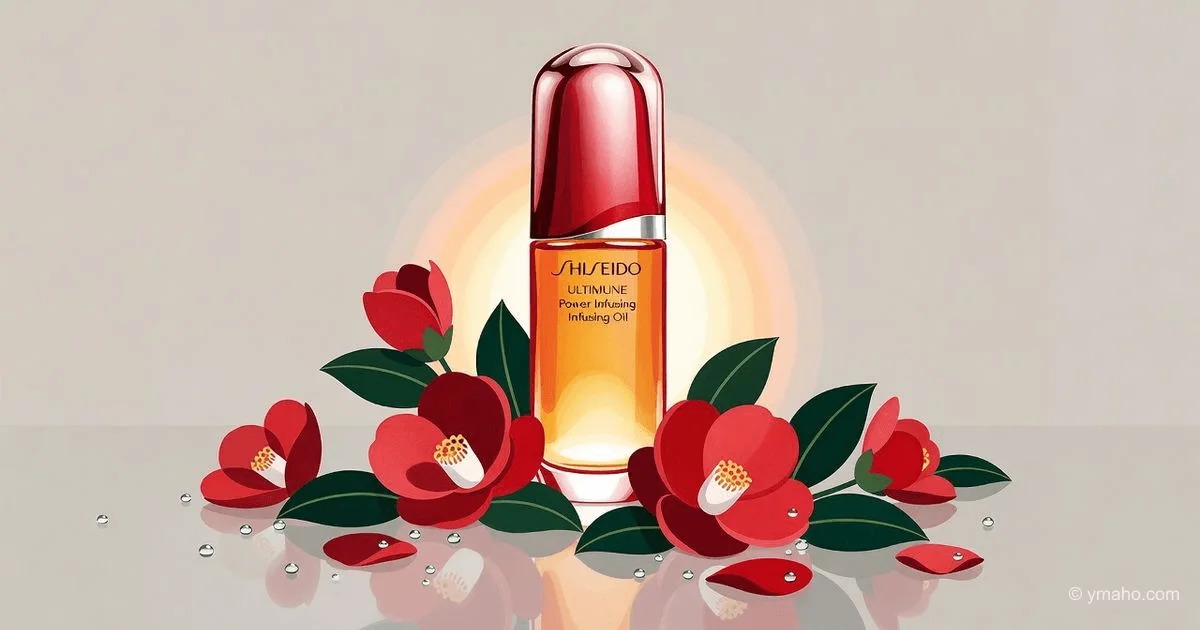
Shiseido Reimagines the Cult Serum: Launch of Ultimune Power Infusing Oil
Japanese giant Shiseido launches Ultimune Power Infusing Oil — a new oil based on the renowned Ultimune technology. The product offers a reimagined approach to strengthening the skin's protective properties, promising intense nourishment and radiance.
Analytical Review: The Shiseido Oil Paradox
How Ultimune Power Infusing Oil at €88 Defies Genre Conventions and Rewrites the Rules in the Face Oil Category
Introduction: When a Cult Concentrate Turns into an Oil
June 2026 will be remembered for a long time. While the industry debated whether oils are suitable for oily skin, the Japanese giant Shiseido made a move that silenced all skeptics. The release of Ultimune Power Infusing Oil in late May to early June is not just an expansion of the famous Ultimune line. It is a bold attempt to rethink the very category of "treatment oil," which has been teetering between a must-have and a niche product for "desert-dry" enthusiasts over the past five years.
What is truly interesting for an analyst: Shiseido is launching an oil that... contains almost no oils. Look at the ingredients: water first, glycerin, alcohol, diglycerin — and only somewhere deep in the middle do we find camellia oil and extracts. This is not an oil in the classic sense (like pure squalane or coconut oil). It is a hydrosol with oily sensations, an emulsion that creates the texture of an oil but behaves like a serum. A brilliant marketing move: give the consumer the "luxury feel of oil" without the risk of clogged pores and comedogenicity.
[The Core]: What Is Really Happening
From a cosmetic chemistry perspective, Ultimune Power Infusing Oil is a hybrid that the industry has long awaited but feared to create. The base is water and alcohol (Alcohol Denat. in fourth position). Yes, denatured alcohol is the second most significant component after glycerin. This is a deliberate risk by the Japanese giant. Alcohol ensures instant absorption, the "disappearance" of oil from the skin's surface, and that feeling of weightlessness for which women with combination and oily skin, who usually avoid oils, are willing to pay.
The star of the formula is the patented Power Fermented Camellia+ technology — fermented camellia oil and extract, designed to enhance the skin's internal defense and remove aging cells before visible signs of aging appear. Add to this ectoin (a powerful cell protector against stress), hyaluronic acid, hydroxyproline (a building block of collagen), and you get a product that claims to be an "all-in-one."
Non-obvious insight (what is not written in press releases): Shiseido deliberately abandoned "pure oil" in favor of an oily emulsion because they know what influencers keep silent about: real oils (squalane, argan, jojoba) are incompatible with active water-soluble peptides and hydrolysates that form the basis of Ultimune's anti-aging effect. To preserve the flagship concentrate complex (which includes reishi extract, heartleaf, and fermented hibiscus), they had to create an oil illusion. The consumer gets the texture of an oil, but the molecular-biological mechanism of action of a water-based serum. It is a kind of "Trojan horse" for oil fans who previously ignored the Ultimune line.
Timeline and Context: 25 Years of Immunology and One Clever Move
To understand the depth of this launch, we need to look at the timeline of recent weeks. On May 21, 2026, the product appeared for pre-order in Japan's duty-free zone. By May 29, it was already available at the Takashimaya chain in Singapore and at ANA Duty Free Shop. And on June 6, 2026, Trend Hunter included the new product in its top 100 trends of the month, calling it a "potential multitasking hydrating oil."
Here is what matters: Shiseido is celebrating 25 years of its immunological research, which laid the foundation for the entire Ultimune line. The first Ultimune concentrate was released in 2014 (version 1.0), followed by versions 2.0, 3.0, and finally 4.0. All this time, the brand taught consumers that "skin immunity" is about concentrates and serums. And suddenly — an oil.
Why now? Because the market is saturated with concentrates. Every pharmacy has a "vitamin C serum" and "retinol in oil." The "concentrate" category has been devalued. But "oil" is premium. It is a ritual. It is luxury. Shiseido needed a new format to raise the average ticket and attract an audience that associates "oil" with effective anti-aging care. The price in Japanese duty-free is ¥10,000 (about $65–70) for 75 ml. In Western markets, it is around €75–88. That is 20–30% more expensive than the classic Ultimune concentrate per ml.
Who Wins and Who Loses
Winners:
- Shiseido Group: The company gains the opportunity to cannibalize its own sales. Instead of the customer leaving for Kiehl's (Daily Reviving Concentrate) or Clarins (Double Serum), they stay within the Shiseido ecosystem. Ultimune Oil is an "offer you can't refuse" for those who wanted to try Ultimune but were afraid of textures or didn't believe in concentrates.
- Consumers with Combination and Oily Skin: Previously, they were forced to choose between "effectiveness" (water-based concentrates) and "feel" (oils that often caused breakouts). Ultimune Oil offers a third way: oil without greasiness, thanks to the high alcohol content and light emulsion. This is a victory for dermatological comfort over marketing stereotypes.
- Eco-conscious Buyers: Shiseido claims that the bottle is made from recyclable materials and the formula contains no mineral oils or parabens. In an era when consumers demand responsibility from luxury, this is a significant advantage over competitors who still use plastic and controversial preservatives.
Losers:
- Niche Oil Brands (e.g., Vintner's Daughter, May Lindstrom, Herbivore Botanicals): Their philosophy is "pure oil from natural ingredients, steeped for weeks." Shiseido has just shown that you can make a "smart oil" with peptides and hyaluronic acid that absorbs in seconds, not sits on the skin for 10 minutes. Asian cosmeceuticals beat artisanal natural care with technology. The consumer chooses results, not the story of the oil's origin.
- Brands That Rely on Alcohol as a Cheap Solvent (e.g., The Ordinary, Inkey List): Shiseido has legitimized the use of Alcohol Denat. in a luxury product, but did it beautifully. Now every budget brand with alcohol in its formula can say, "We are like Shiseido!" However, Shiseido has a buffer in the form of ectoin and fermented camellia, which compensate for the alcohol's aggression. Cheap alternatives do not. This will create market stratification.
What the Media Are Not Saying
The official story goes: "An oil for face, body, and hair that strengthens the skin's protective properties." But let's break down three details that are not written in glossy magazines.
- Alcohol is a double-edged sword. Alcohol Denat. in fourth place is a lot. Yes, it provides fantastic absorption. But it also destroys the hydrolipidic barrier with prolonged use. Shiseido puts ectoin and camellia oil to "heal" what the alcohol has damaged. It is an endless dance: aggression — recovery. For skin with a damaged barrier or rosacea, this product could be a trigger. In reviews of the classic Ultimune Concentrate (which also has a lot of alcohol), users complain about dryness, burning, and even skin darkening (hyperpigmentation) after use.
- Multitasking is marketing, not physiology. Shiseido suggests applying the oil to the face, body, and even hair. This is economically unviable. At €88 for 75 ml, using it on the body is like washing your car with champagne. Moreover, the formula optimized for the face (with peptides and ectoin) is simply useless on hair. You will get slight cuticle smoothing from the oils, but nothing more. This is a classic trick to increase perceived value.
- "94% said radiance improved in 3 days" is not a clinical study. It is a subjective assessment from a focus group that knew they were using a new product (placebo effect). In reality, peptides and ectoin start working at the cellular level no earlier than 4-6 weeks. The first 3 days are just hydration from glycerin and shine from oils. The consumer pays for a long-term effect but gets a short-term wow effect.
Forecast: The Next 30 Days and 90 Days
Next 30 Days (June – July 2026): Battle on Duty-Free Shelves
Over the next month, the main battlefield will be airports and online platforms like Sephora. Shiseido has bet on travelers: the product is available at Haneda, ANA Duty Free, and others. The key metric is the repurchase rate. If a tourist who bought the oil during a trip to Japan comes back for it at home via Sephora, the strategy worked. If not, the product will remain a souvenir. In the next 30 days, we will see a wave of YouTube comparisons: "Ultimune Oil vs. Clarins Double Serum vs. Kiehl's Midnight Recovery." Shiseido has a unique advantage — it suits oily skin, unlike competitors. This is their trump card in communication.
Next 90 Days (August – September 2026): The Great Exodus of Conservative Concentrate Fans
By the end of summer, the main risk of this product will begin to manifest — cannibalization. Some loyal fans of the classic Ultimune Power Infusing Concentrate (version 4.0) will switch to the oil for novelty. If this happens on a large scale, Shiseido will see an internal drop in concentrate sales. But more likely, the market will split: the concentrate will remain for fans of "proven textures," while the oil will attract a new audience. However, the risk of allergic reactions to essential oils (bergamot, linalool, limonene — there are many in the formula) could trigger a wave of negative reviews on Reddit and Facebook groups. In September, we will see either the product solidifying in top sales or its quiet disappearance. My forecast: the product will stay, but in the niche of "emollients for combination skin." Shiseido will be saved not by the oil, but by the next step — likely a sleep pillow with the same Power Fermented Camellia+ technology. Because sleep is the only thing left uncovered by the brand after face, body, and hair.
— Editorial Team