Fed Shifts to New Communication Policy, Boosting Bond Market Volatility
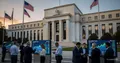
New Fed Chair Kevin Walsh at his first FOMC meeting abandoned the traditional dot plot and simplified the accompanying statement, removing signals about the future policy path. This triggered a negative reaction from major investors expecting rising Treasury yields and volatility, which has already pushed the 10-year yield up 50 bps since the escalation of the conflict in Iran.
Analytical Review: The New Era of Kevin Walsh's Fed — Silence Instead of a Hawkish Cry
[The Gist]: What's Really Happening
The FOMC meeting of June 16–17, 2026, will go down in history not as another round of monetary policy, but as a paradigm shift. The rate was held at 3.5–3.75% — predictable and unanimous. But everything else was not just unexpected; it was a systemic shock for markets accustomed to the era of Jerome Powell's "verbal interventionism."
Kevin Walsh, who took office on May 22, used his first meeting to demonstrate a radical break with the 14-year tradition of post-crisis expectation management. He didn't just remove the phrase about "future adjustments" from the statement — he eliminated the very concept of forward guidance as a policy tool. At his press conference, there were no familiar hints about the rate trajectory. Instead, a terse: "This committee will achieve price stability."
But the real surprise lay in the details. Walsh demonstratively did not provide his own forecasts in the dot plot, which since 2012 had served as the main compass for investors. Instead of 19 dots in the diagram, there were only 18. This is not a technical detail — it is a public statement that Walsh considers predicting the future pointless when the Fed should react to data.
Meanwhile, the median forecast of the remaining 18 committee members turned out to be aggressively hawkish: nine participants expect at least one rate hike in 2026, with six of them forecasting a hike of 50 basis points or more. The PCE inflation forecast for 2026 jumped from 2.7% in March to 3.6%. Markets instantly repriced probabilities: a 25-basis-point hike is priced in by October 2026.
Timeline and Context
To understand the depth of what's happening, we need to reconstruct the chain of events over recent months.
Early 2026: Markets were pricing in Fed easing. The escalation of the Middle East conflict and the closure of the Strait of Hormuz in April-May led to a new round of inflationary pressure, and the 10-year US Treasury yield rose 50 basis points from its year lows, reaching 4.43%. The key question: is this a structural shift or a temporary shock?
| Indicator | March Forecast | June Forecast | Change |
|---|---|---|---|
| End-2026 rate forecast | 3.4% | 3.8% | +0.4 pp |
| 2027 rate forecast | 3.1% | 3.6% | +0.5 pp |
| 2026 PCE forecast | 2.7% | 3.6% | +0.9 pp |
| 2026 Core PCE forecast | 2.7% | 3.3% | +0.6 pp |
| 2026 GDP growth forecast | 2.4% | 2.2% | -0.2 pp |
| 2026 unemployment forecast | 4.4% | 4.3% | -0.1 pp |
Source: FOMC Summary of Economic Projections, June 2026
June 17, 2026, 2:00 PM ET: Release of the Fed statement. It shrank from the usual 600–700 words to a concise list of facts without risk assessments or future signals. The S&P 500 and Nasdaq closed down more than 1%, the two-year yield surged 16 bps to 4.21%, the dollar strengthened, and gold lost 1.1%.
June 18: PIMCO analysts publish a report categorically rejecting the theory that the yield rise is driven by demand for AI infrastructure financing. Their conclusion: "Structural pressure from AI is real, but it is growing slowly and is not the driver of the current yield movement."
June 19–20: Markets try to digest the new reality. CME interest rate futures price the probability of at least one hike this year above 85%, and the probability of two hikes at nearly 50%.
Non-obvious insight that media miss: Walsh's real "hawkish" signal is not in the forecasts but in their absence. By abandoning the dot plot, Walsh creates information asymmetry: markets lose the official benchmark and must rely on market signals, making them more vulnerable to speculative attacks. This increases short-term volatility but gives the Fed room to maneuver at a critical moment — if inflation starts falling faster than forecasts, Walsh can reverse policy without accusations of a "180-degree turn."
Who Wins and Who Loses
Losers #1: Emerging market economies. A stronger dollar and rising Treasury yields make emerging market debt less attractive. Capital will start flowing from EM bonds to US Treasuries yielding above 4.4%. This is especially critical for countries with high external debt denominated in dollars.
Losers #2: Highly leveraged technology companies. Rising yields mean higher borrowing costs. Companies that actively used cheap financing in recent years will face higher debt service costs. Moreover, the tech sector has been the driver of S&P 500 growth in recent months.
Losers #3: Gold and other non-yielding safe havens. Gold lost 1.1% immediately after the meeting. In a world where Treasuries offer real yields above 2%, holding physical gold becomes increasingly unjustified.
Winners: The banking sector. Rising yields and a steep yield curve are the best scenario for bank margins. Banks profit from the spread between short-term deposit rates and long-term lending rates. The higher the long-term yield, the higher bank profits.
Winners: Hedge funds with short Treasury positions. This is an obvious beneficiary — volatility and uncertainty create opportunities for speculators. But there is a nuance: the absence of the dot plot deprives them of familiar benchmarks, increasing the risk of misinterpretation.
Uncertainty: Insurance companies and pension funds. On one hand, high yields are good for new investments. On the other, volatility creates challenges in managing portfolio duration.
What the Media Isn't Saying
First: Walsh is deliberately creating "managed chaos." The statement that he did not participate in formulating the forecasts, but the committee reached a unanimous decision, creates a unique situation. Walsh distances himself from forecasts that may prove wrong but takes responsibility for the current decision. This allows him to reverse policy in the future without losing credibility — he can always say, "That was the committee's forecast; I acted on data."
Second: Markets are misinterpreting the "sawtooth" forecast. The Fed's forecast implies a rate hike to 3.8% in 2026 and a cut to 3.6% in 2027 — a "sawtooth" trajectory the Fed has never published before. Macro economists at Freedom Global point out that this is not a directive to act but a signal to the market: "If the inflation threat materializes, we will act decisively." If inflation remains under control, there will be no hike. This is flexibility, not rigidity — but markets read it as a hawkish signal.
Third: PIMCO and other major asset managers are already preparing for a yield decline scenario. Their analysis shows that of the 0.9 percentage point increase in the PCE forecast, only 0.4 points are due to already published data for March-May — the remaining 0.5 points represent a change in expectations about the future. If the geopolitical factor (reopening of the Strait of Hormuz) normalizes, these expectations could change sharply. PIMCO is already locking in profits on short positions ahead of this scenario.
Fourth: The Fed is becoming less predictable at a time when markets need maximum certainty. This is a paradox: the higher the uncertainty, the more important clear signals. Walsh does the opposite — he reduces communication at a time of geopolitical crisis and inflationary shock. This increases the likelihood of market dislocations and speculative attacks.
Forecast: Next 30 Days and 90 Days
30 days (through end of July 2026): Volatility in the Treasury market will remain high. The 10-year yield will fluctuate in the 4.2–4.6% range depending on inflation data (PCE index release on June 26). Markets price a 32% probability of a rate hike at the July 29 meeting. Any deviation of CPI from forecasts will trigger sharp moves. The S&P 500 will continue its correction — target range 5,400–5,600 points. The tech sector will be under pressure.
90 days (through end of September 2026): The key factor is geopolitics. If the memorandum ending the US-Iran conflict holds and the Strait of Hormuz reopens, Brent oil could fall back to $60–65 per barrel, reducing inflationary pressure. In this scenario, the Fed will keep rates unchanged through year-end, and markets will reprice the "hawkish" forecast — the 10-year Treasury yield will drop to 3.8–4.0%. If the conflict resumes, inflation will remain high, and Walsh will be forced to raise rates by 25 bps as early as October. This would trigger a stock market crash of 5–8% from current levels.
Editorial Forecast
Asset: 10-year US Treasury notes (US10Y). Direction: neutral with a downward bias in the short term. Target: yield 4.25–4.40% over the next 24–72 hours. Confidence level: medium. Main risk: the CPI release on June 26 could shift the balance — an upside surprise would push yields above 4.55%, a downside surprise could pull them to 4.15%. Given the lack of clear forward guidance from Walsh, any macro indicator will have an exaggerated impact on markets. We recommend maintaining short duration in portfolios.
— Editorial Team