Bank of Japan Raises Rate to 1% for First Time Since 1995, Widening Policy Divergence with Fed
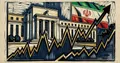
Japan's central bank raised its rate by 25 bps to a 31-year high, signaling an exit from ultra-loose policy, putting pressure on USD/JPY.
Rate at 1%: Why the BOJ's Hike Didn't Save the Yen and What the Market Misunderstood
[The Gist]: What's Really Happening
On June 16, 2026, the Bank of Japan raised its key rate to 1% for the first time since 1995. The decision was expected: the market had priced in 25 basis points a week before the meeting. But the main paradox lies in this predictability. USD/JPY remained above 160 after the announcement, the yen didn't get the long-awaited support, and the Nikkei 225 index, contrary to tightening logic, rose 1% to a record 70,000 points.
What's really happening? The market saw the hike not as the start of a decisive fight against inflation, but as a forced step by a lagging central bank catching up with a departing train. The 7-1 vote with a single dissenting vote from Toichiro Asada, amid Governor Ueda's absence (he was hospitalized with a liver infection), created an image of institutional weakness, not strength.
A key detail overlooked: the BOJ simultaneously raised the rate and paused further reduction in government bond purchases from April 2027, maintaining the monthly volume at 2 trillion yen ($12.5 billion). This contradiction—tightening rates while pausing quantitative tightening—signals to the market that the central bank is not ready to go all the way. It fears a sharp rise in 10-year JGB yields, which are already at multi-year highs.
Timeline and Context
Understanding the current moment requires the sequence of events over the past two weeks:
| Date | Event | Impact on USD/JPY |
|---|---|---|
| June 16 | BOJ raises rate to 1% (25 bps), vote 7-1. QT pause from April 2027 | USD/JPY stays above 160, muted reaction |
| June 16 | Press conference by Deputy Governor Uchida instead of hospitalized Ueda | Cautious tone, no promises on timing of next hike |
| June 17–22 | US-Japan 2-year yield spread widens to 280 bps | Dollar gets fundamental support |
| June 20 (Friday) | Juneteenth—US markets closed, liquidity minimal | Ideal window for intervention, but Japan's Ministry of Finance did nothing |
| June 22 | USD/JPY trades in the 160.7–161.9 zone, testing June 2024 highs | Awaiting US PCE data and Fed speeches |
The key takeaway from the timeline: Japan's Ministry of Finance missed a perfect intervention opportunity on Friday when US markets were closed. If authorities are not ready to act under extremely low liquidity, they either have accepted the 160 level or understand that interventions are useless against the fundamental rate gap.
Who Wins and Who Loses
Winners:
- Japanese exporters and the Nikkei 225 index. The record rise above 70,000 points is a direct result of the weak yen, making Japanese goods globally competitive. Corporate profits are converted into yen at favorable rates, improving earnings.
- Foreign investors in Japanese stocks. Capital inflows into the Japanese market continue: US funds see record inflows, and some of this money goes to Japan as the "last cheap story" amid tightening in the US and Europe.
- Speculators betting on USD/JPY upside. Carry trade remains highly profitable: the US-Japan 2-year yield spread exceeds 280 basis points in favor of the dollar. This is an all-time high, making selling yen and buying dollars nearly risk-free (as long as the Fed doesn't start cutting rates).
Losers:
- Japanese households and small businesses. Wholesale inflation in May rose to 6.3%—a three-year high. Import inflation caused by the weak yen hits purchasing power. The rate hike to 1% increases mortgage and consumer loan payments.
- The Bank of Japan as an institution. With each rate hike having no effect on the yen, the central bank's reputation suffers. Markets begin to doubt whether the BOJ can control the national currency at all.
- Holders of Japanese government bonds. 10-year JGB yields rise, meaning prices of already issued bonds fall. Japanese pension funds, the largest JGB holders, face paper losses.
What the Media Isn't Saying
Insight #1: Uchida did exactly what wasn't expected—he said nothing.
The market awaited Deputy Governor Uchida's press conference as the main driver. He was supposed to either confirm a hawkish stance (and crash USD/JPY) or give a dovish signal (and send the pair to 162+). Instead, Uchida took a cautious position, repeated general statements, and gave no concrete guidance on the timing of the next hike.
For carry traders, this is the best scenario. The lack of clear signals about rapid tightening means the rate gap with the Fed will remain wide at least until year-end. The swap market prices only a 70% probability of one more hike to 1.25% by December 2026. That's not enough to change the trend.
Insight #2: The Ministry of Finance's inaction on Friday is silent acceptance of the 160 level.
This is a non-obvious but critical signal. On Friday, June 20, US markets were closed, liquidity was minimal—ideal conditions for intervention at minimal cost. Japan's Ministry of Finance did not intervene, even though USD/JPY traded above 160.
Why is this important? Because the Ministry has already spent about 11.7 trillion yen on interventions in April–May, and all were temporary. Each intervention gave a 200–300 point pullback, but within a week the pair returned to previous levels or higher. Authorities realized that fighting the market at a fundamental level is a war of attrition that Japan is losing. So they chose a containment tactic rather than a fight.
Insight #3: The decision to pause QT from April 2027 is a political compromise, not an economic calculation.
The BOJ was supposed to reduce bond purchases in parallel with rate hikes. That's the logic of normalization. Instead, it froze the reduction at 2 trillion yen per month from April 2027.
Why? Because Prime Minister Takaichi's government does not hide its discomfort with further tightening. Rising JGB yields increase the cost of servicing public debt, which exceeds 250% of GDP. The QT pause signals to the market that policy remains politically driven and the central bank is not fully independent.
Insight #4: Thursday's PCE is not just an inflation report. It's a test for Warsh.
Consensus expects core PCE to rise 0.3% month-over-month, giving annual inflation around 3.4%—well above the Fed's 2% target. But Warsh made clear at his first meeting that he won't blindly follow the dot plot and is reviewing data sources.
If Warsh ignores strong PCE and focuses on other indicators (services, housing, labor market), it could weaken the dollar and give a temporary breather to the yen. If he confirms a hawkish stance, USD/JPY will head to 163–164 within days.
Forecast: Next 30 Days and 90 Days
30 days (through end of July):
USD/JPY will stay in the 159.5–163.0 range. The main driver is Fed rhetoric and US inflation data. The technical level of 161.95 (June 2024 high) is the nearest resistance. A break above opens the way to 164.00. Japan's Ministry of Finance intervention is possible, but it will be short-lived and give a pullback of no more than 200–300 points. Intervention amid a widening rate gap is like trying to stop a train with your hand.
90 days (through end of September):
The most likely scenario is further yen weakening to 164–168, provided the Fed maintains a hawkish stance and the BOJ continues gradually (one more 25 bps hike by December). If the peace process with Iran proves sustainable and oil continues to fall, inflationary pressure in Japan will ease, and the BOJ may slow its pace—adding a bearish factor for the yen. An alternative scenario—collapse of the agreement and oil rising to $90–100—would force the BOJ to act faster, but even two 25 bps hikes by year-end won't close the gap with the Fed.
Editorial Forecast
Based on current data, we expect short-term USD/JPY growth to 162.0–162.5 within 24–72 hours before the PCE release and Fed speeches. The key resistance level is 161.95; a break above will accelerate the move to 164.00. Confidence level is medium, with the main risk being an unexpectedly hawkish tone from Uchida in upcoming speeches or a sudden statement from Japan's Ministry of Finance about readiness to intervene, which could crash the pair by 150–200 points in a few hours. This is an editorial opinion, not an investment recommendation.
— Editorial Team