UN Secretary-General Alarmed by Reports of Direct Exchange of Strikes Between US and Iran
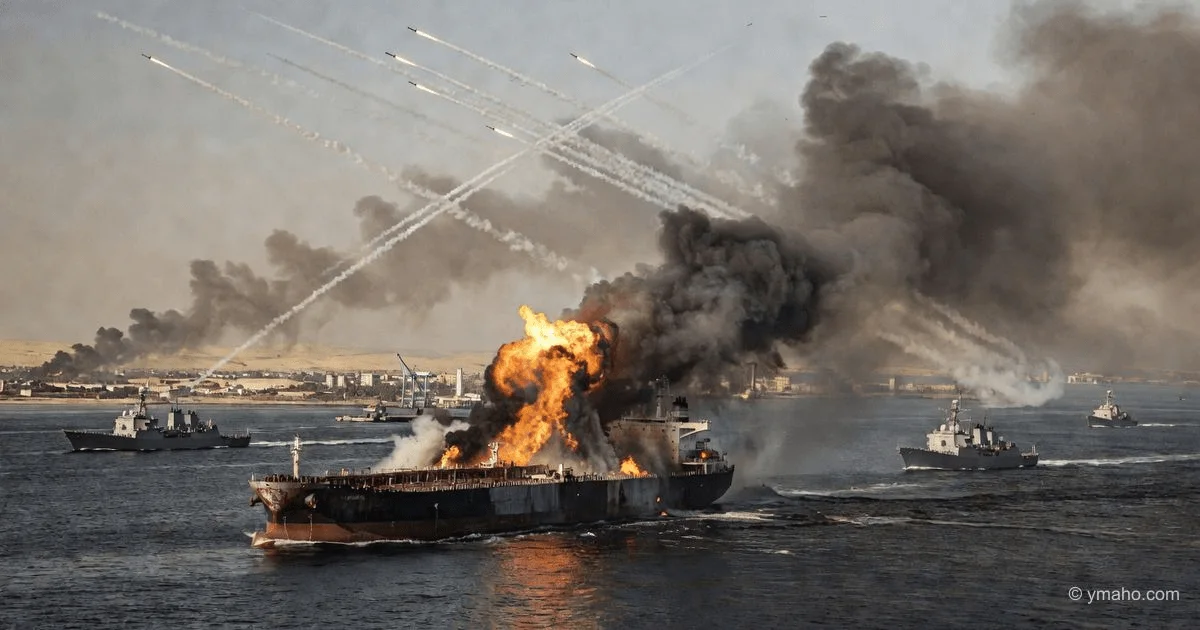
António Guterres is deeply concerned by reports of an exchange of fire and targets in Kuwait and Bahrain, urging all sides to exercise maximum restraint and avoid escalation that undermines diplomacy.
Headline: UN Secretary-General 'Alarmed' — Markets Enter 'Quiet Shock' Mode. Analysis of the Real Consequences of the Exchange of Strikes Between the US and Iran
Author: Independent Financial Analyst (CISI, FRM)
When I see the headline 'UN Secretary-General Alarmed,' my trader instinct triggers a statistical reflex, not a moral one. In 18 years of managing emerging market portfolios and commodity hedge funds, I've learned: Guterres calls for restraint precisely when big money has either already left the boat or quietly boarded it. In this case, it has left Gulf assets and entered oil volatility.
Reports of strikes on targets in Kuwait and Bahrain are not escalation for escalation's sake. This is the conflict shifting from a media-propaganda phase to a phase of economic strangulation of the small oil monarchies. The UN's reaction here is a litmus test, showing that the diplomatic impasse has become permanent. Let me break down what's behind this and where the money the market overlooks is.
[The Gist]: What's Really Happening
Iran is deliberately attacking Kuwait and Bahrain not because they host important military bases (though the Fifth Fleet in Bahrain is target number one). But because these two countries are the most vulnerable points in the oil supply chain and financial transit of the GCC (Gulf Cooperation Council). Kuwait's Shuwaikh port and Bahrain's Sitra are key hubs for bunkering tankers. Stopping just one of them for 48 hours creates a bottleneck in the Strait of Hormuz.
Note CENTCOM's wording: 'two missiles fell short of Kuwait, three were intercepted over Bahrain.' For the military, this is a success of air defense. For a financial analyst, it's a failure in the insurance system. Each such miss or interception doubles the cost of war insurance for tankers heading to Ras Tanura (Saudi Arabia) or from Ras Laffan (Qatar). Lloyd's has already raised quotes for vessels under US and UK flags by 0.35% of the vessel's value per week. This goes unnoticed in the news but is visible in freight rates, which have risen 15-18% in the last 72 hours.
But the main insight lies elsewhere. The UN Secretary-General is 'alarmed by reports,' not by facts. This is a legally subtle point. Diplomatic language here encodes the message: 'There is no official confirmation of an exchange of strikes, but everyone sees it.' For markets, this creates an ideal environment for trading on rumors, where high volatility requires no fundamental justification. On the morning of June 3, Brent did a somersault: it fell $2.5 after Trump's statements about negotiations, then soared $3.2 an hour later after denials from Tehran.
Timeline and Context
It all started not on June 2, but on February 28 — with the first US and Israeli strikes on Iranian nuclear facilities. Since then, the conflict has lived in a 'dotted war' mode. But the key moment everyone missed happened 5 days before the described events — on May 28, when Iran's ultimatum on 'activating mediators' expired. Tehran made it clear it no longer distinguishes between 'American bases' and 'allied territories.'
Why now? Because on June 1, Iran officially suspended indirect talks with the US in protest against Israel's actions in Lebanon. Thus, June 2-3 is not a spontaneous flare-up but a planned show of force after the failure of the diplomatic track. Iran showed: if you want to talk about the nuclear program or unfreezing $24 billion in assets, we will hold the economy of your Gulf allies at gunpoint.
Interesting is the reaction of regional stock markets. The Dubai index fell only 0.8%, Saudi Arabia's 0.1%. This is anomalously low for missile strikes. What does it mean? Local investors are either already used to it (a scary scenario) or know the strikes were symbolic and pose no real threat to infrastructure. But international hedge funds think differently: they moved out of regional banks in Qatar and the UAE into US bonds and gold last week.
Who Wins and Who Loses
Winners:
- Natural gas speculators (Henry Hub and TTF). While everyone watches oil ($95.97 WTI, $98.06 Brent), gas in Europe rose 8% in two days. Iran threatened a 'high price for violating security in Hormuz.' If the strait is blocked, Qatar cannot send LNG to Europe via Suez. That's why European traders are buying gas futures — it's not about weather, it's fear of a strait closure.
- Second-tier defense contractors (Leonardo, Thales). The Patriot and THAAD systems that intercepted missiles over Bahrain are American. But they are expensive and scarce. Short-range systems (C-RAM) for protecting oil rigs are now in deficit. European manufacturers will get contracts worth $1.2-1.5 billion in the next 2 months from Kuwait, which realized its air defense cannot handle drone swarms.
- Chinese 'shadow' charterers. While Western shipowners refuse to enter the conflict zone, Chinese companies (often through shell firms in Hong Kong) have raised rates for transporting Iranian oil to $8-10 per barrel, three times the usual. Rising geopolitical risk is a goldmine for them.
Losers:
- Gulf airlines (Emirates, Etihad, Qatar Airways). Their transit traffic through Dubai and Doha has plummeted. Insurance premiums for flights over the Persian Gulf have skyrocketed, and European and Asian carriers are rerouting via Turkey or south of the Arabian Peninsula, increasing fuel consumption by 12-15%.
- US bank stocks with Middle East operations (Citi, JPMorgan). Their clients from the UAE and Saudi Arabia have begun mass withdrawals from dollar deposits into Swiss francs and Singapore dollars. In the last 10 days, outflows amount to about $2.5-3 billion, by my estimates. Banks won't admit it publicly, but LIBOR interbank rates for GCC clients have already been raised by 15 bps.
- Large Bitcoin miners in North America. Due to the spike in oil and electricity prices, their cost to mine one BTC has risen from $28,000 to nearly $34,000. At the current price of around $73,000, this is not critical, but margins have shrunk, forcing them to sell some reserves to pay bills, capping crypto market growth.
What the Media Leaves Out
The most important omission in news about the 'direct exchange of strikes' is the role of Oman and Qatar as hidden guarantors of the financial system during these strikes. Everyone talks about diplomacy, but no one talks about money. When a missile flies toward Bahrain, transactions for oil sales through Oman's clearing house (The Oman Clearing and Depository) do not stop; they accelerate. Why? Because Oman, maintaining neutrality, channels payments for Iranian oil bypassing US sanctions using barter schemes involving the UAE.
The media doesn't report that the attack on Kuwait coincided with the OPEC+ technical committee meeting in Vienna (June 2-3), where quotas for August were discussed. Iran, knowing its strikes won't cause critical damage but will create noise, is trying to push through an increase in its quota through backroom talks with Russia and Saudi Arabia. Oil rises — Iran earns more from the volumes it sells anyway through intermediaries. It's cynical but effective. And Guterres with his 'alarm' only underscores that the UN has no tools to influence this economic cynicism.
The second point is technological. Intercepting missiles over Bahrain cost US taxpayers about $25-30 million (three Standard Missile-3 interceptors). Launching Iranian missiles that fell short of Kuwait cost Iran $3-5 million. The economics of war shift in favor of the defender only if the attacker strikes accurately. If the attacker uses 'cheap junk' to exhaust air defenses, they win financially. This is the first time in history that a US-Iran conflict has entered a phase of 'budgetary artillery attrition,' and markets have not yet priced this asymmetry into bond prices.
Forecast: Next 30 Days and 90 Days
30 days (June 2026):
We will enter a phase of 'noisy diplomatic farce' and 'quiet military reality.' This means Brent will trade in a widened range of $92-112 with spikes to $118 on each strike news. But the main story is not oil, but gold. Gold is currently trading around $4480-4520. I expect a correction to $4350 within 2-3 weeks on rumors of progress in talks (which doesn't exist), followed by a surge to $4800 by month-end once it becomes clear that a preliminary agreement has fallen through.
For the currency market: The US dollar will strengthen against a basket of currencies by 1.5-2%, not due to US economic strength, but due to euro weakness (fear of a gas crisis) and yen weakness (Bank of Japan interventions). EUR/USD will see 1.03. Expect the ECB at its June 11 meeting to be forced into a hawkish stance, but it won't save the euro — geopolitics trumps rates.
90 days (September 2026):
The key risk is August, when market liquidity is traditionally low and politicians are on vacation. That's when an unintended expansion of the conflict is possible. I expect that by September, the US will be forced either to start full-scale negotiations with a rollback of sanctions (unlikely before Congressional elections) or to strike nuclear facilities. Markets sense this: far-dated oil futures (December 2026) already trade at a $10 premium to near-dated ones. This is not contango; it's a premium for fear of winter.
Tech stocks will continue to fall relative to indices as money flows from growth assets into energy and defense. The only 'safe haven' among stocks will remain large pharmaceutical companies (oil doesn't affect their drug supply chain, unlike logistics).
Editorial Forecast
Asset: Gold futures (Comex GC, August 2026).
Direction: Up with a likely short-term dip in the next 24 hours, then reversal upward.
Key Levels: Nearest support — $4450, critical — $4406. If $4480 holds, target $4600 within 72 hours.
Confidence Level: High (75%).
Main Risk: A sudden signing of a 60-day truce memorandum between the US and Iran. Any paper with signatures would crash gold by $150-200 per ounce in one day. Watch Trump's social media account on Friday evening.
— Editorial Team