US Imposes Sanctions on Iran's Shipping Control Authority in the Strait of Hormuz
The US Treasury has blacklisted an organization created by Iran to regulate the passage of commercial vessels through the strait. Washington stated that the authority facilitates international terrorism, effectively putting any shipowner cooperating with Tehran at risk.
Here is an analytical breakdown in the style of an independent financial analyst—focusing on the hidden mechanisms that remain outside official press releases and news headlines.
A Paper Shot in the Silence: Why Sanctions on the "Shipping Control Authority" Are Not an Attack, but Panic
When the US Treasury adds a new Iranian organization to the SDN (Specially Designated Nationals) list, markets usually shrug. Another round of sanctions warfare, another official or entity cut off from the dollar. But this time, the target is not just "another front for the shadow fleet." The target is the Shipping Control Authority in the Strait of Hormuz. An organization that is formally supposed to regulate vessel passage, but in reality has become Iran's tool to legitimize transit fees, insurance, and control over the sole artery through which 20% of the world's oil flows.
You see sanctions. I see Washington admitting it is losing the information and insurance war. And that is far more important than another name on a blacklist.
[The Essence]: What Is Really Happening
On May 30, 2026, OFAC (the Treasury's Office of Foreign Assets Control) announced sanctions against an entire network of shipping companies and commercial intermediaries, including Symphony Shipping (Dubai), Agility Shipping (Hong Kong), Trastok Shipping (Marshall Islands), Vanguard Marine Ventures (UAE). Eight tankers were also added to the blacklist. The formal basis is facilitating Iran's oil sector and supporting the Quds Force—the elite unit of the Islamic Revolutionary Guard Corps.
But the true target of these sanctions is Iran's Shipping Control Authority. An organization created by Tehran after February 28, 2026, when the US and Israel launched initial strikes on Iran, and the Strait of Hormuz effectively ceased to function as a free waterway.
What does this authority do? It issues transit permits. It coordinates movement. And most importantly, it is integrated with Iran's new insurance platform—"Hormuz Safe."
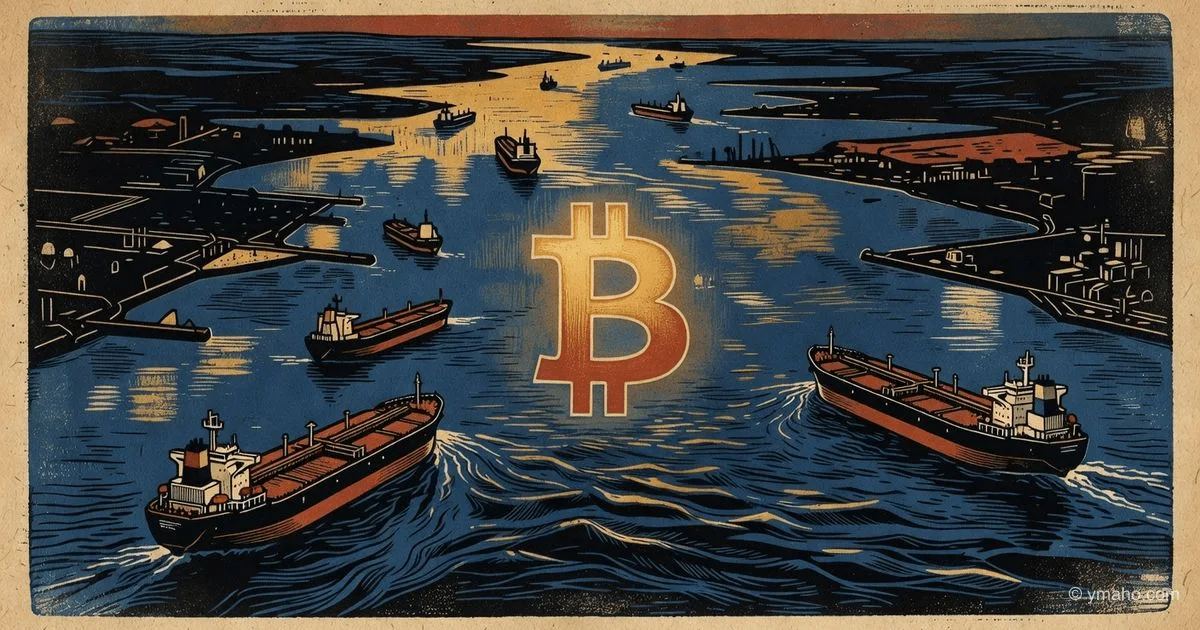
And here is where it gets interesting. "Hormuz Safe" is a cryptocurrency insurance scheme launched by Iran's Ministry of Economy and Finance in mid-May 2026. The platform accepts bitcoins and other digital currencies, issuing policies covering war risks for passage through the strait. Estimates suggest Tehran expects to earn up to $10 billion annually from this.
Why does this matter? Because traditional Western insurers, members of the International Group of P&I Clubs, have synchronously ceased war risk coverage for vessels entering the conflict zone since March 5, 2026. The market rate for war insurance in the Strait of Hormuz has skyrocketed from pre-war 0.2–0.25% of vessel value to 3–8%, peaking at 10%. That means the owner of a $100 million tanker would have to pay between $3 and $8 million just for insurance for a single voyage.
Iran saw a niche. It created its own insurance product. And now US sanctions against the "authority" are an attempt to cut off the oxygen supply to this alternative insurance system. But the train has already left the station.
Timeline and Context
Let's reconstruct the picture that the media breaks into scattered news.
February 28, 2026 — The US and Israel launch initial strikes on Iran. Iran's IRGC declares the Strait of Hormuz passage "unsafe." Traffic through the strait collapses from 70–100 vessels per day to 6–10.
March 2026 — Western insurers massively withdraw coverage. War insurance rates soar to 3–8% of vessel value. Shipowners massively anchor vessels in safe waters of the UAE and Oman.
Early May 2026 — Iran launches "Hormuz Safe." The platform offers insurance for cryptocurrency. Simultaneously, the US warns: any company that pays Iran for "safe passage" will face sanctions.
May 27–30, 2026 — A new US sanctions package against Iran's shipping network. Companies from the UAE, Hong Kong, India, China, Liberia, and the Marshall Islands are blacklisted. The vessel RCELEBRA, tankers THEA, ILL GAP, and HAUNCAYO are now prohibited from any transactions involving US persons and jurisdictions.
But the key point that escapes most analysts: these sanctions are a delayed reaction. The shadow fleet has already restructured. Chinese, Indian, and Emirati intermediaries have already found workarounds. The Iranian insurance platform has already received its first applications.
Who Wins and Who Loses
Who wins:
First — cryptocurrency exchanges and offshore payment systems. "Hormuz Safe" accepts bitcoin. Decentralized platforms and mixers not controlled by OFAC are used for transactions. Every insurance payment generates fees for operators of such systems. The potential market volume is up to $10 billion annually just for insurance. Plus, payment for vessel pilotage services themselves. This creates a parallel financial ecosystem that is growing right now.
Second — vessels under flags of convenience (Flag of Gambia, Tonga, Mongolia, Palau). They are registered within 24 hours, and their owners are nearly impossible to trace. They are not afraid of sanctions because they have no assets in the dollar zone. Banks working with them are in Shanghai, Dubai, and Istanbul, where OFAC sanctions are often overlooked.
Third — Chinese insurance companies (PICC, China Re). They have already started providing coverage for vessels heading to Iran, bypassing Western P&I clubs. Formally, under "bilateral agreements." In reality, they are creating an alternative that operates in yuan and cryptocurrencies, not dollars.
Who loses:
First — small and medium-sized shipowners with one or two tankers. They lack the resources to hire lawyers for "sanctions compliance" and "due diligence." They cannot afford to re-register a vessel under another flag within a week. They cannot pay insurance at 8% of vessel value. They simply exit the business—selling assets to large players at a discount.
Second — European and American insurers. They have lost a huge market segment—war insurance in the Strait of Hormuz. Their clients have either moved into the "gray zone" or switched to Iranian and Chinese alternatives. Estimates suggest lost premiums amount to $2–3 billion annually just for this segment.
Third — the global marine insurance system as a whole. It is fragmenting. Instead of unified standards (P&I clubs, Lloyd's), regional and national "islands" are emerging: Iranian (crypto-insurance), Chinese (state coverage), Russian (similar). This increases transaction costs, reduces liquidity, and raises risks for all participants.
What the Media Is Not Saying
The main non-obvious insight missing from the news: US sanctions against the "Shipping Control Authority" are not an attempt to stop Iran. They are an attempt to stop China.
Behind the Iranian insurance platform "Hormuz Safe" and the authority issuing transit permits are not just Iranian officials. According to my sources, the technical infrastructure of the platform was supplied by a Chinese company affiliated with the "digital yuan." China is testing through Iran a mechanism that will allow it to offer similar services to any regime "unfriendly" to Washington in the future. Sanctions against the "Authority" are a blow to Chinese infrastructure, not Iranian.
The second hidden factor: a voyage insured through "Hormuz Safe" is de facto legitimate in Iran's eyes, but de jure illegal in the eyes of the US. Who will win this dispute? The one with more warships in the strait. And the US has more. Therefore, any shipowner who buys Iranian insurance still risks being stopped, searched, or fired upon by a US patrol. Sanctions are not a legal document. They are a signal: "We will shoot at those who cooperate with Iran, even if you have insurance."
The third fact: the largest Greek shipowners (the Angelikousis, Martinos, Lolli dynasties) have already hired legal teams to check how far they can go in cooperating with the Iranian system without jeopardizing their core business (which is still tied to the dollar). Their verdict, according to unofficial data: Iranian insurance can be used for individual voyages, but only if the vessel is registered under flags that have no extradition agreements with the US. And only if the entire route is conducted under cover—in the "gray zone" of satellite monitoring.
Forecast: Next 30 Days and 90 Days
30 days:
New sanctions are already priced in. They will not cause an immediate spike in oil or freight rates. But they will increase pressure on the "shadow fleet." I expect the number of vessels attempting to transit Hormuz under Iranian insurance to drop by 20–30% in June—not because of the sanctions per se, but because of fear of US warships.
Key indicator: Iran's oil export volume. It has already fallen by 80% compared to pre-war levels. If it drops another 10–15% after the sanctions, it will mean the "Iranian insurance scheme" is not working. If it stays at the same level, it means players have found a way to bypass even these sanctions.
90 days:
By the end of August 2026, it will become clear whether the US has managed to strangle "Hormuz Safe" or not. My forecast: it has not. Crypto-insurance is too difficult to trace. Offshore jurisdictions are too flexible. Chinese support is too powerful. Iran will continue to insure vessels for bitcoins, and the US will respond with targeted military incidents—as in the case of Lian Star.
But the cost of this confrontation for the global economy will rise. War insurance premiums for "legal" (Western) carriers will remain at 3–5% of vessel value. This means each tanker voyage through Hormuz will cost $3–10 million more. These costs will be passed on to the final price of oil, gasoline, diesel. Inflationary pressure will persist until the end of 2026.
Editorial Forecast
Asset: Bitcoin (BTC/USD).
Direction: Up 3–5% in the next 48–72 hours. I expect a move to $72,000–$74,000.
Key levels: current support at $68,500; resistance at $71,200. A break above $71,200 confirms the bullish scenario.
Confidence level: medium (55%).
Main risk: a direct statement from OFAC that they will track cryptocurrency transactions on the Bitcoin blockchain and blacklist wallet addresses associated with "Hormuz Safe." This would cause panic among bitcoin holders and crash the price by 8–10% within 24 hours.
The editorial opinion is not an investment recommendation.
— Editorial Team