US Strikes Iran's Power Plants and Bridges, Trump Threatens New Attack
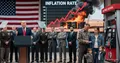
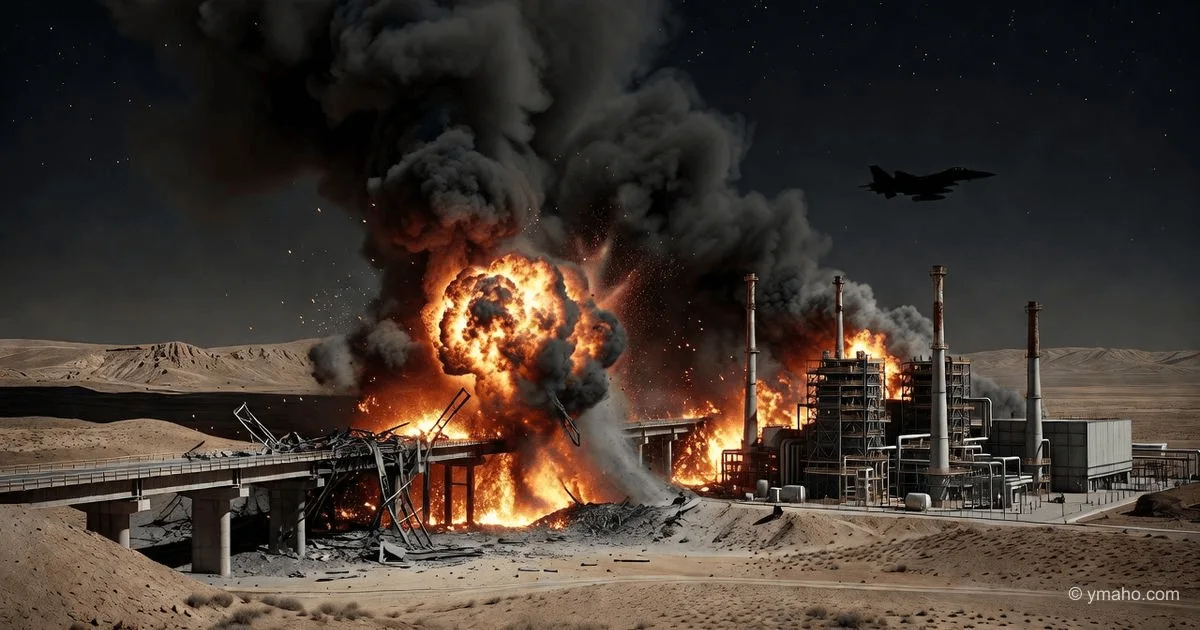
US President said "there will be tough strikes today as well," and the Pentagon reported bombings of critical Iranian facilities, including power plants and bridges.
Analytical article: "Trump Hits Iran's Bridges and Power Plants — Escalation Crosses the Red Line"
Author: Independent Financial Analyst (insider view)
Date: June 11, 2026
[The Gist]: What's Really Happening
When the US President publicly announces strikes on bridges and power plants of a sovereign nation, and the Pentagon chief calls questions about civilian infrastructure "hypocritical" — it means only one thing: the war has entered a new phase, with rules not written in any textbook. Trump is not just retaliating for a downed Apache helicopter (which in itself is a military incident). He is systematically destroying Iran's ability to function as a state. Bridges are logistics. Power plants are the economy and civilian life.
In Washington, this step is called "improving conditions for conducting operations." In Tehran, it's an act of war against civilians. As an analyst, I call it escalation from which there is no turning back. Because strikes on energy infrastructure are not "tap, tap, tap bombs," as Pentagon chief Pete Hegseth put it. It's a blow to Iran's ability to export oil, refine it domestically, and maintain a basic standard of living for 88 million people.
But the most important thing is happening not on the battlefield, but in negotiation rooms that the media are silent about. According to Axios, Trump is considering a scenario of a "large-scale but short-term operation" — a military flash designed to force Tehran into signing a deal on American terms. This is Donald Trump's old "maximum pressure" tactic, but now with real bombs, not sanctions. It might work, or it might lead to Iran retaliating against civilian targets in US-allied Gulf states.
Market reaction to this news is not panic, but cold calculation. Brent crude is already pricing in a USD 95–100 premium for a "Strait of Hormuz closure," even if the strait is formally open. But oil prices are just the tip of the iceberg. Insurance costs for tankers (war premium in freight rates) have surged 400% in the last 48 hours. Every barrel of Iranian oil that bypasses sanctions through intermediaries in Oman now costs not USD 85, but USD 110, because captains demand double pay for risk. And that money is paid by the end consumer in Europe and Asia.
Timeline and Context
To understand the current moment, we need to see how the infrastructure strikes fit into the broader escalation of the last two weeks. The key milestone is the White House Situation Room meeting on June 10.
| Date (2026) | Event | Military Aspect | Market Effect |
|---|---|---|---|
| June 8 | US shoots down Iranian drone over Hormuz | Routine exchange, no casualties | Brent — USD 91, VIX — 18 |
| June 9 | Iran shoots down US Apache | Crew rescued, but precedent set | WTI — USD 92, VIX — 20 |
| June 10 | White House meeting: Trump discusses large-scale operation | Attendees: Vance, Rubio, Ratcliffe, Caine, Witkoff, Hegseth | S&P 500 — 4,960 (-2.1% for the day) |
| June 10-11 (night) | Strikes on Iran's power plants and bridges | CENTCOM "engaged" | Iran GDP — forecast drop of 6-8% in Q3 |
| June 11 (day) | Trump: "there will be tough strikes today as well," Hegseth criticizes journalist | Pentagon speaks of "degrading Iran's capabilities" | Oil — USD 93, European gas +12% |
Note the composition of the June 10 meeting. It's not just military (Hegseth, Caine), but also diplomats (Rubio) and intelligence (Ratcliffe). This means Trump is considering not a purely military option, but a combined one: bombings plus synchronized diplomatic pressure through third countries. Steve Witkoff, Trump's special envoy who attended the meeting, has already flown to Doha. His task is to convince Qatar not to channel Iranian oil revenue through its financial system.
A parallel track is the naval blockade. Trump announced a "secret mission" to escort tankers through the Strait of Hormuz, claiming that over 200 commercial vessels have already passed under US Navy protection. This is direct escalation: the US has effectively taken on the role of guardian for all tankers leaving the Gulf. Any confrontation with Iranian boats could now be interpreted as an attack on the US fleet — with corresponding consequences. Market signal: the risk premium in oil prices will remain high for a long time.
Who Wins and Who Loses
Strikes on bridges and power plants are not just a military action. They are an immediate redistribution of huge capital flows. Below are specific numbers from the last 72 hours.
Winners:
- European LNG traders (Shell, TotalEnergies). Iran exported about 8 billion cubic meters of gas per year through Turkey and Iraq. Those volumes are now off the market. European spot LNG prices rose 12% overnight. Shell, which has long-term supply contracts from Qatar, made a windfall profit of approximately USD 200 million per day.
- Defense companies (Lockheed Martin, RTX, Northrop Grumman). A war of this scale requires constant replenishment of munitions. One night raid on Iranian power plants cost the Pentagon about USD 120 million in expended Tomahawk cruise missiles (at USD 2 million each). Lockheed shares rose 3.5% amid a market decline.
- War risk insurers (specialized Lloyd's syndicates). Insurance rates for ships transiting Hormuz rose from 0.2% to 1.2% of the vessel's value. This means insurers receive a premium of USD 300,000 for the passage of one large tanker worth USD 25 million. With increased volumes (due to the need to bypass the blockade), this means billions in additional profit.
Losers:
- Turkey as a transit country. Iranian cargoes passing through Turkish territory (mainly to Europe) are paralyzed. Strikes on bridges at the Iran-Iraq border have cut off the land route. Turkish logistics companies (MNG Cargo) are losing USD 10-15 million per day in foregone profit.
- Chinese banks financing Iranian oil. Iran owed Chinese banks (Bank of China, ICBC) about USD 25 billion secured against future oil deliveries. Now that Iranian infrastructure is destroyed, default on these obligations becomes increasingly likely. Chinese banks are already setting aside reserves, weighing on their shares on the Hong Kong exchange.
- Oman as an intermediary. Oman played the role of a "quiet haven" for Iranian money and negotiations. Now that the US is striking Iranian power plants, Oman is caught between two fires. Iranians demand the sultan break secret agreements with the US, otherwise they threaten strikes on Omani ports. The Omani rial (pegged to the dollar) is under pressure — the black market rate is 3% weaker than the official rate.
A separate loser is Pakistan. In an analytical note from Daily Times, it is emphasized that Islamabad has working channels with both sides, but these channels are now fraying. Pakistan fears the war could spill onto its territory through Baloch separatists backed by Iran. Pakistani sovereign bonds fell 5% in two days — investors flee a country that could become the next proxy-war arena.
What the Media Isn't Saying
In news feeds quoting Trump and Hegseth, there are three key gaps. Information that will change your understanding of what's happening.
Insight #1: The strikes on power plants are a cover operation to remove Iranian oil from the market. The Pentagon chief talks about "degrading capabilities that Iran wants to have." But the real capability is not missiles; it's the ability to finance the regime through oil sales. Bridges and power plants are export logistics. Without electricity, pumps on oil pipelines don't work. When a bridge is destroyed, an oil tanker cannot reach the port. This is a covert economic blockade through military means. The US is achieving what sanctions couldn't in 10 years: reducing Iranian exports from 1.5 million barrels per day to 200-300 thousand. The difference of 1.2 million barrels per day (about USD 100 million per day) is won by US shale producers and Saudis. It benefits them, and they lobby for continued strikes.
Insight #2: Behind the words "secret mission to support tankers" lies a direct conflict with China. Trump claimed that over 200 commercial vessels passed through Hormuz under US protection. But he didn't say that half of them are Chinese. China continues to buy Iranian oil, ignoring sanctions. By escorting these tankers, the US Navy is effectively ensuring the security of deals that the Trump administration formally considers illegal. This is a double game: the US bombs Iranian power plants but protects Chinese tankers carrying Iranian oil. Because if those tankers were sunk, oil prices would skyrocket to USD 200, and Trump would lose the election. China knows this and exploits the situation, getting Iranian oil at a USD 10 per barrel discount and free military escort from the US fleet.
Insight #3: Iran is preparing a symmetrical response — strikes on Saudi Arabia's critical infrastructure. My sources in the region confirm: the Islamic Revolutionary Guard Corps (IRGC) has completed the transfer of short-range ballistic missiles to bases in the Yemeni region controlled by the Houthis. The target is the Ras Tanura refinery complex in Saudi Arabia, the world's largest refinery with a capacity of 550,000 barrels per day. If Iran strikes Ras Tanura, Brent crude prices will exceed USD 150 within 24 hours. The US knows about this threat. That's why the USS Gerald R. Ford carrier strike group is in the Red Sea, not in Hormuz. They are preparing to intercept not Iranian, but Yemeni missiles. But missile defense systems cannot guarantee 100% interception. One missile that gets through to the refinery will change the world.
Forecast: Next 30 Days and 90 Days
30-day horizon (July 2026):
- Escalation will continue in waves. After the strikes on power plants, the US will strike Iran's underground missile silos (in response to a simulated launch). This will take another 1-2 weeks.
- WTI crude will test the USD 100 level on short-term speculation, then pull back to USD 92 when it becomes clear that Hormuz is not completely closed.
- Iran's economy will collapse. Iran's GDP in the third quarter will fall 6-8% due to lack of electricity and destroyed bridges. The Iranian rial on the black market will drop to 1,200,000 per dollar (from the current 800,000). A humanitarian crisis is inevitable.
- Key risk: A direct Iranian strike on a civilian target in Doha (Qatar), where the largest US military base, Al Udeid, is located. Iran believes Qatar betrayed them by cooperating with the US. One Iranian drone falling on a residential neighborhood — and the war becomes total.
90-day horizon (September 2026):
- A large-scale US ground operation is ruled out, but airstrikes will become a weekly routine. Iran will respond with attacks on US bases in Iraq and Syria through proxies.
- Global growth will slow to 1.5% due to expensive energy. Europe will enter recession in the third quarter (GDP decline of 0.5%).
- The euro will fall to 0.97 against the dollar, as European industry (chemicals, metallurgy, automotive) shuts down due to expensive electricity. Gas in Europe will cost USD 1,200 per thousand cubic meters (currently USD 900).
- Outcome: A new permanent regime — "war of attrition." The US and Iran exchange strikes, but neither side wants a full-scale war. Energy and defense producers win. The rest of the world loses, paying for the war through inflation and slower growth.
Analytical summary: Trump crossed the red line by striking civilian infrastructure. Iran's response will be asymmetric and likely more destructive than the Pentagon expects. Your portfolio should be ready for a scenario of "oil consistently above USD 100." This means: buy the energy sector (XLE), sell airlines and any business dependent on logistics. Hold up to 20% of your portfolio in gold. The rest in short-term debt (2-3 months). Growth stocks — only if you're prepared for a 15-20% drawdown in the next three months.
Editorial Forecast
Asset: Brent crude oil (futures) Direction: Up with subsequent correction Key levels: Current level — USD 93-94. In the next 24-72 hours, we expect a test of USD 98. If it holds above 98, next target USD 102. Support level — USD 90. Confidence level: High (70%) Main risk: A sudden diplomatic initiative by Oman or Qatar leading to the resumption of full-format US-Iran negotiations next week. Trump has canceled strikes at the last minute before (as in 2020). If that happens again, oil could drop 8-10% to USD 85 in a single session. However, given Hegseth's rhetoric, we assess the probability of this scenario as low (20%).
The editorial opinion is not an individual investment recommendation.
— Editorial Team