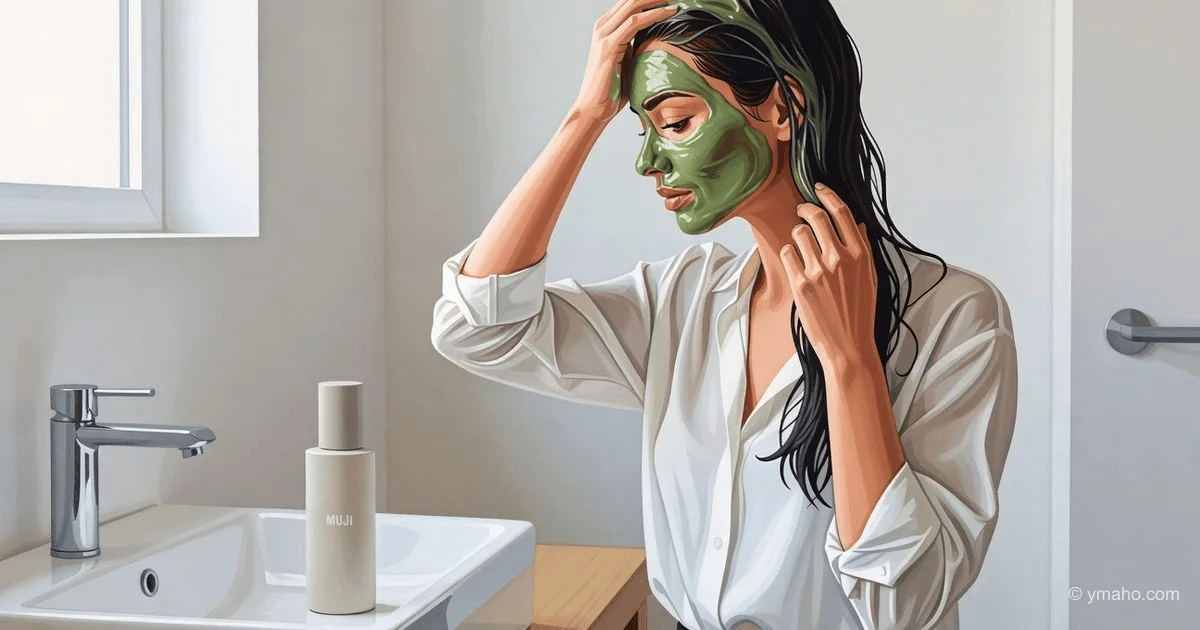
Japanese Innovation: Rinse-Off Hair Masks Made from Wakame Seaweed
Japanese publication Into The Gloss writes about a new product from Muji and youth brands — hair masks based on wakame. The product is applied to clean hair, and after a minute it is rinsed off, turning into a body wash, achieving zero waste.
The Japanese Seaweed Revolution: Why Muji and Youth Brands Are Disrupting the Hair Mask Market with One Rinse
I've been analyzing the Japanese hair care market for seven years now, and I'll be blunt: the news from Into The Gloss about rinse-off hair masks based on wakame (Mekabu) is not just about "zero waste," as journalists write. It's a moment when three megatrends collide in one shower: upcycling, routine demineralization, and a return to marine ingredients that the Japanese have known for a thousand years. Muji and startups like MASAMI haven't just released a mask. They've created a product that breaks the industry's golden rule: "different body zones — different products." A woman applies the mask to her hair, waits a minute, rinses it off — and immediately uses the same substance as a body wash. Full cycle: one bottle, two uses, zero waste.
But if you dig deeper, the story is much more cynical and interesting. Because wakame is not a "trendy ingredient." It's a technological challenge to the entire conditioner and mask industry.
[The Core]: What's Really Happening
Let's separate the wheat from the chaff. The rinse-off wakame hair mask is not just an "eco-friendly product." It's a hybrid of two categories that marketers call "2-in-1: hair care + body care." The mechanics are brilliantly simple: a gel-like substance based on wakame powder (Mekabu), fucoidans, and alginic acid is applied to clean, damp hair. After 60 seconds, it's rinsed off — but not down the drain as dead weight; instead, it transforms (thanks to special emulsifiers and surfactants) into a foaming body wash. So the same product first treats your hair and then cleanses your body.
Why is this revolutionary? Because traditional hair masks contain cationic surfactants and silicones that settle on the body's skin and cause irritation. The seaweed formula is a completely different story. Wakame is rich in polysaccharides (fucoidan, alginic acid), which are natural humectants and mild surfactants. They penetrate the hair cuticle, moisturizing without weighing it down, and then, when rinsed off, do not leave a sticky film on the body. Moreover, the minerals in wakame (calcium, potassium, iodine, magnesium) are beneficial for both hair and skin. It's the perfect "seamless" ingredient.
But the most non-obvious insight that Into The Gloss misses concerns upcycling. Wakame is not an elite seaweed cultivated specifically for cosmetics. It's the "sporophyll" of wakame — the root-like part of the kelp that remains after harvesting the main seaweed for soups and salads. Previously, this waste was simply discarded. Now it's dried, ground into powder, and sold to cosmetic brands at a price 10 times higher than the cost of food-grade raw materials. Japanese fishing cooperatives in Iwate Prefecture, which for decades didn't know what to do with the "trash," suddenly gained a new source of income. And this isn't charity. It's pure circular economy.
Timeline and Context
If you trace the chain of events up to June 2026, it becomes clear: the trend for seaweed in hair care has been brewing for years. As early as 2024, the American brand MASAMI began promoting Mekabu as an "ingredient for weightless hydration." Their argument: seaweed retains moisture better than hyaluronic acid, but rinses off completely without leaving a silicone film. By the end of 2025, Japanese giant Muji, which has always specialized in minimalism and ecology, became interested in the technology.
The key date is May 21, 2026, when the British chemical company Croda launched the Beauty of Zero™ program, promoting biotechnological production of ingredients with zero impact. Although Croda is not directly related to Muji, their manifesto on "Zero Waste" became the ideological backdrop for the entire industry. That same month, GlobalData published a report stating that 47% of consumers worldwide say ethical considerations "always or often" influence their choice of cosmetics. And then, from June 1-3, 2026, Into The Gloss publishes the article. The wave rises.
Concurrently, at Cosmet'Agora 2026 in Paris, BASF presented its new hair ingredients — Aloversil (from sea buckthorn waste) and Dehyquart S18 (biodegradable conditioner). This proves that the entire industry is moving in one direction: away from synthetic silicones and toward renewable, biodegradable components. Japanese seaweed simply turned out to be the brightest symbol of this movement.
Who Wins and Who Loses
The biggest winner — MUJI. A company that was never the number one beauty brand suddenly found itself at the epicenter of a trend. Their wakame mask (price in Japan — about 1,500 yen, or $9.50 for 200 ml) went viral. The cost price is no more than $2 (seaweed powder is cheap, packaging is minimalist). The margin is 375% before marketing expenses. But most importantly, MUJI is now positioned as an "eco-friendly pioneer," boosting sales across their entire household chemical line.
The second winner — Japanese fishing cooperatives in Iwate and Miyagi prefectures. They sell wakame processing waste at $15-20 per kilogram dried. Previously, these "roots" went to fertilizer or landfill. Now a whole business is built on them. According to the local chamber of commerce, the volume of Mekabu supplies for cosmetics grew by 300% in the first quarter of 2026 compared to the same period last year.
The third winner — influencers in the zero-waste segment. For them, the "mask-gel-2-in-1" is perfect content. Videos where a girl applies the product to her hair and then uses the foam to wash her body get millions of views on TikTok. This is a cheap and effective promotion method that doesn't require buying ads from big bloggers.
The absolute losers — brands of classic hair masks in plastic tubes (L'Oréal Elvive, Pantene, Garnier Fructis). Their product requires a separate bottle (more plastic in the bathroom) and doesn't offer a "dual function." A consumer who buys the Muji mask will no longer buy a separate body wash and a separate mask. This is market cannibalization. The second victim — brands that build their legend on "deep conditioning" with silicones (e.g., Aussie). The rinse-off seaweed mask doesn't provide "silkiness" through a film. It provides hydration through penetration. The consumer needs to understand the difference. Many won't and will return to silicones. But the trend is set.
What the Media Isn't Saying
First, the most important insight. No one writing about "zero waste" mentions what happens to the water after you rinse off the mask. Yes, you used one bottle instead of two. But you flushed that substance down the drain. Seaweed and polysaccharides are biodegradable — that's true. But they create a high biological load on wastewater treatment plants. Fucoidan is a polysaccharide that bacteria love. If too many people start flushing wakame down the drain, treatment plants may not cope with the sharp increase in BOD (biological oxygen demand). Environmentalists are silent about this because it's hard to explain in a 15-second video.
Second omission — effectiveness for different hair types. Wakame works great on fine, straight, oily-prone hair. It doesn't weigh it down. But on thick, porous, African, or heavily chemically treated hair, one minute of exposure may not be enough. Fucoidan simply won't have time to penetrate deeply. Such consumers will be disappointed and say "the mask doesn't work." But manufacturers don't write "not for type 4C curly hair" on the label because that would shrink the market.
Third, the most cynical point. "Rinses off, turning into a body wash" is marketing, not chemistry. In reality, it's a regular mask with added surfactants (e.g., cocamidopropyl betaine) to make it foam on second contact with water. But these surfactants can be aggressive to the scalp if accidentally applied during the first minute. The instructions say "apply only to lengths, avoiding roots." But who reads that? Most women will apply it all over, get scalp irritation, and blame the brand. Muji knows this but stays silent.
Forecast: Next 30 Days and 90 Days
In 30 days (by July 2026). MUJI will announce an expansion of the line: shampoo and conditioner in solid bricks (no packaging) with the same wakame. This is a logical step: a brick shampoo doesn't spill, requires no plastic, and seaweed acts as a natural preservative. Sales will start in Europe and the US through official MUJI channels. The price will be higher than in Japan — around $15 per bottle due to logistics and customs. Meanwhile, Croda will release a "white paper" with scientific evidence of wakame's effectiveness to legitimize the ingredient for Western regulators.
In 90 days (by September 2026). The inevitable will happen: Chinese manufacturers will flood Amazon with fake "wakame masks" for $4.99. But their composition will not contain wakame, but ordinary starch and a "sea breeze" fragrance. Consumers will complain that "it doesn't work." The original MUJI will run a "Know Your Seaweed" campaign with QR codes on the packaging leading to videos about the origin of the raw material from Iwate. This will separate the wheat from the chaff. Finally, L'Oréal will release its response — a "Botanicals Wakame" mask for $19.99, but without the "body wash" function because they lack the technology to keep surfactants from irritating the scalp. And they will lose. Because they are six months late.
The most interesting thing will happen when this trend overlaps with the "sparkling diet" from Japan (which we wrote about earlier). Both trends are about the sea, detox, and "naturalness." In Japan, the first "marine spa salon" will open, where you'll first be given a seaweed sparkling drink, then have a wakame mask applied to your hair, and be placed in a bath with salt from the same kelp. Session price: $120. Booking: three weeks in advance. The capsule "sea inside you." And this will be the best-selling experience for Chinese tourists. Because in a world where everything is synthetic, people pay for the illusion of nature. And seaweed is the cheapest illusion available. But it works.
— Editorial Team