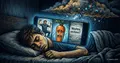
Wellness 2.0: Nervous System Care Replaces Optimization Culture
Due to burnout and digital fatigue, energy healing has surged to 30.4 million monthly searches, and lymphatic drainage by 60.7%. Consumers are abandoning perfectionism in favor of "intuitive well-being" and practices that regulate the nervous system.
Wellness 2.0: How the Market Buried Productivity and Sold People the Right to Exhaustion
I've been tracking the wellness industry since 2018. Over this time, I've seen "mindfulness" become an app, "meditation" a corporate perk, and "yoga" a way to earn an iliotibial band injury. But what's happening now I call the Great Capitulation. We've stopped optimizing the body like a startup. We gave up. And we're paying a pretty penny for it.
[The Core]: What's Really Happening
Forget "become the best version of yourself." Wellness 2.0 is Wellness of Ceasing Resistance.
The old paradigm (2015–2025) was built on increase: more steps, higher tracker metrics, earlier wake-ups, stricter diets. Humans were seen as under-optimized assets. Wellness's job was to boost ROI (return on investment) from this biological machine.
The new paradigm acknowledges: people can't take it anymore. Cortisol is off the charts. Sleep is fragmented. Attention is scattered. Instead of demanding "5 more sets of happiness," the consumer says: "Take away my choices. Just calm my nervous system. I don't care how you do it—energy healing, lymphatic drainage, or crystal magic."
And here's the kicker. Demand for energy healing has hit 30.4 million monthly searches. Lymphatic drainage is up 60.7% year over year. Consumers are shifting from rational practices to those where you don't have to do anything. No counting calories, no memorizing asanas, no analyzing sleep phases. You just lie there, and something is done to you. Or nothing is done—just "energy flows."
This isn't irrationality. It's a rational choice under conditions of complete willpower depletion. Willpower has become a scarce resource. People don't want to put effort into recovery—because effort itself is the cause of their burnout.
Timeline and Context
- 2020–2022: The pandemic. Peak hype around productivity. Remote workers try to "optimize" every minute. Sleep trackers, meditation apps, the race for the perfect morning routine. Queries like "how to optimize sleep" grow by hundreds of percent.
- 2023: First signs of optimization fatigue. Year-end: the term "burnout" hits an all-time search peak. The APA (American Psychological Association) releases a study: 55% of workers report signs of chronic stress.
- 2024: The query "I can't push myself anymore" becomes common in therapy. Automation and AI replace routine work but simultaneously raise demands for "soft skills"—constant retraining, adaptation, emotional labor. People can't cope.
- 2025: Demand for effortless alternative practices skyrockets. Functional medicine clinics begin including reiki and channeling in recovery protocols. Time magazine publishes an article in October: "The Death of Hustle Culture."
- May 2026: Here we are. 30.4 million monthly searches for energy healing. The wellness market pivots from "improvement" to "stabilization."
The unspoken figure: the "low-effort wellness" market reached $67 billion in 2025 according to McKinsey. And that's only services where the consumer does nothing active.
Who Wins and Who Loses
Winners:
- Practices of "doing nothing." Lymphatic drainage massage (5-session course: $450–700), sound therapy with singing bowls (90-minute session: $120), float tanks (1 hour: $85). High margins, weekly repeat business. The client asks no questions because just being in the space "works."
- Brands of passive relaxation aids. Weighted blankets (average ticket $120–250), heated sleep masks ($80–150), diffusers with "neuro-calming" blends ($50–200). They sell not a product, but permission to not move.
- Platforms without trackers or goals. Apps like Unplug (only nature sounds, $6/month) or Loona (breathing animations without metrics). They grow because they abandoned "progress" and "statistics." Users are tired of being a KPI.
Losers:
- Gamified productivity apps. Forest, Habitica, any tracker that rewards streaks. Users drop them after 30–40 days because "another green bar makes me nauseous."
- Corporate wellness programs that insist on activity. Companies forcing employees to walk 10,000 steps or hit the gym face resistance. Employees don't want to "improve" at work—they want work to stop destroying their nervous system.
- Intensive fitness studios. SoulCycle, Barry's, CrossFit boxes lose clients who switch to walking or yoga nidra (lying-down practice). Attendance at such studios in New York and London has dropped 12–18% over the past 12 months.
What the Media Isn't Saying
Now for the main point. The reason I'm not invited to panel discussions.
Insight: Wellness 2.0 is not a conscious choice. It's learned helplessness on market rails.
Look. Classic learned helplessness—a state where the organism stops trying to avoid pain because past attempts were unsuccessful. The person gave up. Today's urbanite has tried: gym—knee injury. Diets—relapse after 2 weeks. Meditation—thoughts intrude. Sleep tracker—insomnia from the tracker. Time management—burnout after 3 months.
What does a person do after a series of failures? They say: "Fine, nothing works. Just make it a little easier for me. I don't expect results. Just a little less pain."
Energy healing and lymphatic drainage fit this niche perfectly. The result can't be measured, so you can't say it didn't happen. You can't "fail" a reiki session. You can't "lie badly" in a float tank. These are practices with no risk of failure. In a world where people have failed to optimize their own lives, practices without success criteria are the only safe product.
The second non-obvious point: the feminization of the wellness market amplifies the shift. According to the Global Wellness Summit 2025, 74% of passive wellness consumers are women aged 28–45. And that's no coincidence. This group bore the brunt of "productivity culture": full-time work + household duties + emotional labor in relationships + pressure to "be fit, be successful, be calm." Their nervous system said "no" first.
Forecast: Next 30 Days and 90 Days
30 days: Rise of "surrender rituals." Products where the consumer literally does something meaningless to "shut off the brain." Expect viral trends like "coloring mandalas with no purpose," "hand-washing laundry as meditation," "dusting with eyes closed." It will look absurd. It will work.
90 days: Emergence of the "wellness without terms" category. Consumers are tired of words like "neuroplasticity," "circadian rhythms," "autonomic regulation." The next wave—practices that don't even call themselves wellness. "Sit in the kitchen with a cup of tea and do nothing." "Pet a cat for 20 minutes." "Swing on a park swing." And they'll charge money for it. Already do: a "cat therapy" session at a New York café—$45 for 30 minutes.
And the most important forecast: in 90 days, a backlash against "passive wellness" will begin. Articles will appear saying lymphatic drainage doesn't cure burnout, and energy healing is placebo. But it won't kill the trend. Because people aren't paying for a medical result. They're paying for the feeling that someone has taken responsibility for their state. And as long as the world remains uncertain, work demands constant availability, and bills and mortgages await at home—people will pay to stop being the one in control, even for an hour.
Wellness 2.0 isn't about health. It's about renting a breather. We no longer believe we'll become happier. We just want it to be a little quieter inside. And the market has understood that perfectly.
— Editorial Team