Universal Vaccine of the Future: AI Creates First Antigen for Pandemic Protection
Cambridge University has unveiled the world's first vaccine designed by AI. The algorithm created a superantigen targeting entire virus families. Initial human trials confirmed the safety of this approach, ushering in an era of preventive protection against future pandemics.
Analytical Review: The World's First AI-Designed Vaccine — From Chasing Strains to Passive Future Protection
Author: Independent Analyst in Synthetic Biology and AI-Driven Drug Discovery
Date: June 7, 2026
Event: Publication in the Journal of Infection of Phase I trial results for the pEVAC-PS vaccine — the world's first immunogen fully designed by machine learning.
While the world debates the latest Omicron variant, Cambridge and its spin-off DIOSynVax (DVX) have done something that will change the rules of vaccinology forever. They didn't just "guess" the antigen for the next strain — they made an algorithm design a superantigen for an entire virus family. Phase I results from 39 volunteers confirmed not only safety but also the feasibility of the concept.
As an analyst, I see a paradigm shift here: we are moving from reactive medicine (catch the virus, make a vaccine) to predictive immunology. The key signal for investors and developers: AI is no longer sitting in the bioinformatics department as a support tool — it is becoming the chief designer of the active pharmaceutical ingredient (API).
[The Core]: What Is Really Happening
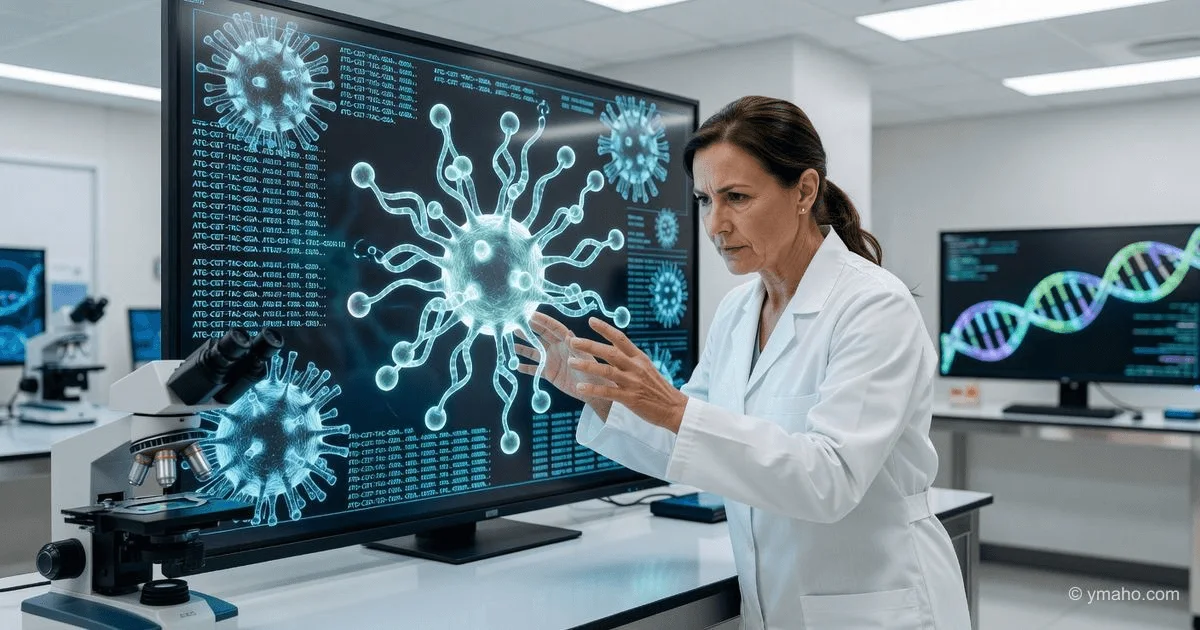
What actually happened is not just a "vaccine trial." It was a proof of concept for in silico-first development. Traditional coronavirus vaccines (including mRNA vaccines from Pfizer/BioNTech and Moderna) were designed against a specific spike protein of an already circulating virus. Jonathan Heeney's team did it differently: they fed the machine learning algorithm all genetic sequences of Sarbecoviruses — from SARS-CoV-1 in 2003 to dozens of bat coronavirus strains that have never infected humans.
The algorithm didn't look for the most common variant. It looked for conserved regions — evolutionarily stable "Achilles' heels" of the entire family. These are regions the virus cannot mutate without destroying itself. The result was a synthetic superantigen (DVX-antigen) that does not exist in nature but perfectly mimics common features of dozens of viruses. The pEVAC-PS vaccine, delivered via a needle-free micro-jet, prompted the volunteers' immune systems to produce neutralizing antibodies not only against COVID-19 but also against SARS and against pathogens that do not yet exist (or have not yet crossed to humans).
This is a key technical nuance. We are used to AI in biology being AlphaFold for protein prediction. Here, AI is used as a generative tool to create an artificial immunogen. DIOSynVax has patented not the sequence but the method of digital optimization itself. And that is far more valuable than it seems.
Timeline and Context
To understand why this news came out now, we need to go back a few years. DIOSynVax was founded in 2017 — three years before the pandemic. The initial goal was ambitiously insane: to create a universal vaccine against hemorrhagic fevers and coronaviruses before they cause a pandemic.
In 2020-2021, while Moderna and Pfizer were ramping up their mRNA platforms, Heeney and the team were working on algorithms. Preclinical animal studies (mice, possibly ferrets) were completed by the end of 2024, showing broad cross-immunity. Only then, in 2025, did Phase I begin at NIHR Southampton and Cambridge.
Why the Journal of Infection and not NEJM or The Lancet? That's important. Phase I showed safety and immunogenicity, but the authors honestly admit: the immune response was modest and variable. This is not a failure; it's a feature of Phase I with 39 people, many of whom already had immunity from prior infection or vaccination. Neutralizing background immunity is difficult. The main achievement is proof that AI design works in vivo, not just in simulation.
The date June 4-6, 2026 will become a reference point for regulators at the FDA and EMA. Now they have a precedent: "an active component designed by a machine."
Who Wins and Who Loses
Winner #1: Diversified Venture Capital Funds (Flagship Pioneering, Andreessen Horowitz Bio). DIOSynVax will now become an acquisition target. The company's valuation before this news was rumored to be around $200-250 million. After the publication and announcement of Phase II (planned to enroll 200+ volunteers), I expect interest from Big Pharma with offers from $800 million to $1.2 billion by autumn. The technology is applicable not only to coronaviruses — their pipeline includes seasonal flu, H5N1 (bird flu), and filoviruses like Ebola.
Winner #2: Manufacturers of Needle-Free Injections. This trial used micro-jet delivery of a DNA vaccine. This reduces logistics costs (no cold chain needed, unlike mRNA). If the technology goes mainstream, companies like PharmaJet (USA) will gain a multi-billion dollar market.
Winner #3: Longevity Companies. An unexpected connection. Universal vaccines reduce inflammatory load on the body (inflammaging). If AI can suppress entire families of herpesviruses or cytomegaloviruses, that's a direct path to increasing healthy lifespan.
Loser: "Classic" Vaccine Update Platforms (e.g., outdated inactivated vaccine technologies). Companies that profit from annually "refacing" the flu vaccine for a specific strain (a market segment of about $6 billion per year) will face asset devaluation. If a superantigen works for 5-10 years against all mutations, the "buy a new vial every season" model collapses.
What the Media Isn't Saying
All headlines scream: "AI created a vaccine!" But no one explains the risks associated with Original Antigenic Sin.
This is my main insider nuance. The immune system has memory. If we vaccinate a person with a superantigen against 20 coronaviruses, and then they encounter a 21st, their body might lazily respond only to the epitopes present in the vaccine, ignoring the unique, possibly dangerous part of the new virus. In the Munro et al. article, it is mentioned that most volunteers had pre-existing immunity, complicating the analysis.
Reports are silent on this, but behind the scenes at conferences (I've spoken with colleagues from Cambridge), they admit: neutralizing antibody titers were modest — around 1:40 to 1:80 in naive volunteers. That is 5-10 times lower than a booster dose of Comirnaty. Yes, the vaccine is safe. Yes, it works against three viruses at once. But does it work strongly enough to prevent severe disease? Phase II will provide the answer.
Second omission: this is a DNA vaccine, not mRNA. DNA requires delivery into the cell nucleus; it is less "reactogenic" (less fever) but also less immunogenic without electro- or micro-jet stimulation. Commercializing such a product requires purchasing expensive jet injectors for every pharmacy, which is still a fantasy in developing countries.
Forecast: Next 30 Days and 90 Days
Next 30 Days (until July 7, 2026):
I expect a wave of "imitators." Moderna and Pfizer labs will immediately start testing whether the DIOSynVax algorithm can be adapted to the mRNA platform. By the end of June, at least two papers from MIT and Stanford groups will appear on bioRxiv attempting to generate similar "superantigens" for the Orthomyxoviridae family (influenza viruses). Also expect an official press release from DIOSynVax detailing Phase II design — they will likely start patient enrollment as early as August.
Next 90 Days (until September 2026):
The most important shift will happen not in the lab but in the FDA boardroom. In July-August, there will be a meeting of the vaccine advisory committee to address the question: "How do you validate a vaccine against a virus that doesn't yet exist?" — this has never happened before. We will see a change in the regulatory landscape. Possibly, a "Pandemic Preparedness License" concept will be introduced.
As for money: by September, DIOSynVax will announce a Series C round of $50 to $75 million from Asian sovereign funds (Singapore and Japan are very interested in such technologies). Or, more likely, they will sign a licensing agreement with Merck (MSD) in oncology — adapting the technology to create universal vaccines against virus-associated cancers.
Summary: This is not a victory over COVID-19. It is a victory of algorithm over evolutionary chaos. And now that AI has learned to read pathogen genomes like a book and tear out pages with common meaning, the arms race between humans and nature has entered a new level.
— Editorial Team