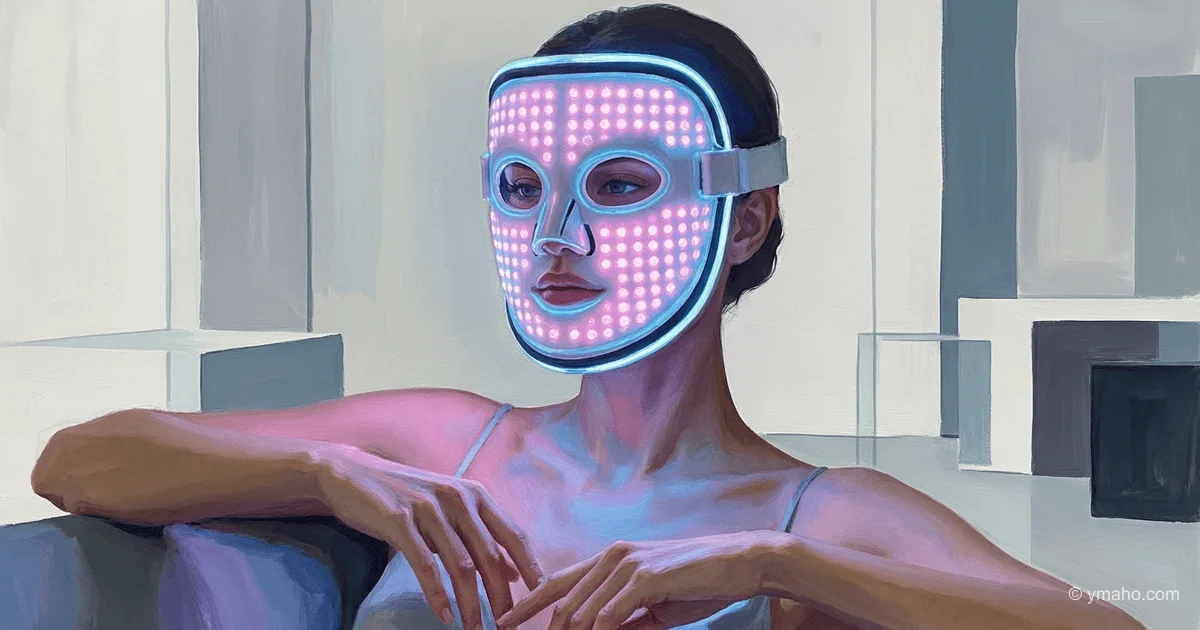
Beauty-Tech Devices Take Over the Market: LED Mask Sales Surge 172%
Home beauty gadgets are rapidly gaining popularity, especially among women aged 35-45 who seek alternatives to salon treatments. The leaders in growth are LED masks and ice rollers.
Insight: The 172% surge in LED mask sales is not a triumph of technology, but a crisis for beauty salons.
[The Gist]: What's Really Happening
The 172% figure sounds like a victory for beauty-tech, but it's actually a warning sign for the entire industry. Behind the rise in sales of LED masks and ice rollers lies not so much a love for technology as a deep distrust of salon procedures. Women aged 35-45, who have spent thousands of dollars on laser treatments, Botox, and device-based cosmetology, are tired of three things: first, being tied to a specific doctor; second, having to show a post-procedure face with swelling; and third, the opaque 300-500% markup on salon services.
Non-obvious insight: The main driver of LED mask sales in 2026 is not marketing or discounts, but "clinic navigation fatigue." According to a Future Market Insights report, the market for subscription-based home beauty devices has already reached $2.68 billion in 2026, with 51.2% of this market coming from anti-aging and skin rejuvenation. But few understand: women buy LED masks not because they are better than salon treatments (they aren't), but because they provide a sense of control. The client no longer wants to depend on a cosmetologist's schedule, who might cancel an appointment an hour before the visit.
Timeline and Context
Events have been building gradually, but the sharp spike occurred in the last six months. The global market for portable LED masks grew from $118.87 million in 2025 to $131.85 million in 2026, with a forecast to reach $209.32 million by 2032. However, the most interesting figures are in another report. Future Market Insights recorded that the subscription model market (where clients pay monthly for access to "professional modes" of the device) is growing at a CAGR of 19.9% and will reach $16.54 billion by 2036.
Meanwhile, on TikTok Shop, sales in the "Facial Beauty Device" category surged 400% in just a few months, with 26% of purchases made through live streams. This is a fundamentally new sales channel: a woman sees an influencer putting on a mask live and buys it on the spot without leaving the app.
Analysts at Research and Markets emphasize that portable LED masks have evolved from "niche gadgets for the wealthy" to "everyday tools with clinically proven efficacy." And that is what has legitimized them in the eyes of a conservative audience.
Who Wins and Who Loses
Winners:
- Dr. Dennis Gross Skincare, Omnilux, CurrentBody. These brands were the first to obtain FDA clearance and invest in research. Their masks cost between $400 and $600, but they sell like hotcakes because dermatologists trust them.
- TikTok Shop and influencers. The platform earns a commission on each sale, and content creators get up to 20-30% of the mask's price for promotional integration. The live format creates a sense of presence and impulse buying.
- Dropshippers. Margins on LED masks range from 30-70% — with a purchase price of $25-45, the device sells for $130-200. This is one of the most profitable items in the beauty-tech category.
Losers:
- Chain beauty salons with an average ticket of $100-300. Their clients can now buy a mask for $500 and use it for years, instead of paying $150 for a single LED therapy session at the salon. The economics of such salons are collapsing, forcing them to cut prices by 20-30%.
- Device-based cosmetologists. They used to make money because equipment cost $10,000-20,000 and a session cost $200. Now clients realize they can get the same technology at home. Doctors lose the "exclusivity" of access to light therapy.
- Budget cream and serum brands. An LED mask requires a clean face but not an expensive cream before use. This reduces client attachment to a specific product, undermining the "buy a cream for $80, use it for a month" model.
What the Media Isn't Saying
First and foremost: safety is not guaranteed. Dermatologists warn that using cheap devices without proper certification can cause burns and retinal damage. Blue light is especially dangerous — at least one case of photochemical retinopathy due to improper mask use has been documented. Professional manufacturers undergo ISO 13485 certification (medical devices) and test their products for flicker, which is invisible to the eye but causes headaches. Chinese knockoffs for $50 on AliExpress do not do this.
Second: results are exaggerated. Doctors honestly admit that LED therapy works, but not as fast as ads promise. For visible effects, the mask must be used 3-5 times a week for 8-12 weeks. Most buyers abandon the device after a month and return to the salon.
Third: subscriptions kill freedom. The FMI report shows that the key trend of 2026 is the SaaS model, where the mask physically works, but "professional modes" are unlocked only through a monthly subscription of $10-30. The client thinks they are buying a device, but in reality, they are renting it with a lifelong obligation to pay.
Forecast: Next 30 Days and 90 Days
Next 30 Days:
A wave of lawsuits will begin from buyers of cheap LED masks who suffered burns or vision deterioration. Dermatological associations will issue official guidelines for the safe use of home light devices. TikTok will launch internal certification for beauty-tech sellers after videos of "burnt faces" go viral.
Amazon and Sephora will introduce a separate "FDA-cleared LED devices" category with higher commissions for sellers. Brands without certification will be pushed into the low-price segment (under $50), where margins will drop to 10-15%.
Next 90 Days:
Market consolidation will occur. Major players (L'Oréal, Estée Lauder, Shiseido) will start acquiring successful beauty-tech startups to integrate LED technologies into their ecosystems. We will see the first "hybrid" devices: LED + microcurrents + RF lifting in one gadget for $800-1200.
The main change will be the collapse of independent mid-range salons. Clients will massively switch to home devices, and only two types of salons will survive: luxury (with injections and surgery, which masks cannot replace) and budget (massage and facials for $30-50). The middle will die.
Finally, the subscription market will grow to the point where manufacturers start selling masks at cost ($30-50), earning solely from monthly payments. This is the "razor and blades" model in beauty-tech. We will see the first such case by the end of summer 2026.
— Editorial Team