Clinical Data Confirm Safety of Vitamin D Analog in Metastatic Cancer
A study published in Nature Cancer showed that adding paricalcitol to standard chemotherapy is safe and reduces activation of cancer-associated fibroblasts in patients with pancreatic tumors.
Analytical Summary: Paricalcitol — Not a Vitamin, but a Trojan Horse for the Stroma
Date: May 27, 2026
Event Source: Nature Cancer, Dana-Farber Cancer Institute / Salk Institute, work by Perez K.J. et al.
[The Gist]: What Is Really Happening
On May 25, 2026, a study was published that many in oncology had been waiting for over the past 5 years. This is not about yet another targeted agent against the KRAS mutation (dozens are already in development). It is about a paradigm shift: instead of bombarding the cancer cell, scientists are "dissuading" its protective wall.
This is about paricalcitol — a synthetic analog of vitamin D that has long been sold cheaply for treating secondary hyperparathyroidism in patients with kidney disease. The key phrase you won't read in hype-driven news: "The study was not designed to measure efficacy."
36 patients with metastatic pancreatic cancer received standard chemotherapy (gemcitabine + nab-paclitaxel) plus either placebo, intravenous paricalcitol, or oral paricalcitol. The primary endpoint was safety. A phase 1b/2 study with a run-in design.
Numbers that really matter:
- Partial Response: 42% (10 out of 24) in the paricalcitol group vs. 9% (1 out of 12) in the placebo group.
- Progression-free survival at 1 year: 5 patients in the paricalcitol group vs. 0 in the placebo group.
- Safety: acceptable profile, BUT: 5 out of 12 patients on the oral form had grade 2-4 hypercalcemia. This is not trivial; it is a dosing limitation.
Non-obvious insight (hidden behind the wording):
The researchers from Dana-Farber (Kimberly Perez, Brian Wolpin) were not trying to cure cancer. They were trying to prove that the mechanism works in humans just as it did in Ronald Evans' mice at the Salk Institute in 2014.
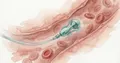
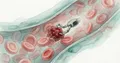
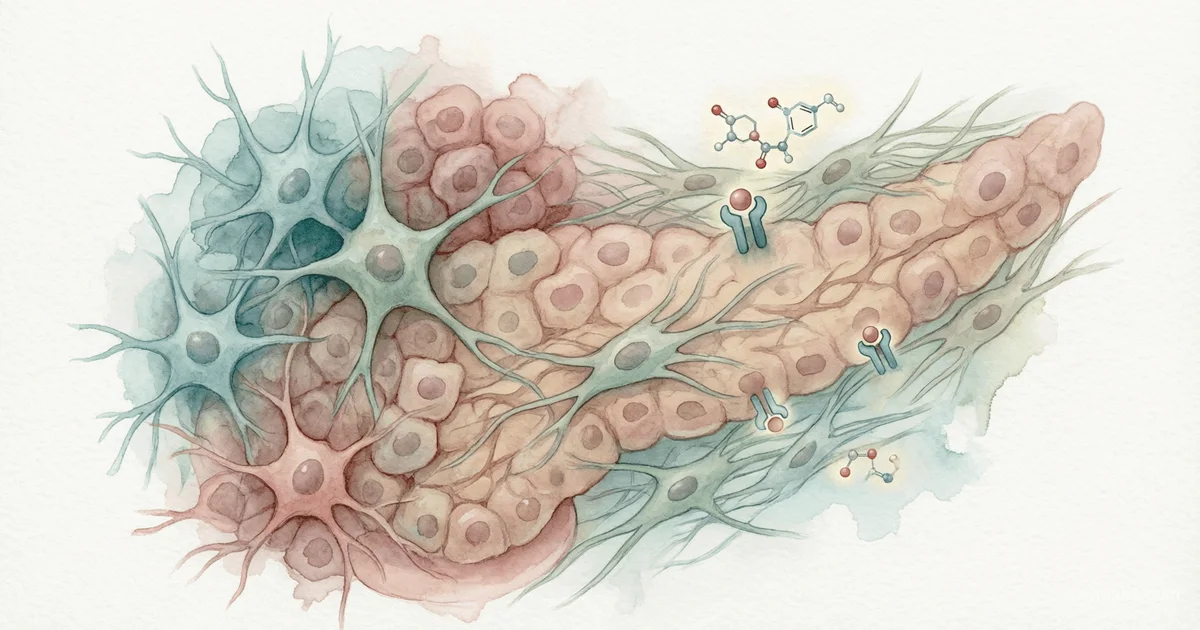
In 2014, Evans' lab showed that activation of the vitamin D receptor (VDR) could "calm" pancreatic stellate cells, turning aggressive stroma into passive stroma. In 2018, this result was reproduced in tumor-bearing mice — paricalcitol plus chemotherapy yielded striking effects.
But the real insight is that the 2026 results are much more modest than the mouse results. In mice, tumors disappeared. In humans, only changes in the microenvironment and a slight increase in progression-free survival.
Why? Because the heterogeneity of VDR expression in humans is enormous. The article explicitly states: nuclear VDR expression was heterogeneous and detected in tumor, stromal, and immune cells. Patients with low VDR show almost no effect.
Timeline and Context
Actually, the story did not start in 2026 or even in 2014.
- 2000s: Ronald Evans discovers the nuclear receptor superfamily. Today, ~13% of all FDA-approved drugs work through these receptors.
- 2014 (Cell): Evans shows that VDR agonists block liver and pancreatic fibrosis.
- 2019 (Salk Institute): Preclinical models of pancreatic cancer — paricalcitol plus chemotherapy yields record responses.
- October 2021 – May 2026: Clinical trial NCT03520790 lasts almost 5 years. Pandemic, enrollment difficulties (pancreatic biopsy is no joke), issues with the oral form (hypercalcemia).
- May 25, 2026: Publication in Nature Cancer.
Who Wins and Who Loses
Winners:
- Salk Institute and Ronald Evans: Their theory of stromal remodeling is clinically validated. This is Nobel-level significance for basic science. Grants will pour in.
- Dana-Farber (Kimberly Perez, Brian Wolpin): They achieved the "impossible" — obtained paired biopsies (before and after treatment) from patients with metastatic cancer. This is a huge biobank of data. They are now leaders in translational pancreatic oncology.
- Pharma giants with repurposing portfolios: They realize that old, cheap drugs could be key to "cold" tumors. Pfizer, Novartis — they will start screening their libraries for VDR agonists with a better profile than paricalcitol.
Losers:
- Startups creating "super-toxins" for pancreatic cancer: If the problem can be solved with cheap vitamin D (paricalcitol costs pennies compared to CAR-T or antibodies), why pay millions for experimental genetically engineered constructs? Investors will reconsider deals.
- Proponents of "pure" KRAS targeting: They have been searching for decades for a molecule that kills cells with the KRAS mutation. But it turns out that sometimes you don't need to kill, but to "re-educate" the neighbors.
- Hospitals that do not perform metastasis biopsies: The study showed that VDR expression is a critical biomarker. Hospitals that cannot perform deep molecular analysis of biopsy samples will lose pancreatic cancer patients because they cannot determine who will benefit from paricalcitol and who will not.
What the Media Is Not Saying
- Hypercalcemia is not just a side effect; it is an "indicator of problems." 42% of patients on the oral form developed dangerous calcium elevation. Yes, it is manageable by dose reduction, but it means the therapeutic window of paricalcitol is NARROW. Doctors will be afraid to give an effective dose, fearing they might send the patient to dialysis or with arrhythmia.
- Fibroblasts did not disappear. Key phrase: "reduced activation of fibroblasts, but not their total number." That is, the traitor cells are still there. They just "fell asleep." As soon as you stop paricalcitol (or the patient develops resistance to VDR), they wake up again. This is palliative remodeling, not a cure.
- Conflict of interest that is kept quiet. The vast majority of vitamin D repurposing studies are funded by grants (NIH, Stand Up To Cancer). This means the authors have no incentive to bring the drug to market as a "cancer drug." Pharma companies are not interested in investing $500 million in a phase 3 trial for a generic that cannot be patented. The study will end, the data will sit on a shelf, and no one will conduct a large phase 3. This is the sad reality of repurposing.
- Comparison with the PHL study (Fox Chase). While Dana-Farber was testing paricalcitol plus chemotherapy, Fox Chase Cancer Center was testing a triple combination: paricalcitol + hydroxychloroquine + losartan (PHL) in resectable pancreatic cancer. Their study (NCT05365893) started in 2021 and is expected to complete in March 2026. Results are expected any day now. If PHL proves more effective than paricalcitol alone, it will change standards of neoadjuvant therapy. Watch for this!
Forecast: Next 30 Days and 90 Days
30 days:
No changes in clinical guidelines. NCCN will not rewrite protocols based on 36 patients. There will be a wave of webinars and "expert" comments. The main event will be the publication of the full set of spatial transcriptomics data. The authors promised to upload them to GEO (Gene Expression Omnibus). If you are a data analyst, download them — it's a goldmine for dissertations.
90 days:
- Meeting with the FDA. The authors will announce they want to conduct a phase 3. The FDA will likely ask for either a very large budget (2000+ patients) or a surrogate endpoint (e.g., reduction of αSMA in stroma by biopsy). Without pharma support, this will not happen.
- Death of the oral form. Hypercalcemia in 42% of cases is a death sentence for oral administration. Intravenous paricalcitol will become the standard if the technology reaches the clinic. But intravenous means hospital infusions, expensive and inconvenient.
- Risk of competitor failure: Note the premature termination of another paricalcitol study (NCT04617067) according to BMC Cancer 2026 data. If it was terminated due to futility, not just enrollment issues, that is a warning sign. Replication of results is a weak point for this direction.
Analyst's Verdict:
The news sounds like a breakthrough: "vitamin D against pancreatic cancer." In reality, it is a modest but important proof that stromal therapy can be performed in humans.
Paricalcitol will not become a blockbuster. It is too cheap and toxic at high doses. But it has opened the door for the next generation of "reprogramming" agents. The true victory will not be for paricalcitol, but for selective VDR agonists with a better therapeutic index, which are currently in preclinical development.
For investors: do not invest in companies that simply copy this protocol. Look for those developing combinations (paricalcitol + immunotherapy? + FAP inhibitors?). For patients: do not take vitamin D from the pharmacy hoping to cure cancer. It does not work.
Conclusion: The mechanism is validated. The drug is weak. We await a phase 3 in 3-5 years, if someone pays. For now, we observe.
— Editorial Team