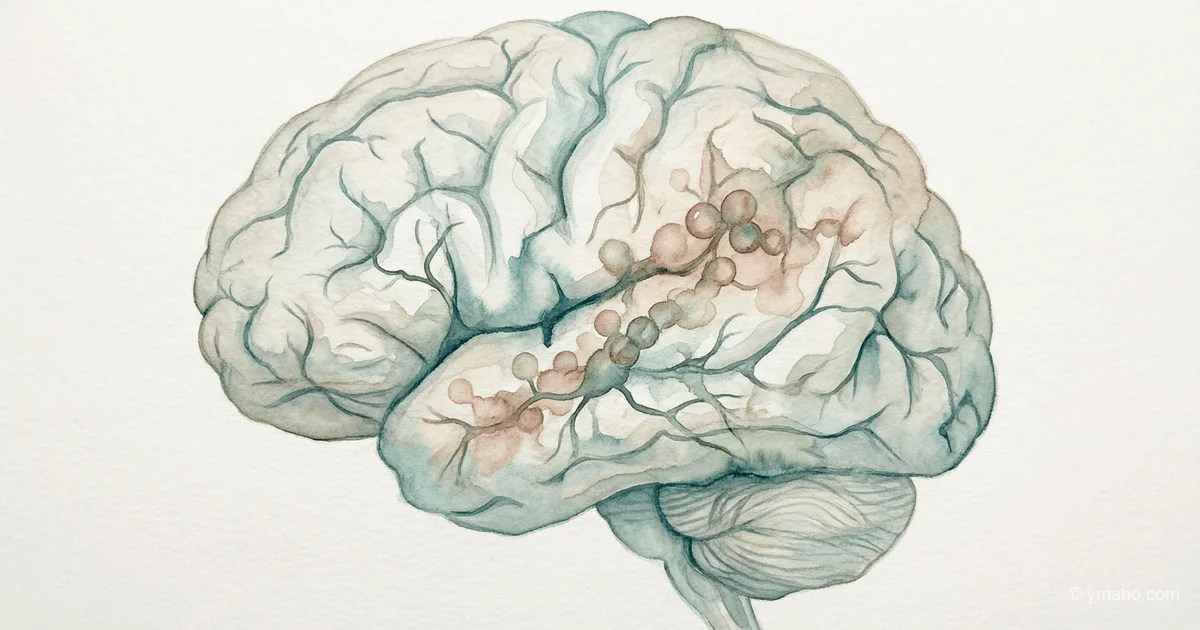
Springer Review Confirms Cyanidin's Neuroprotective Potential in Alzheimer's and Parkinson's Disease
A publication in the journal Inflammopharmacology summarizes data on the flavonoid cyanidin, which exhibits antioxidant and senolytic properties but requires nanoparticles to cross the blood-brain barrier.
Analytical summary: Cyanidin — an old friend in need of new nano-outfits
Date: May 27, 2026
Event source: Springer, journal Inflammopharmacology, Volume 34, Issue of May 22, 2026.
[The Gist]: What's really happening
On May 22, 2026, a review article was published in the journal Inflammopharmacology, in which the authors summarized data on the neuroprotective potential of cyanidin — a natural flavonoid found in blueberries, cherries, red grapes, and red cabbage.
Here are the real numbers that news headlines don't mention:
- 64 million people worldwide suffer from Alzheimer's and Parkinson's disease — that's the potential audience if cyanidin ever reaches pharmacies.
- Log P 2.41 — the partition coefficient between oil and water. This means cyanidin is moderately fat-soluble but poorly water-soluble, which is the first problem for its absorption in the gut.
- Cyanidin's antioxidant properties have been known since at least 2004. The 2026 news is not a discovery but an attempt to reinterpret old data in a new technological context.
Non-obvious insight (what even the authors don't say):
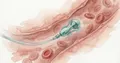
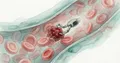
The key thesis in the article reads: "nanoparticles are required to cross the blood-brain barrier."
This is a nice phrase that hides a global industry problem: over the past 20 years, only a handful of molecules have crossed the blood-brain barrier (BBB). The BBB is not just a "dense layer of cells"; it's an active transport system that pumps 98-99% of potential brain disease drugs back into the blood.
Cyanidin is no exception. Its molecular weight (287 daltons) theoretically allows passive BBB crossing. But in practice, it is pumped back out by P-glycoprotein — the "bouncer protein" that protects the brain from foreign substances.
The review authors themselves admit: "without nanocarriers, cyanidin won't reach the brain." But they don't say the main thing: developing such nanocarriers is a separate, multi-year task costing tens of millions of dollars.
Timeline and Context
This story is a classic example of "academic dressing up," where old data is presented under a new guise.
- 2004-2010 (first discoveries): Cyanidin was identified as a potent antioxidant. Studies showed it inhibits COX-2 (cyclooxygenase-2) and suppresses JNK and ERK phosphorylation — key inflammatory pathways. Discussions about its neuroprotective properties began then.
- 2018-2019 (first hints at mechanisms): Studies emerge showing cyanidin protects neurons from beta-amyloid toxicity (a key pathological protein in Alzheimer's) via the TLR4/NOX4 pathway. Still fundamental science.
- May 2026 (publication of the review): An article appears in Inflammopharmacology. No new experiments. The authors simply restated what was already known and added a section on nanoparticles. This is not a breakthrough — it's a "brochure" to attract grants.
Who Wins and Who Loses
Winners:
- Springer Nature (journal publisher): They got a citable article that will now pop up in every search for "cyanidin + neuroprotection." Traffic to the site is guaranteed.
- The review authors (names not given in the press release, but they are unlikely to be big names): They earn academic points (CV points), citations, and invitations to conferences. Ideal scenario: collect others' data, write a review — and you're on top.
- Companies working on nanoparticles for brain delivery: Their yellow press is already working. Now any startup can say, "We have a platform for delivering cyanidin — invest."
Losers:
- Patients with Alzheimer's and Parkinson's who read the news as a "breakthrough": They will rush to the pharmacy for cyanidin supplements (blueberry, grape seed extract). But these supplements don't work — cyanidin doesn't reach the brain in sufficient concentration. This is false hope.
- Companies already developing synthetic neuroprotectors: If cyanidin (cheap, natural, non-patentable) suddenly shows clinical effect, it would crash the market for expensive synthetic molecules. But the probability is 1-2%. Too many obstacles.
What the Media Isn't Saying
- This is a review, not original research. News calls it "publication confirms." In reality, it confirms nothing new. If I write a review that aspirin might cure cancer, that doesn't mean aspirin actually cures cancer. Clinical trials are needed. There are none.
- The blood-brain barrier isn't the only problem. Even if cyanidin reaches the brain (which is nearly impossible without nanoparticles), it must:
- Reach the required concentration inside neurons (not get stuck in the extracellular space).
- Not be degraded by brain enzymes (cytochrome P450 in neurons actively metabolizes flavonoids).
- Not trigger an immune response to the nanoparticles (if we use them).
The Inflammopharmacology review lists 4-5 mechanisms of cyanidin action (antioxidant, anti-inflammatory, anti-apoptotic, senolytic, mitochondrial). But in reality, "many mechanisms" often means "weak effect on each."
- Comparison with real competitors. In the same issue of the Cerrahpaşa Medical Journal (March 2026), an article compared cyanidin with rosmarinic acid. Both are polyphenols, both are antioxidants, both don't cross the BBB. The authors honestly write: "nanocarriers are needed." So cyanidin is not unique. It's one of many. No one knows which is better.
- Hidden advertising of delivery technology. Note: the news says "requires nanoparticles to cross the BBB." This is no accident. The brain nanoparticle industry is booming right now. In January 2026, Taiwanese researchers from China Medical University published work on "αDAT-EV" — exosomes that deliver curcumin (another flavonoid, similar problems) to the brain in Parkinson's disease. They showed 88.3% loading efficiency and improved behavior in rats. That's a concrete technology with animal data. The cyanidin review is just "we want that too."
Forecast: Next 30 Days and 90 Days
30 days:
No new experimental data. There will be a wave of news reposts on healthy eating and natural medicine portals. These reposts will contain phrases like "blueberries protect the brain from aging." That's marketing, not science.
First comments from neurologists will appear on social media. They will criticize the news for exaggerations. Follow accounts like David Perlmutter or Dale Bredesen — if they comment, it adds weight, but not facts.
90 days:
If the review authors have ambitions, they will apply for a grant to create cyanidin nanoparticles. Most likely to the NIH (National Institutes of Health) or European equivalents. Amount: $300,000 - $500,000 for 2 years. If the grant is approved, it's a signal that the concept is moving into lab work.
What else is critical to track:
- Clinical trials of flavonoids with nanocarriers. Monitor the clinicaltrials.gov database for "nanoparticle flavonoid Parkinson." If someone starts a Phase 1 with curcumin or cyanidin, that changes the game. No such trials yet.
- Work by the Chang Gung University (Taiwan) group on exosomes for flavonoid delivery. They already have rat data on curcumin. If they switch to cyanidin or publish Phase 1 human data, that's a breakthrough.
- Patent applications. If someone patents "cyanidin nanoparticles for treating neurodegenerative diseases," that's a commercial signal. The WIPO (World Intellectual Property Organization) patent bureau is a source to track.
Analyst Verdict:
This is a news item at the level of "we read old articles and thought it would be nice if..." No new data, no animals, no humans. Only theoretical reasoning and one phrase about nanoparticles, which is a stretch to make the review look modern.
Cyanidin is a wonderful molecule. In a test tube, it works wonders: scavenges free radicals, soothes inflammation, protects neurons. But in a real organism, it doesn't reach its target. In 20 years of research, no one has solved the delivery problem. The 2026 review won't solve it either.
If you're an investor — don't invest in cyanidin supplements. If you're a patient — don't buy them. If you're a scientist — apply for a nanoparticle grant, but know you're the 100th person trying this.
A real breakthrough will happen when someone shows clinical data in humans. Until then, cyanidin remains a "promising molecule," of which there are thousands in oncology and neurobiology.
I assign the status: "Interesting, but not investable." Let's check back in 12 months — maybe someone from the Taiwanese group will make the decisive move.
— Editorial Team