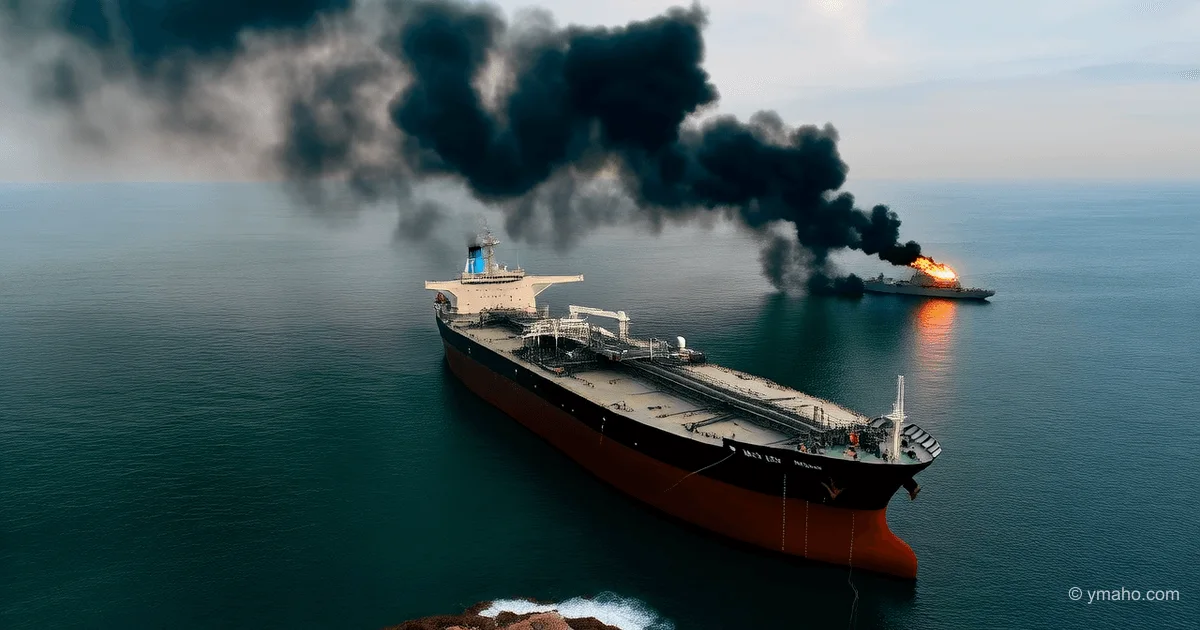
Brent Oil Prices Surge Above $111 as US-Iran Talks Hit Deadlock
Oil prices have surged 35% since the start of the conflict, as Washington and Tehran remain far from a deal to reopen the Strait of Hormuz, and Trump says 'time is running out.' Markets are in turmoil: the yield on 30-year US Treasuries hit a three-year high.
Oil at $111. Trump is twisting Tehran's arm. And the yield on 30-year US Treasuries just broke a three-year high. This is not just another geopolitical noise—this is the market rewriting the rules of the game in real time.
Since the start of the conflict, Brent prices have soared 35%. The latest jump came on Monday morning when traders realized: the deal to reopen the Strait of Hormuz is dead. Washington and Tehran are not just far from a compromise—they are speaking different languages. Trump dropped the phrase 'time is running out,' and algorithmic trading systems instantly priced in a new scenario: the blockade of the strait will drag on, along with the oil shock.
The Hormuz Needle
The Strait of Hormuz carries 21 million barrels of oil per day. One-fifth of global consumption. When the IRGC blocked the strait in March for vessels linked to the US and its allies, the market initially hoped for a quick diplomatic exchange. It didn't happen.
Iran demands the lifting of all sanctions and the withdrawal of US troops from bases in the Persian Gulf. The US insists on the immediate removal of 400 kilograms of enriched uranium. Between these positions lies a chasm. Negotiators have held three rounds in Geneva, but by May 2026, even the format for further meetings has not been agreed upon. Trump is pressuring through Emirati intermediaries, but Abu Dhabi itself is scared: a drone struck the Barakah nuclear plant in early April, and now the UAE is not eager to become a proxy force in someone else's war.
While diplomacy stalls, physical oil supplies are shrinking. Saudi Arabia and the UAE are trying to ramp up flows through alternative routes, but their capacity covers only 40% of the shortfall. The rest is a hole in the global market balance.
Yields That Scream Fear
Oil at $111 is only half the story. The other half is unfolding in the US Treasury market. The yield on 30-year Treasuries has jumped to 5.89%—a level last seen in October 2023, when the world was burying US regional banks.
Why are they connected? Inflation. The April CPI in the US surged to 3.8%. Producer prices hit 6% annualized. The energy component of the indices pulls everything along: from freight costs to fertilizer prices. The bond market is screaming that the Fed is cornered. The rate will not just have to stay high—it will have to rise. Futures for the July 24 meeting already price in a 25-basis-point hike with 68% probability.
Long Treasuries are the global indicator of the cost of money. When their yield rises at such a pace, mortgages in California, corporate loans in Frankfurt, and Brazil's sovereign debt all become more expensive simultaneously. The global financial system is stretched like a string.
Who Is Already Counting Losses
Toyota announced that the potential impact from the conflict could be $4.3 billion. The Japanese auto giant depends on Middle Eastern plastics, lubricants, and supply chains that are now breaking. The aviation industry will collectively lose $15 billion—fuel costs are eating margins faster than carriers can raise ticket prices.
Reuters calculated total corporate losses at $25 billion. But the figure is almost certainly understated. It accounts for direct costs, not cascading effects: factory shutdowns due to component shortages, disruption of the agricultural season in India where petrochemicals are critical for fertilizers, and a wave of defaults in energy-intensive sectors in Turkey and Pakistan.
Israel's economy, contrary to expectations of a quick recovery, contracted by 3.3% in the first quarter. Private consumption collapsed by 4.6%, exports fell nearly 4%. The Bank of Israel keeps the rate at 4.5%, but there is no room to maneuver: cut it and you kill the shekel and fuel inflation; raise it and you strangle business.
Stock markets in the Persian Gulf are falling for the fourth consecutive session. Saudi Tadawul is losing market capitalization amid an outflow of foreign investment. Egypt's EGX30 plunged 1.5% in one day—investors are pulling money out of the entire region, regardless of who is on whose side.
The Bet That Will Break the Fed's Calendar
Jerome Powell finds himself in a situation worse than imaginable. Inflation is accelerating not because of an overheated economy, but because of a supply shock. Raising rates won't force the IRGC to open the strait. But doing nothing is not an option: inflation expectations are already breaking loose from their anchor. Five-year breakeven inflation swaps have reached 2.9%—a twenty-year high.
The market is pricing in a 'one hike and pause' scenario. But if Brent breaks $120—and that will happen with any expansion of the conflict to Saudi facilities—the Fed will have to act more aggressively. Half a point at a time no longer seems like fantasy, as it did a month ago.
And then there's China. Beijing is building strategic oil reserves at a record pace—1.2 million barrels per day above normal imports. This supports the price, but also signals: China is preparing for a protracted crisis, not a quick resolution.
What Happens Next
Scenario one: a diplomatic breakthrough within the next three weeks. Probability: low. Trump wants a deal by mid-summer, but his negotiating position is an ultimatum. Iran does not accept ultimatums, especially when oil revenues are trickling in through a shadow fleet and 'gray' intermediaries in Malaysia.
Scenario two: limited military escalation. A strike on Iranian oil platforms or a new attack on a US base. In this case, the market would see Brent at $130–135. The 30-year yield would break 6.2%. The Fed would hold an emergency meeting and raise rates off-schedule.
Scenario three: a freeze of the conflict without a formal deal. The strait remains semi-closed, oil fluctuates in the $105–115 range, and the global economy slowly adapts through a recession in energy-intensive sectors. This is the baseline scenario for traders right now.
One thing is certain: cheap oil is not coming back anytime soon. And the era of low rates is also over. The market has shifted into survival mode, and every new day without a deal is another step toward a global recession caused not by central banks, but by geopolitics.
— Editorial Team









