US Secretary of State Marco Rubio Says Efforts Underway to Involve China in Pressuring Iran to Stabilize the Persian Gulf
Rubio said the US is trying to persuade China to play a more active role in resolving the conflict, noting that Chinese ships are stuck in the Persian Gulf and that aid to Iran would harm China's relations with Washington.
The market is used to thinking in terms of "US vs. Iran," but what is unfolding right now is a far more complex dynamic. Marco Rubio's statement on May 14 about efforts to involve China in pressuring Tehran is not routine diplomatic rhetoric. It is a public acknowledgment of a tectonic shift: Washington, which for decades built the Persian Gulf security architecture around its own military dominance, is now forced to ask Beijing to become the guarantor of that very security.
The Essence: What Is Really Happening
Formally, Rubio laid out three arguments for why a resolution benefits China: Chinese ships are stuck in the Persian Gulf, Asia is critically dependent on energy supplies through Hormuz, and a global economic downturn would hit Chinese exports. In reality, this is a transfer of keys to a strategic asset. The US cannot single-handedly force Iran to open the strait—military escalation would only consolidate the Iranian regime, and a full-scale war is toxic for Trump ahead of the midterms. China remains the only country that Tehran at least formally listens to.
The Trump-Xi summit in Beijing on May 15-16 confirmed this dynamic. The joint statement that Iran must not acquire nuclear weapons and that the Strait of Hormuz must be opened is a diplomatic framework within which Beijing gets a mandate for mediation. But the real game is at another level: China is using the crisis to bargain with Washington for easing sanctions on its oil companies that buy Iranian crude. Trump has already said he is considering such a possibility.
Timeline and Context
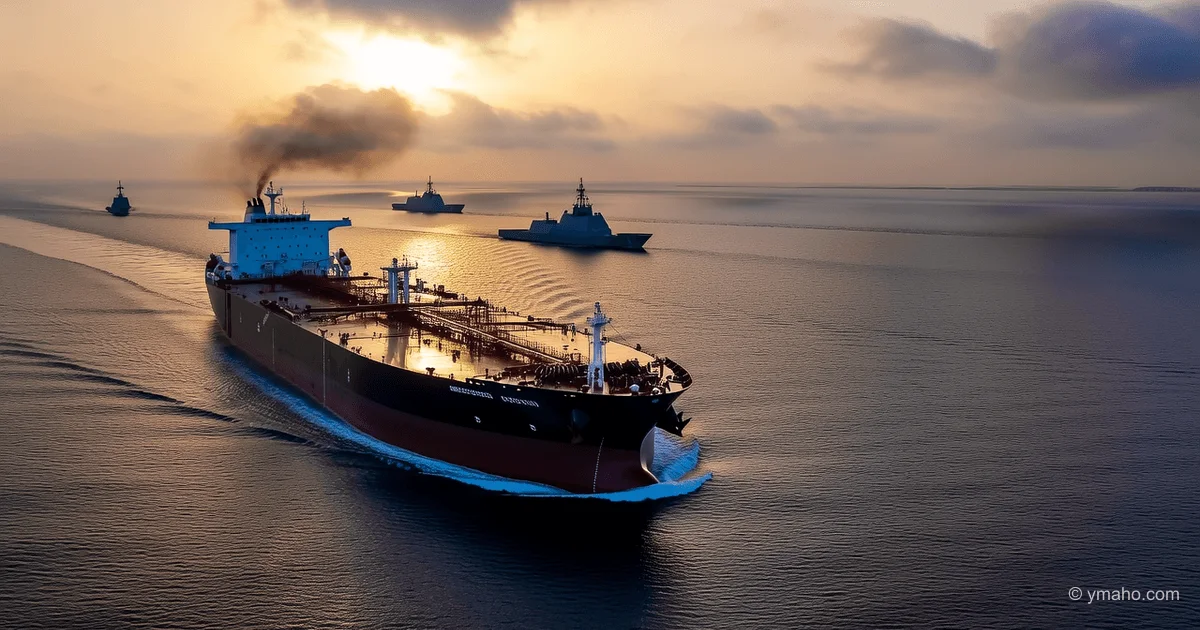
The chain of events unfolded rapidly. On February 28, the US and Israel struck Iranian targets. The Strait of Hormuz was effectively blocked. By May 12, data emerged that Chinese tankers—Yuan Hua Hu and other vessels linked to COSCO Shipping—were passing through the strait via an Iranian "safe corridor," while passage was closed for everyone else. This selective permission signaled that Tehran is ready to differentiate access to the strait based on political loyalty.
On May 13-14, Rubio made his statements about the need to involve China, and on May 15-16, Trump and Xi agreed on principles for a settlement. However, the Chinese side deliberately distanced itself from the wording "Iran must not possess nuclear weapons"—China's Foreign Ministry limited itself to criticizing the war, calling it a conflict "that should not have started." Meanwhile, Iran's Foreign Ministry, through Abbas Araghchi, expressed readiness to accept Chinese mediation but stressed "zero trust" in Washington.
Who Wins and Who Loses
China wins on all fronts. First, Beijing gains the status of an indispensable mediator, strengthening its position in the region. Second, easing sanctions on Chinese oil companies is a direct financial gain: according to Kpler, the volume of Iranian oil in floating storage fell from 85 million barrels in February to 51 million in May, indicating continued shipments to China despite the US blockade. Third, Chinese ships effectively gain exclusive access to Hormuz—a competitive advantage that is hard to overstate.
The loser is the traditional US security architecture in the Middle East. The US Navy is blockading Iranian ports, intercepting over 70 vessels, but it is China that negotiates transit with Tehran. This is a humiliating moment for a military superpower whose main geopolitical rival extracts maximum benefit from the conflict.
European and Asian economies without such access to Tehran also lose. When Eneos and other Japanese operators must negotiate separate passage for each tanker, Chinese ships move through the strait relatively unimpeded.
What the Media Is Not Saying
The first non-obvious insight concerns the mechanism of interaction between Beijing, Tehran, and Washington. This is not just diplomatic mediation but the formation of a two-tier shipping system. Iran is essentially charging a fee for passage through the strait, but not directly. Trade sources indicate the existence of "administrative fees" of $3-4 per barrel, routed through a chain of shell companies. Chinese ships using the "safe corridor" de facto pay this fee. The US turns a blind eye in exchange for Beijing's commitment to prevent nuclear escalation. A shadow trilateral deal is taking shape that no government will publicly acknowledge.
The second point: Chinese ships use sophisticated masking techniques. According to Windward, from April 19 to May 3, there was a 600% increase in vessels using deceptive tactics—turning off transponders, spoofing, false flags. The New York Times analyzed three specific tankers—Huge, Atomis, and Salute Legend—that use unconventional routes like the Lombok Strait instead of Malacca to reduce visibility. Meanwhile, US command effectively admits that vessels passing outside Iranian ports (e.g., via ship-to-ship transfer in the Gulf of Oman) are not considered blockade violators. This is a deliberately left loophole.
The third insight concerns Trump. His statement that he is considering lifting sanctions on Chinese oil companies is a direct admission of the failure of the maximum pressure strategy. As recently as April, Treasury Secretary Scott Bessent accused China of "financing terrorism" through Iranian oil purchases. Now, Bessent is quietly participating in talks with figures close to the Iranian leadership. This is a 180-degree turn that the media describes as "flexibility" but is in fact a capitulation to reality: without China, resolving the crisis is impossible.
Forecast: Next 30 and 90 Days
Next 30 days (by June 16). I expect China and Iran to agree on expanding the "safe corridor" for vessels under certain flags, including Japanese and possibly Indian. This will not be a full opening of the strait—rather, an expanded version of selective access. The US, in turn, will ease the sanctions regime for specific Chinese companies but maintain the overall blockade of Iranian ports as leverage. Brent will remain in the $105-112 range as the market prices in partial rather than full normalization of supply.
Next 90 days (by August 16). Base scenario (55% probability): A US-Iran framework agreement is reached with Chinese mediation. Iran agrees to enhanced monitoring of its nuclear program, the US lifts some sanctions and eases the blockade. Hormuz opens for commercial shipping but under Chinese monitoring—Beijing de facto becomes the security guarantor of the strait. Brent adjusts to $95-100.
Negative scenario (30%): China overestimates its influence on Iran, talks stall, Trump orders renewed strikes. Brent jumps to $120-125. Catastrophic scenario (15%): Iran and China strike a separate deal excluding the US—Tehran opens the strait only for Chinese and some Asian vessels in exchange for security guarantees and investments. This completely undermines US influence in the Gulf and sets a precedent where regional security is ensured not by Washington but by Beijing. In this case, the geopolitical premium in oil will remain a structural factor for years, even with the strait formally open.
— Editorial Team









