Fed Holds Rate at 3.5–3.75%, Tightens 2026 Forecast
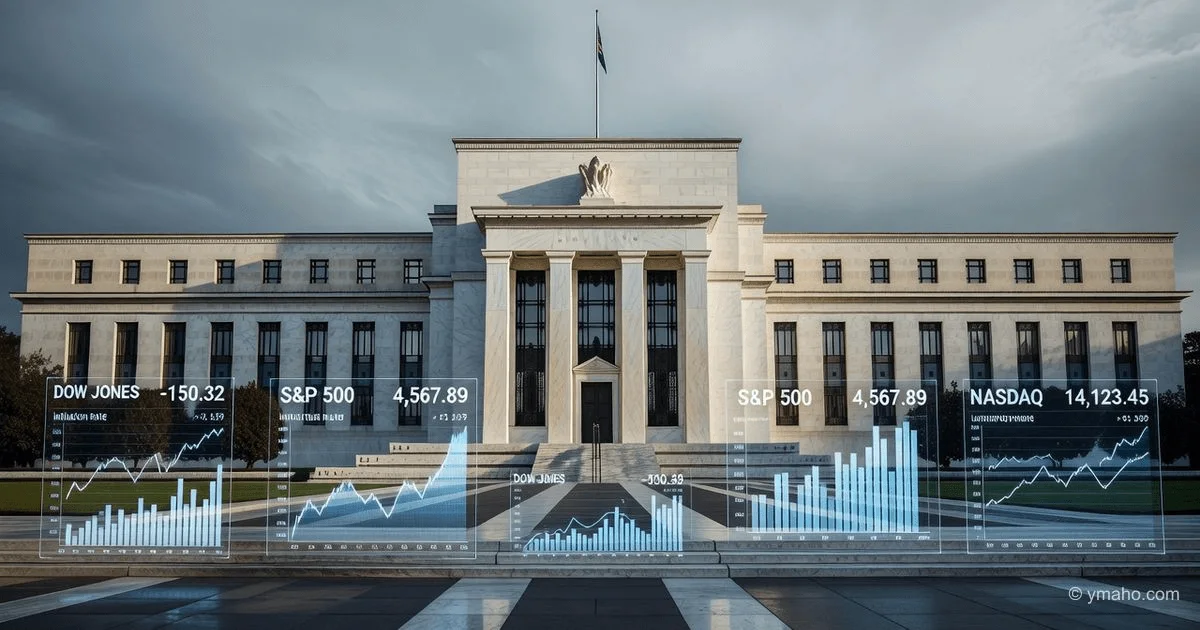
At its first meeting under new Chair Kevin Warsh, the Fed unanimously left rates unchanged but raised its PCE inflation forecast to 3.6% and signaled a possible rate hike by year-end.
Analytical Breakdown: The First Fed Meeting Under Kevin Warsh — The Calm Before the Storm
Author's Analytical Review
The Gist: What's Really Happening
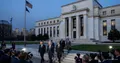
Formally, the Federal Reserve kept the rate at 3.5–3.75% — exactly what markets had priced in. But the devil, as always, is in the details. New Chair Kevin Warsh, who replaced Jerome Powell, held his first meeting on June 17, 2026, and although the vote was unanimous 12-0, the signal markets received was far more hawkish than anyone expected.
The key point is not the rate itself, but the updated dot plot and economic projections. The median rate forecast for end-2026 jumped from 3.4% to 3.8%, meaning nine of the eighteen FOMC members now see at least one rate hike by year-end. This is a dramatic reversal: as recently as March, the median forecast implied a cut. Now only one participant expects a cut, eight voted for the status quo, and nine for tightening.
But the most important thing most commentators miss is not even the numbers themselves, but how Warsh is reshaping the decision-making process itself. He deliberately refused to publish his own "dots" in the dot plot, an unprecedented move for a Fed chair. The post-meeting statement was cut to a minimum — Warsh literally removed all language about the policy direction, including the famous "easing bias" that signaled the next move would likely be a rate cut.
Timeline and Context
To understand the scale of what happened, we need to reconstruct the sequence of events over recent months.
| Date | Event | Market Impact |
|---|---|---|
| February 2026 | Start of the Strait of Hormuz conflict | Oil prices surged, inflation expectations spiked |
| April 2026 | Warsh confirmed by the Senate as Fed Chair | Markets expected a policy shift but didn't know which direction |
| May 2026 | Annual PCE inflation hit 4.2% — a three-year high | Pressure on the Fed to tighten policy intensified |
| June 16, 2026 | Strong May retail sales data released (+0.9% vs. +0.5% forecast) | Final argument for hawks before the meeting |
| June 17, 2026 | FOMC: rate 3.5-3.75%, dot plot signals possible hike | Markets repriced expectations — two-year Treasuries surged to highs not seen since February 2025 |
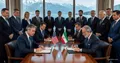
Critically important context: the meeting took place against the backdrop of news about a US-Iran ceasefire, expected to be formally signed on Friday in Switzerland. The agreement involves lifting sanctions on Iranian oil exports and unblocking the Strait of Hormuz. Oil prices have already fallen from peak levels, but the Fed, judging by its updated forecasts, does not believe this is enough for a sustained decline in inflation.
Warsh found himself between a rock and a hard place: on one side, President Trump, who appointed him precisely to get lower rates and stimulate the economy. On the other, inflation fueled by tariffs and military conflict, forcing the Fed to appear tougher than any new chair would like.
Who Wins and Who Loses
Biggest losers — highly leveraged tech stocks. The rise in two-year Treasury yields by 16 basis points in one day to 4.207% means higher borrowing costs. Companies like Intel, which had already fallen 8% ahead of the meeting, and Marvell Technology (-9%) will come under additional pressure. The space sector, including SpaceX, which recently surpassed Amazon in market cap, is also vulnerable to rising rates, though it has its own specifics.
Winners — the banking sector and financial institutions. Rising bond yields widen interest rate spreads — what banks profit from. Shares of JPMorgan, Goldman Sachs, and Bank of America will get support from a normalizing yield curve. Two-year notes are rising faster than ten-year notes, indicating the market is pricing in rate hikes in the near term.
Commodity markets — in a zone of uncertainty. On one hand, oil fell on the ceasefire. On the other, the Fed raised its PCE inflation forecast to 3.6%, meaning the regulator expects price pressures to persist even after oil's decline. This is a paradoxical signal: the energy market may face conflicting factors, creating volatility for hedge funds holding long commodity positions.
Is the dollar losing? Not exactly. The dollar index got a short-term boost from the hawkish signal — a high rate makes the dollar more attractive. However, over a 30-90 day horizon, the Iran ceasefire factor could weaken the dollar if oil prices fall and inflation expectations decline faster than the Fed expects.
What the Media Isn't Saying
Here's where it gets interesting — what won't make it into Bloomberg and Reuters headlines.
Insight one: Warsh is deliberately creating room for maneuver that Powell didn't have.
Refusing to publish his own "dots" and radically cutting the statement is not just a stylistic change. It's a strategic move. Warsh, who in his pre-appointment speeches criticized Powell for excessive predictability and "over-communication," is now giving himself freedom of action. Markets are used to reading every word of the Fed statement — now they'll have to read between the lines. This increases short-term volatility but gives Warsh the ability to adapt to data without losing credibility.
Moreover, Warsh is using the "divided committee" to his advantage. A 12-0 vote when half the FOMC members want a hike and half are ready to hold rates is a fragile equilibrium. By calling meetings a "family quarrel" and stating that differences of opinion are a sign of a healthy organization, Warsh can now balance between factions without committing to either.
Insight two: Markets are wrong about the probability of a hike.
The CME FedWatch at the time of the meeting showed a 43% probability of a hike in December. After the dot plot release, markets priced in a 72% probability of a hike by October. But that's an average.
Looking at the vote distribution within the FOMC: nine participants expect a hike, eight expect to hold, one expects a cut. A hike requires a simple majority, but in practice decisions are made by consensus. The key question: who are those nine? Analysts at Infrastructure Capital Advisors point out that the "hawks" include virtually all regional Fed presidents, who don't have a vote at every meeting. And of the two Republicans on the Board of Governors, according to their information, neither votes for a hike.
This means an actual rate hike in 2026 is much less likely than markets are trying to suggest. Warsh may have deliberately allowed a hawkish signal to cool inflation expectations without actual tightening.
Insight three: The Iran deal is not the disinflationary factor it's made out to be.
Most analysts assume that falling oil automatically means falling inflation. But the Fed raised its PCE forecast to 3.6% precisely after the ceasefire news. Why?
Because the effect of an energy shock appears with a lag of 3-6 months. The oil price spike from February-March is already baked into base inflation effects. And even if oil now falls to $70, it will only affect annual inflation toward the end of the year — Q4. The Fed looks at forecasts, not current prices. The Iran agreement is a positive factor for 2027, but for 2026 it's too late to change the picture.
Forecast: Next 30 Days and 90 Days
30 days (July-August 2026):
In the coming month, the main market drivers will be earnings season and the flow of macroeconomic data. Key levels to watch:
- S&P 500: support at 5,800, resistance at 6,050. After the hawkish signal, a 1-2% correction is likely, but company fundamentals may limit it.
- 10-year Treasury yield: range 4.40-4.60%. If June inflation data comes in above expectations, a break above 4.60% opens the way to 4.75%.
- WTI: $75-82 per barrel. The Iran agreement will be signed, but physical oil deliveries to the market will take 4-6 weeks. During this period, a deficit persists, limiting the decline.
Risk to this scenario: if inflation expectations start to decline faster due to falling oil, the Fed may soften its rhetoric, giving the market a powerful rally impulse. However, Warsh will be extremely cautious about easing, to avoid repeating Powell's 2024 mistake when the Fed "over-signaled" a cut and had to reverse course.
90 days (September-November 2026):
By this horizon, the inflation picture for Q4 will become clearer. Key events:
- September FOMC meeting: Warsh may either confirm the hawkish signal or begin to soften it if inflation data shows sustained declines.
- Release of Q3 GDP data: a slowdown to 1.8-2.0% could increase pressure on the Fed to start easing.
- Congressional elections in November: a political factor that could affect Fed appointments (including the fate of Lisa Cook, whom Trump tried to fire — the Supreme Court is expected to rule this month).
Most likely 90-day scenario: the rate will remain at 3.5-3.75%. A hike in December is possible but probability is below 50%, despite current market expectations. The key difference from Powell will be less predictability. Markets will react more to each macro indicator than to Fed "signals." Volatility will be higher, and hedge fund managers are already factoring this into their strategies, shifting portfolios toward short-term options.
Editorial Forecast
Asset: 2-year US Treasury yield. Direction: Likely a slight decline from current 4.21% in the next 24-72 hours, as markets overreacted to the hawkish signal and an actual rate hike is unlikely. Key level: decline to 4.10% barring new inflation surprises. Confidence level: medium. Main risk: June inflation data could exceed expectations, pushing yields back to 4.30% and above. This information is analytical in nature and does not constitute investment advice.
— Editorial Team